
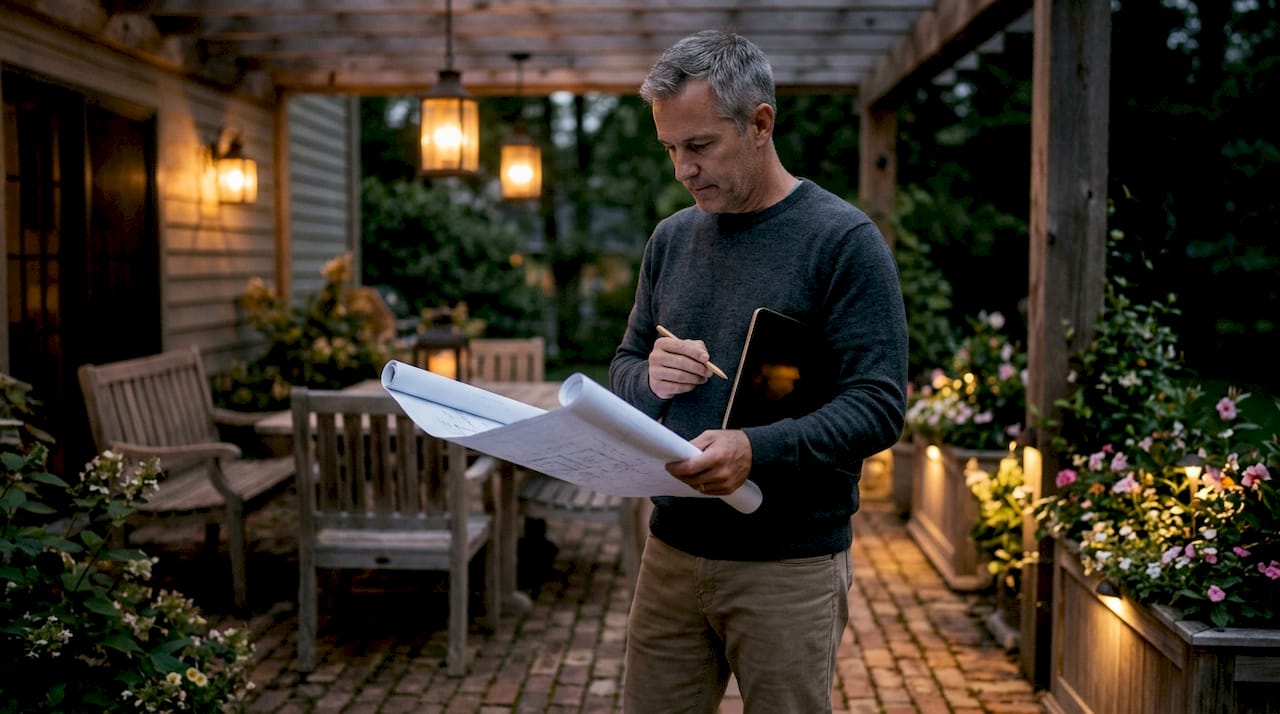
Professional landscape lighting design is the expert method of planning, placing, and wiring outdoor fixtures to maximize safety, beauty, and usability across your entire property. Unlike a basic DIY setup, professional outdoor lighting design applies layered illumination principles, energy-efficient LED technology, and careful electrical planning to create results that last. Homeowners who invest in this approach consistently see stronger curb appeal, safer outdoor spaces, and measurable returns at resale. This article explains exactly how the process works and why it matters for your home.
Why professional landscape lighting design outperforms DIY approaches
Professional landscape lighting design is defined by restraint and hierarchy, not by adding more fixtures or turning up the brightness. That distinction separates a polished result from a cluttered, overlie yard that creates glare and light pollution. Professionals apply three core principles to every project: layering, hierarchy, and balance.
The three-layer approach organizes lighting into distinct roles: pathway lighting for safe movement, accent lighting to highlight architectural and plant features, and ambient lighting to set the overall mood. Each layer serves a specific purpose. Removing any one of them leaves the design feeling flat or incomplete.
Lighting hierarchy means some features receive more emphasis than others. A mature oak tree might get a focused uplift, while a garden border gets softer, lower-intensity path lights. This contrast guides the eye naturally across the property and creates visual depth after dark.
- Pathway lights keep walkways, driveways, and steps clearly visible without blinding guests
- Accent lights use uplifting, down lighting, and wall washing to highlight trees, facades, and garden beds
- Ambient lights soften the overall space and create a welcoming atmosphere for outdoor entertaining
- Smart zoning groups fixtures by function so you can dim the garden while keeping the entry bright
Over-lighting creates glare and washes out the very features you want to showcase. Professionals test beam angles and fixture placement before permanent installation, often using temporary lighting setups to check for glare and unwanted reflections. That testing step alone prevents the most common mistakes homeowners make when installing lights themselves.
Pro Tip: Walk your property at night with a flashlight before any fixture goes in the ground. Aim the beam at each focal point and note where the light spills. This replicates what a professional nighttime test achieves and helps you spot glare problems early.
How does LED technology improve landscape lighting efficiency?
Modern LED landscape lighting consumes up to 75% less energy than traditional halogen fixtures and lasts more than a decade with proper installation. That energy reduction translates directly into lower monthly utility bills without sacrificing light quality. LED fixtures also produce less heat, which reduces fire risk near mulch and dry plant material.
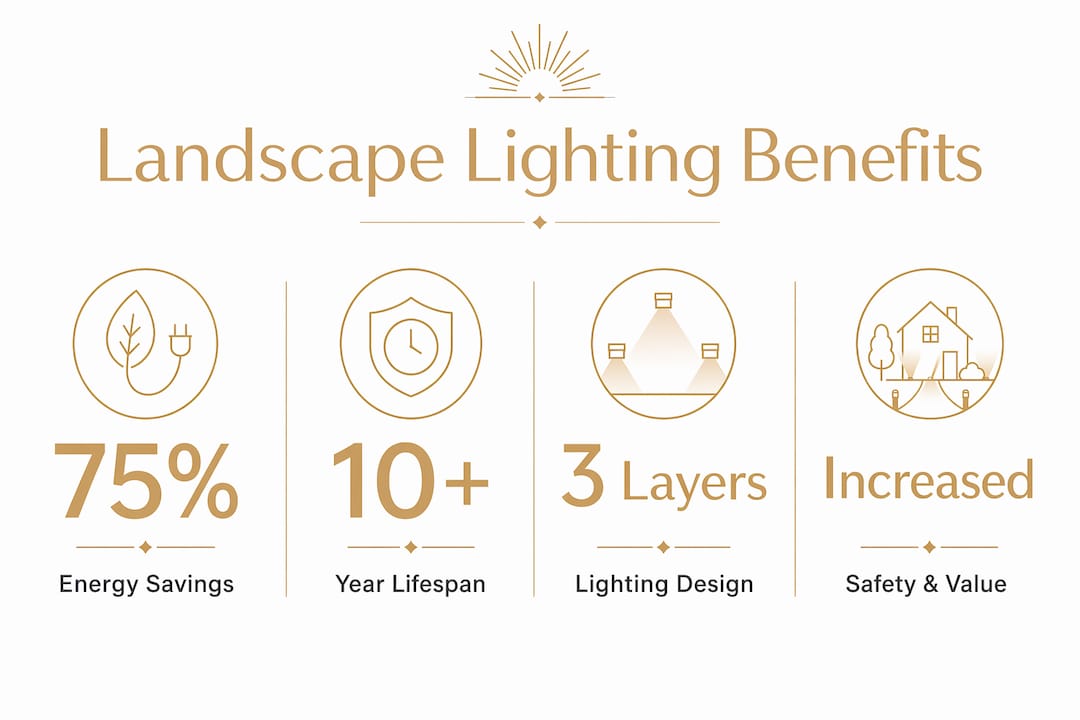
How LED landscape lights work is straightforward: they convert electricity into light through a semiconductor rather than a heated filament. That process is far more efficient. Less energy is wasted as heat, and the diode itself degrades slowly over time rather than burning out suddenly.
Proper electrical planning is just as important as the fixture choice. The industry standard calls for a 20% capacity buffer on every transformer beyond the total fixture wattage. A system drawing 180 watts, for example, requires a transformer rated for at least 216 watts. That buffer prevents overloading, reduces heat buildup in the transformer, and leaves room to add fixtures later without rewiring.
Professionals also address voltage drop, which causes fixtures farthest from the transformer to dim noticeably. The solution is a hub-and-spoke wiring layout rather than daisy-chaining fixtures in a single run. Each hub feeds a small cluster of lights at consistent voltage. The result is uniform brightness across the entire property.
- Select LED fixtures rated for outdoor use with an IP65 or higher weatherproof rating
- Calculate total wattage for all planned fixtures before choosing a transformer
- Add a 20% buffer to the transformer capacity to allow for expansion and reduce strain
- Use hub-and-spoke wiring to maintain consistent voltage from the transformer to every fixture
- Schedule annual inspections to check connections, clean lenses, and replace any degraded components
Quality installation materials extend system life significantly. Brass and copper fixtures resist corrosion far better than plastic alternatives, particularly in humid climates like Charlotte, North Carolina. A well-installed LED system with quality components can serve a property reliably for well over a decade with minimal maintenance.
Why integrating lighting at the landscape design phase matters
Planning lighting alongside hardscape and planting decisions produces more cohesive, effective results than retrofitting fixtures after a landscape project is complete. Retrofitting forces compromises: conduit runs through finished garden beds, wiring hides awkwardly behind completed stonework, and fixture placement is limited by what already exists. Early integration avoids all of that.
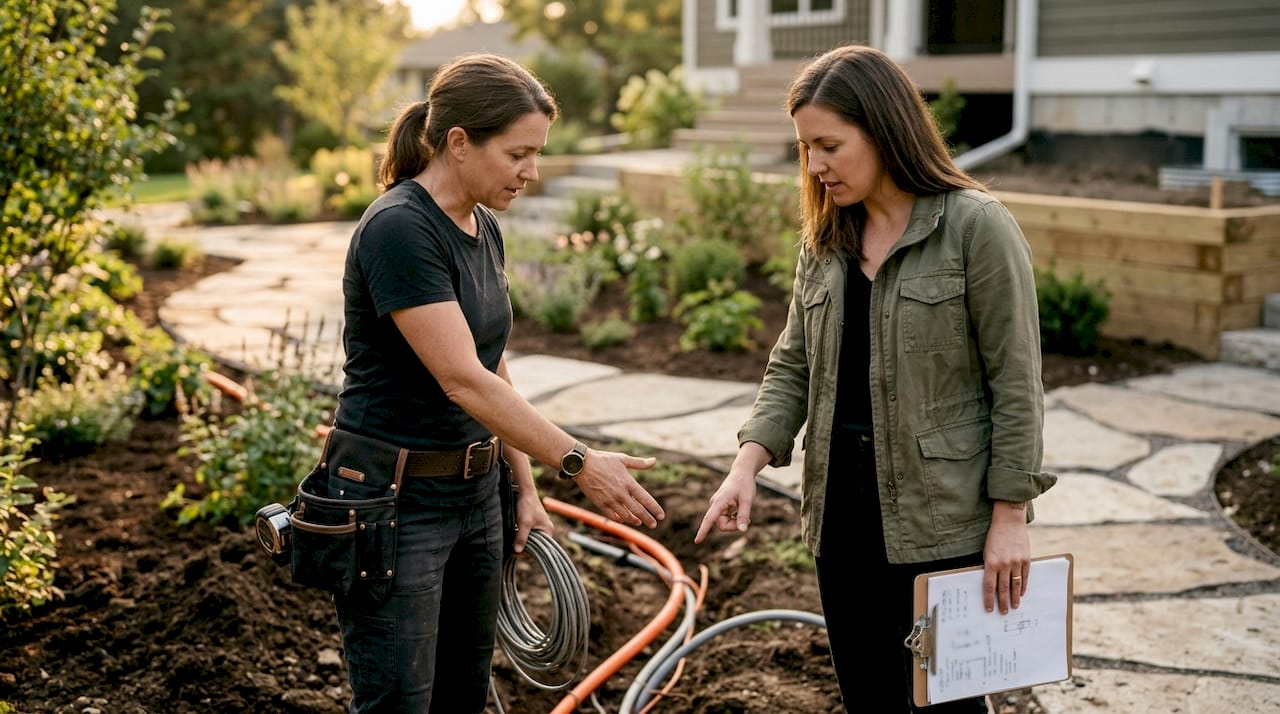
When lighting is part of the original plan, electricians can run conduit under pathways before pavers are set and position junction boxes where they will be hidden by mature plantings. The result looks intentional because it was planned that way from the start.
| Planning phase | Lighting integration benefit |
|---|---|
| Before hardscape installation | Conduit runs under pavers cleanly, no visible wiring |
| During planting layout | Fixture positions account for mature plant height and spread |
| At irrigation planning | Avoids conflicts between wiring and irrigation lines |
| After project completion | Limited fixture options, exposed wiring, higher labor cost |
Professional installation standards also govern how wiring is buried, how fixtures are anchored, and how transformers are mounted and protected. These standards protect the system from moisture intrusion, ground movement, and accidental damage during future yard work.
Pro Tip: Ask your landscape contractor to mark all planned planting locations before the electrician runs conduit. Mature shrubs and ornamental grasses can block fixture beams or crowd ground-mounted lights within two to three growing seasons.
Foreverglowlighting approaches every landscape lighting design project with this integrated mindset. Planning the electrical layout before the first plant goes in the ground is the single most effective way to achieve a result that looks professionally designed rather than added as an afterthought.
How does professional lighting improve safety and property value?
Professional lighting design improves safety by illuminating pathways, steps, and dark corners where trip hazards and intruders can hide. A well-lit property removes the shadows that make it easy for someone to approach undetected. Consistent visibility across the yard is one of the most practical security benefits a homeowner can add without installing a single camera.
Properly lit deck and step lighting reduces the risk of falls significantly, particularly for households with children or older adults. Steps that are invisible at night become a reliable hazard. Low-voltage step lights solve that problem at minimal energy cost.
The financial case for professional outdoor lighting is equally strong. Realtor data shows up to 80% ROI at resale for professionally installed landscape lighting. That return reflects both the curb appeal boost and the practical value buyers assign to a property that is safe and usable after dark.
“Lighting should be an extension of interior living, creating functional, inviting outdoor spaces that encourage use after dark. A yard that is dark and uninviting at 8 PM is effectively unusable for half the year. Professional lighting reclaims that time and space.”
Key safety and value benefits include:
- Illuminated pathways and steps that prevent trips and falls
- Eliminated dark hiding spots that deter opportunistic intruders
- Architectural spotlighting that increases perceived home value from the street
- Extended outdoor usability into evening hours for entertaining and relaxation
- Consistent visibility that complements security cameras and motion sensors
Curb appeal matters most at the moments when it counts: when a buyer first sees your home, when guests arrive for the first time, and every night when you pull into your own driveway. A professional lighting installation makes that first impression work for you around the clock.
Key Takeaways
Professional landscape lighting design delivers measurable safety, efficiency, and financial returns when planned with layered principles, quality materials, and early integration into the overall landscape project.
| Point | Details |
|---|---|
| Layered design outperforms DIY | Three-layer lighting (pathway, accent, ambient) creates depth that single-layer setups cannot achieve. |
| LED efficiency is significant | Modern LEDs use up to 75% less energy than halogen and last over a decade with proper installation. |
| Transformer sizing is critical | Always add a 20% capacity buffer beyond total fixture wattage to prevent overloading and allow expansion. |
| Early planning saves money | Integrating lighting before hardscape and planting is complete avoids costly retrofitting and exposed wiring. |
| ROI justifies the investment | Professional landscape lighting returns up to 80% of its cost at resale while improving daily safety and usability. |
What I have learned after years of watching lighting projects succeed and fail
The homeowners who are most satisfied with their outdoor lighting are almost never the ones who asked for the most fixtures. They are the ones who trusted a designer to say “that is enough.” Restraint is the hardest thing to sell and the most valuable thing a professional delivers.
I have seen properties where every tree, shrub, and garden border was lit. The result looked like a parking lot. The homeowners eventually dimmed half the fixtures and never turned the rest back on. The wiring was already in the ground, the money was already spent, and the effect they wanted was never achieved.
The properties that genuinely impress visitors are the ones where three or four focal points are lit beautifully and everything else recedes into comfortable shadow. That contrast is what creates drama and warmth. It is also what makes a yard feel like an extension of the home rather than a display case.
My honest advice: resist the urge to light everything. Hire a professional who will push back when you ask for more. The best outdoor lighting design you will ever see is the one where you cannot quite identify where the fixtures are. You just know the space feels right.
— Dave
Foreverglowlighting: custom landscape lighting for Charlotte homeowners
Foreverglowlighting designs and installs professional landscape lighting across Charlotte and the surrounding area, including custom LED systems that blend into your property by day and perform beautifully at night. Every project starts with a site assessment and a design plan that accounts for your hardscape, plantings, and how you actually use your outdoor space.

Whether you want subtle pathway lighting, architectural accent lighting, or a full outdoor living setup, Foreverglowlighting builds systems that are energy-efficient, low-maintenance, and built to last. Contact us today for a free estimate and see what a professionally designed system can do for your home’s safety, appearance, and value.
FAQ
What is landscape lighting?
Landscape lighting is a system of outdoor fixtures designed to illuminate pathways, plants, architectural features, and outdoor living areas after dark. Professional systems use layered placement and LED technology to balance safety, aesthetics, and energy efficiency.
Why does landscape lighting need a professional install?
Professional installation ensures correct transformer sizing, proper wiring layouts, and code-compliant fixture placement that DIY setups frequently miss. Errors in voltage planning cause uneven brightness, premature fixture failure, and potential electrical hazards.
How do LED landscape lights work?
LED landscape lights convert electricity into light through a semiconductor diode rather than a heated filament. This process uses up to 75% less energy than halogen alternatives and produces minimal heat, extending fixture life significantly.
How does a budget landscape lighting installation plan work?
A budget plan starts with identifying the highest-priority zones: entry paths, steps, and one or two focal plantings. A professional sizes the transformer for the full future system even if only a portion of fixtures are installed initially, allowing cost-effective expansion over time.
How much value does landscape lighting add to a home?
Realtor data shows professionally installed landscape lighting can return up to 80% of its initial cost at resale. Beyond financial return, it extends outdoor usability and strengthens curb appeal year-round.
Recommended
- Stunning Landscape Lighting Transformation In Weddington, NC | Forever Glow Lighting
- Stunning Landscape And Hardscape Lighting Design In Matthews, NC | Forever Glow Lighting
- Professional Landscape Lighting Solutions In Charlotte, NC | Forever Glow Lighting
- Stunning Landscape And Hardscape Lighting Design In Charlotte, NC | Forever Glow Lighting