
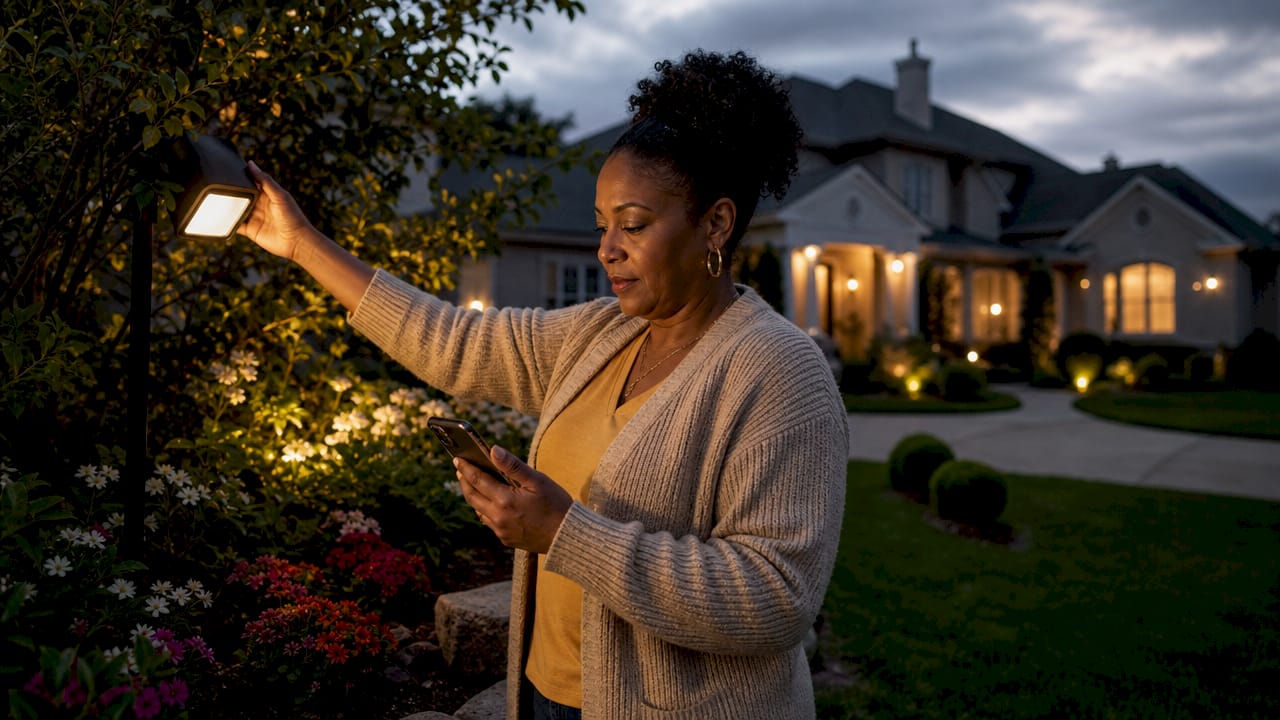
Smart outdoor lighting is defined as a network of LED fixtures installed outside your home that you control remotely through an app, voice assistant, or automated schedule. These systems go far beyond a standard porch light on a timer. They respond to motion, adjust brightness, change color, and connect to your broader home security setup. Understanding what smart lighting means outdoors helps you make decisions that improve safety, reduce energy waste, and add lasting curb appeal to your property.
What does smart lighting mean outdoors: core technology explained
Smart outdoor lighting systems combine LED hardware with wireless communication protocols to give you real-time control over your exterior lights. The three most common connectivity standards are Wi-Fi, Zigbee, and Z-Wave. Wi-Fi works well for a single fixture near your router, but hub-based mesh networks using Zigbee, Z-Wave, or the newer Matter standard deliver far more reliable coverage across backyards, garages, and side yards where Wi-Fi signal fades. That reliability matters when your security lights need to respond instantly, not after a dropped connection.
The features built into these systems separate them from conventional outdoor fixtures. Common capabilities include:
- Motion detection using passive infrared (PIR) sensors that cover 30–50 feet at a 120-degree angle
- Scheduling with both fixed timers and astronomical timers that adjust automatically to seasonal sunrise and sunset times
- Dimming and brightness control from 0% to 100%, adjustable from your phone
- Color temperature and color changes for accent and holiday lighting
- Integration with video doorbells and security cameras for coordinated responses
Hardware options range from smart bulbs you drop into existing outdoor-rated sconces to fully integrated smart floodlights and low-voltage landscape systems. Each approach suits a different budget and installation complexity.
Pro Tip: Choose fixtures rated for outdoor use with a minimum IP65 rating. If you live in a region with heavy rain or occasional flooding, IP67-rated fixtures protect the internal electronics against temporary water immersion and significantly extend fixture life.
How does smart outdoor lighting improve safety and security?
Smart lighting is one of the most effective deterrents in a residential security setup. The key is speed. Motion-triggered lights that activate in under 500 milliseconds create an immediate psychological response that discourages intruders. A light that takes two or three seconds to turn on loses most of that deterrent effect because the window of surprise is gone.
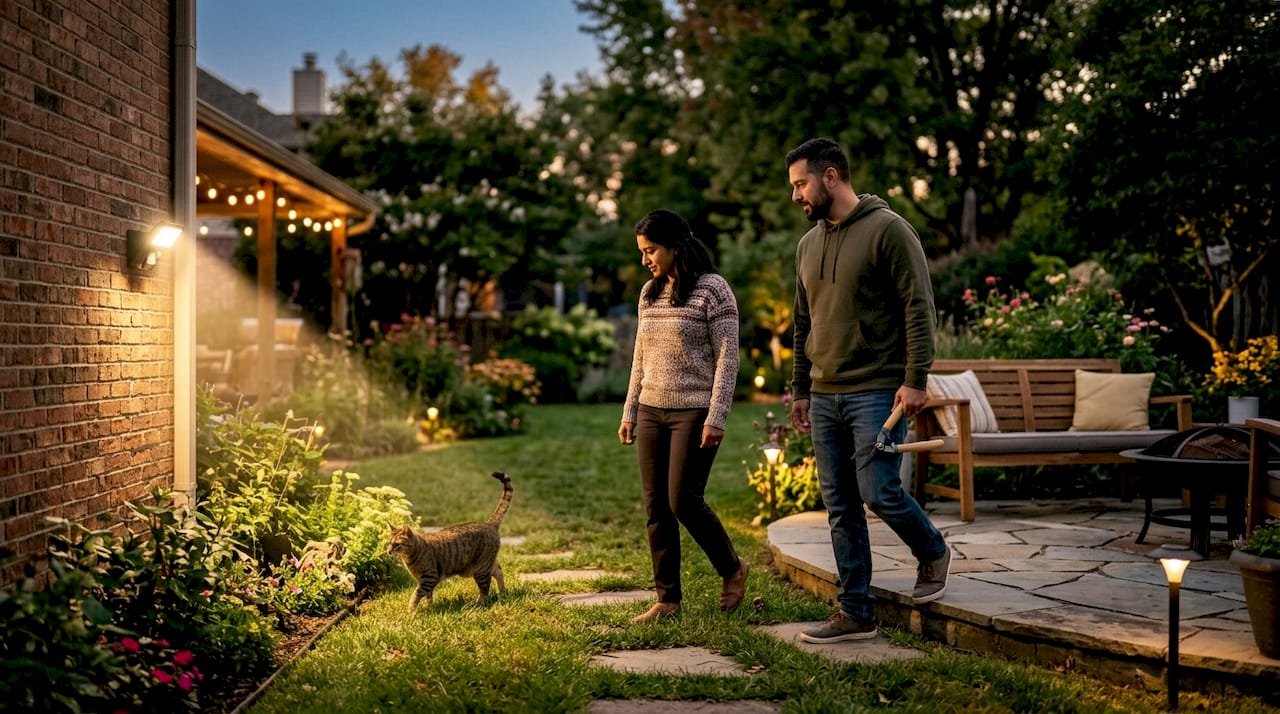
The security benefits extend beyond deterrence. Well-placed smart lighting removes the dark corners and shadowed areas that give intruders cover. Combining motion-activated floodlights with a video doorbell covers the primary approach vectors to your home, including the front door, driveway, and side gates. Smart lighting paired with security devices forms a coordinated layer of protection that neither system achieves alone.
Package theft is a specific and growing concern for homeowners. Smart outdoor lighting systems that use motion-triggered responses and automated scheduling can reduce porch theft incidents by approximately 60%. That figure reflects how much visible, responsive lighting changes the risk calculation for opportunistic theft.
Scheduling features add another layer of protection when you travel. You can program your lights to activate at random intervals during the evening, simulating occupancy even when the house is empty. This approach is far more convincing than a single lamp on a fixed timer.
What are the energy efficiency benefits of smart outdoor lighting?
Smart outdoor lighting reduces energy waste in ways that standard fixtures simply cannot match. The most impactful tool is the astronomical timer. Unlike a fixed schedule that turns lights on at 7:00 PM year-round, astronomical timers adjust automatically to local sunset and sunrise times every day. Your lights run only when darkness actually requires them, which reduces unnecessary runtime across every season.
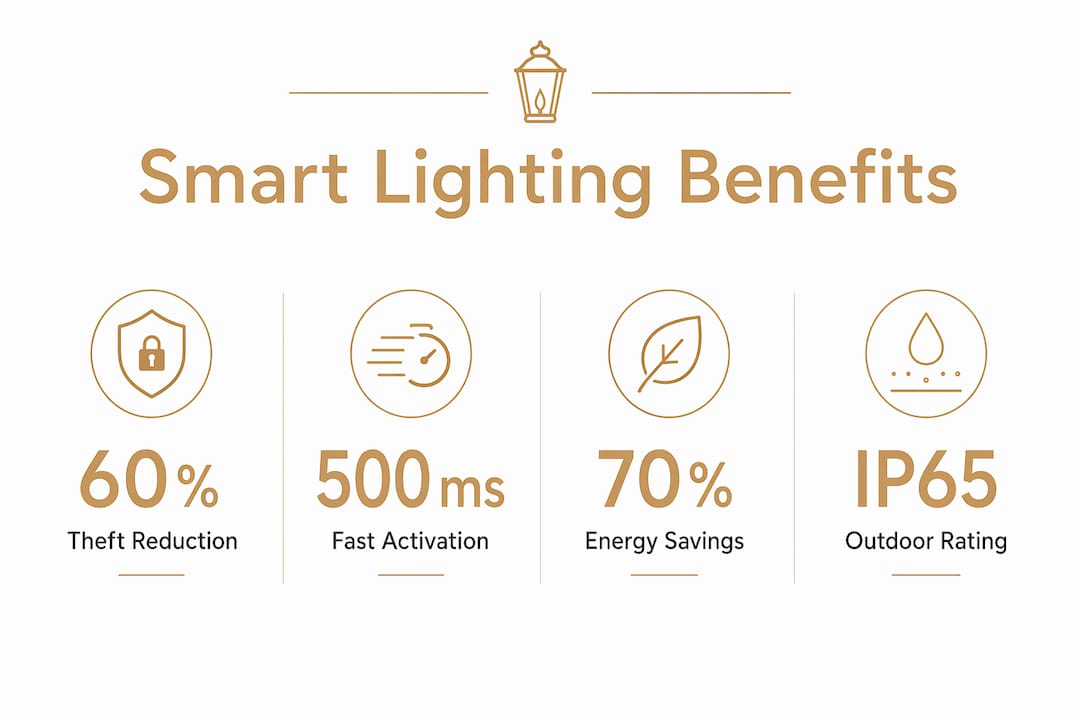
Motion-only activation takes efficiency further. When a fixture stays off until someone approaches, it consumes no power during the hours when your yard is empty. For battery-powered and solar-powered smart lights, dimming and motion-only settings improve battery life by 30–40% compared to running at constant full brightness. That difference translates directly into fewer battery replacements and lower operating costs over time.
Pro Tip: Set your pathway and garden lights to dim to 20–30% brightness after midnight. Full brightness is unnecessary when foot traffic drops, and the reduced output extends both battery life and LED lifespan.
Astronomical timers also align with dark sky-friendly lighting recommendations, which call for limiting unnecessary light pollution in residential areas. Using smart lighting controls that adapt to natural light cycles supports those guidelines without requiring any manual adjustment on your part.
Solar-powered smart fixtures add a sustainability layer by eliminating grid power consumption entirely for lower-demand zones like garden paths and accent lighting. They work best in areas with consistent sun exposure and are not ideal for high-output security floodlights that need reliable, full-brightness performance.
How to select and install smart outdoor lighting systems effectively
Choosing the right outdoor smart lighting system starts with defining your goal before you look at product specs. Security zones need fast-triggering, high-lumen floodlights. Ambiance zones like patios and garden paths need dimming capability and color control. Mixing up these priorities leads to overspending on features you will not use.
Follow these steps to build a reliable setup:
- Map your lighting zones. Identify security areas (entryways, driveways, side gates), ambiance areas (patios, decks, garden beds), and pathway areas that need consistent low-level illumination.
- Choose your connectivity standard. For one or two fixtures near your router, Wi-Fi works. For three or more fixtures spread across your property, choose a hub-based system using Zigbee, Z-Wave, or Matter to avoid dead zones.
- Match IP ratings to your climate. IP65 is the minimum for any outdoor fixture. In Charlotte and similar climates with heavy summer storms, IP67 is the safer choice for exposed fixtures.
- Check ecosystem compatibility before buying. Over 60% of homeowners report that incompatible devices and poor Wi-Fi coverage are the most common reasons their smart lighting setups fail. Confirm that your fixtures, hub, and app all work together before installation.
- Plan for professional installation on wired systems. Low-voltage landscape lighting and hardwired floodlights require proper wiring, junction boxes, and in some municipalities, a permit. A licensed installer ensures code compliance and avoids voided warranties.
- Test sensor placement before finalizing. PIR sensors have a detection range of 30–50 feet at a 120-degree angle. Position them to cover the intended zone without triggering on passing traffic or neighboring movement.
DIY installation works well for smart bulbs in existing fixtures and for battery or solar-powered standalone units. Wired systems benefit from professional landscape lighting design to get zone coverage, cable routing, and transformer sizing right the first time.
What types of smart outdoor lighting systems suit different needs?
The outdoor smart lighting market divides into five main categories, each suited to a specific application:
- Smart bulbs in outdoor-rated fixtures. The simplest entry point. Replace a standard bulb in an existing porch sconce or post light with a smart LED bulb. Works well for front doors and covered entryways where the fixture already provides weather protection.
- Integrated smart floodlights. Self-contained units with built-in motion sensors, cameras, and Wi-Fi or hub connectivity. Best for driveways, garages, and security zones that need high-lumen output and fast trigger response.
- Smart low-voltage landscape systems. Transformer-based systems that power multiple path lights, spotlights, and accent fixtures from a single hub. Ideal for full-yard coordination where you want consistent control over landscape lighting zones from one app.
- Smart string lights. Dimmable, color-adjustable string lights for patios, pergolas, and seasonal decoration. Lower security value but high ambiance impact for entertaining spaces.
- Solar and battery-powered smart fixtures. Wire-free installation for areas where running cable is impractical. Best for garden accents and pathways. Not recommended as primary security lighting due to variable output.
| Fixture type | Best use | Power source |
|---|---|---|
| Smart bulb in existing fixture | Porch, sconce, post light | Wired |
| Integrated smart floodlight | Driveway, garage, security zone | Wired |
| Low-voltage landscape system | Full-yard path and accent lighting | Wired (transformer) |
| Smart string lights | Patio, pergola, seasonal décor | Wired or battery |
| Solar or battery smart fixture | Garden paths, accent zones | Solar or battery |
Key Takeaways
Smart outdoor lighting delivers the greatest value when security, energy efficiency, and ecosystem compatibility are planned together from the start.
| Point | Details |
|---|---|
| Speed matters for security | Motion-triggered lights must activate in under 500ms to effectively deter intruders. |
| Use astronomical timers | Timers that adjust to seasonal sunrise and sunset reduce unnecessary runtime and energy use. |
| Match IP ratings to climate | IP65 is the minimum; IP67 protects smart electronics in heavy rain or flood-prone areas. |
| Mesh networks beat Wi-Fi outdoors | Zigbee, Z-Wave, or Matter hub systems provide reliable coverage across large outdoor zones. |
| Plan zones before buying | Defining security vs. ambiance zones prevents overspending and ensures the right fixture for each area. |
What I’ve learned after years of watching smart lighting setups succeed and fail
The homeowners who get the most out of smart outdoor lighting are not the ones who buy the most features. They are the ones who plan their zones carefully and choose products that work reliably together. I have seen setups with color-changing floodlights and voice control that fail every time it rains because the fixtures were rated IP44 and installed in exposed locations. Meanwhile, a simpler system with IP67 floodlights on a Zigbee hub runs without a single issue through three years of Charlotte summers.
Ecosystem compatibility is the detail most homeowners skip. Buying fixtures from three different brands because each one had a feature you liked is a reliable path to frustration. Firmware updates on one device can break compatibility with another. Pick one ecosystem and build within it. If you are not sure which one fits your home, a professional installer can assess your layout and recommend a system that will actually work together.
Sensor calibration is another area where small adjustments make a large difference. A PIR sensor aimed slightly too high will miss a person walking close to the house. One aimed at a street will trigger every time a car passes. Spend 20 minutes after installation adjusting sensitivity and angle. It prevents false triggers and ensures the system responds when it actually matters.
The impact on curb appeal is real and often underestimated. Thoughtful lighting design, with layered zones for security, pathways, and accent, changes how a property looks and feels at night. It is one of the few home improvements that delivers both a practical security benefit and a visible aesthetic upgrade simultaneously.
— Dave
Foreverglowlighting: professional smart outdoor lighting for Charlotte homeowners
Foreverglowlighting specializes in permanent, smart LED lighting systems installed directly into your roofline and landscape, giving you year-round control from your smartphone without the seasonal hassle of temporary fixtures.
Whether you need security-focused permanent lighting for your entryways and driveway or a full landscape lighting system with coordinated zones for paths, gardens, and accent features, Foreverglowlighting designs and installs systems built for Charlotte’s climate and your property’s specific layout. Every installation includes expert zone planning, weather-resistant fixture selection, and app-based control setup. Contact Foreverglowlighting today for a free estimate and see what a professionally designed smart lighting system looks like on your property.
FAQ
What does smart lighting mean outdoors?
Smart outdoor lighting refers to LED fixtures installed outside your home that connect to an app, hub, or voice assistant for remote and automated control. These systems support motion detection, scheduling, dimming, and color adjustment.
What is the best connectivity standard for outdoor smart lighting?
Hub-based systems using Zigbee, Z-Wave, or Matter provide more reliable outdoor coverage than standard Wi-Fi, which struggles to reach garages and backyards. Wi-Fi works for single fixtures close to your router.
What IP rating do outdoor smart lights need?
IP65 is the minimum rating for any outdoor smart fixture. Homeowners in areas with heavy rain or flooding should choose IP67, which protects internal electronics against temporary water immersion.
How much can smart lighting reduce package theft?
Motion-triggered smart lighting combined with automated scheduling can reduce porch package theft by approximately 60%. Lights that activate in under 500 milliseconds deliver the strongest deterrent effect.
Do smart outdoor lights save energy?
Smart outdoor lights reduce energy use through motion-only activation, dimming, and astronomical timers that adjust to seasonal sunrise and sunset times. Battery and solar-powered fixtures using these settings improve battery life by 30–40% compared to constant full-brightness operation.