
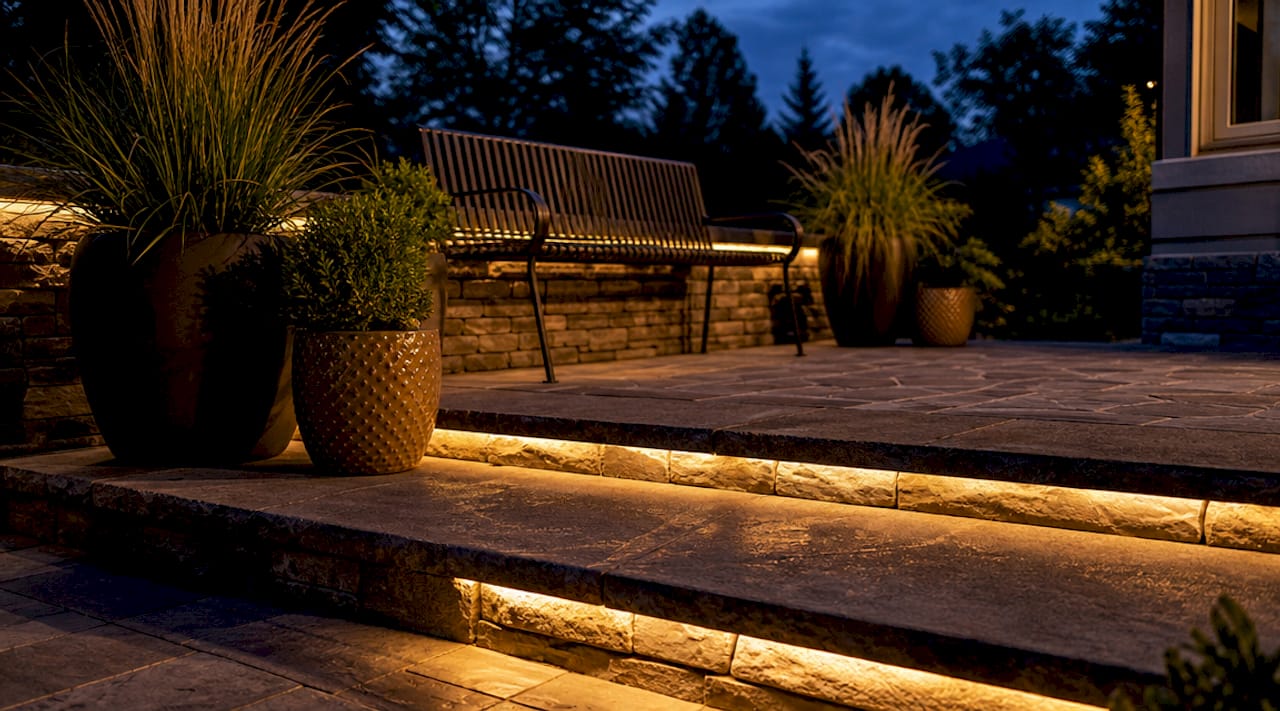
Hardscape lighting is defined as the practice of embedding lighting fixtures directly into outdoor built structures, such as stone retaining walls, steps, patios, and seating walls, to deliver focused, elegant illumination that improves both safety and visual appeal. Unlike traditional landscape lighting, which casts soft washes over garden beds and plantings, hardscape lighting integrates into the architecture itself. Modern systems use low-voltage 12V LED technology rated to IP67 waterproof standards, and quality fixtures are built to last 15–20 years with minimal maintenance. The result is a permanent outdoor lighting solution that works every night of the year, not just during the holidays.
What is hardscape lighting and why does it matter?
Hardscape lighting is the category of outdoor lighting that lives inside or directly on built structures rather than on separate poles or stakes in the ground. The fixtures become part of the hardscape itself. A step-edge LED strip glows beneath a stair tread. An under-cap light sits flush inside a retaining wall cap. A recessed fixture disappears into a patio surface. The light is visible; the hardware is not.
This approach matters for two practical reasons: safety and usability. Well-lit steps and pathways reduce trip hazards after dark, which is one of the most common causes of outdoor injuries at home. Proper outdoor lighting safety also deters trespassers by removing dark hiding spots around the perimeter of your property.
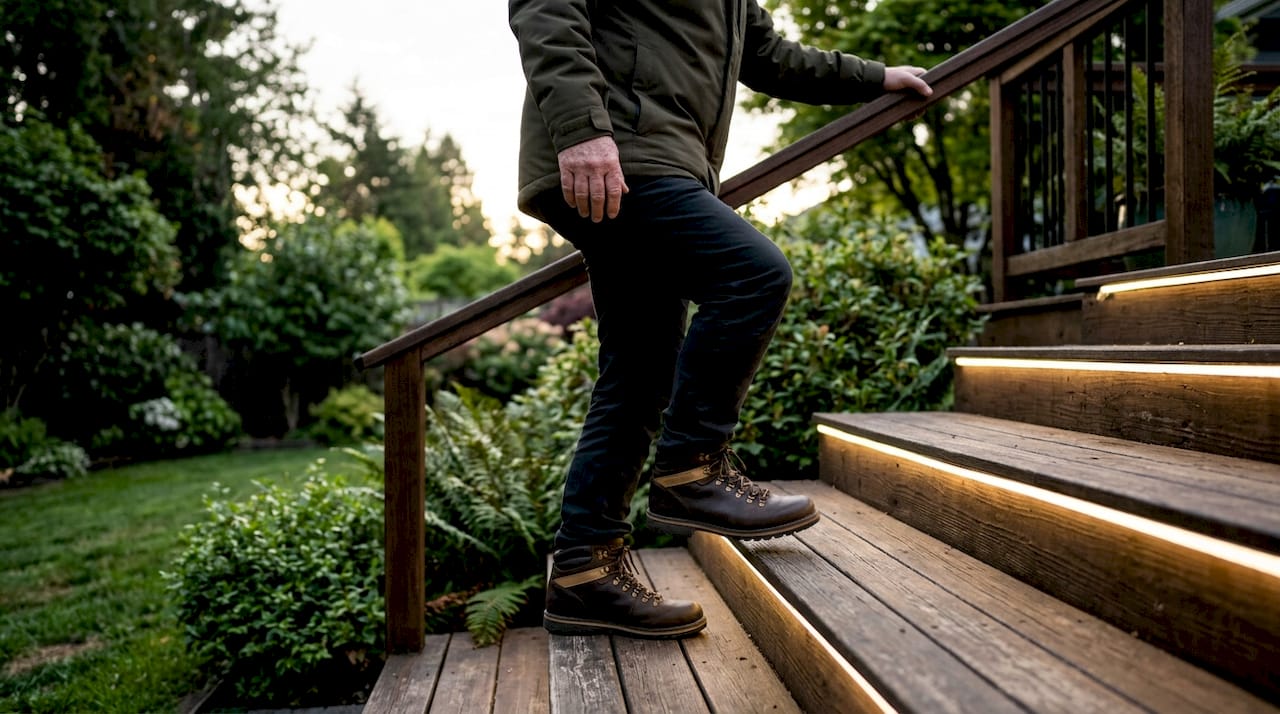
The aesthetic benefit is equally significant. Hardscape lighting creates visual depth and definition after dark, turning a plain concrete patio or stone wall into a focal point. Lighting professionals describe this as controlling what is visible at night, shaping the mood and perceived size of an outdoor space. That level of control is only possible when fixtures are built into the structure itself.
What are the common types of hardscape lighting?
Several fixture styles serve different hardscape applications. Each type is chosen based on the surface it illuminates and the effect the homeowner wants to achieve.
- Under-cap lights: Installed beneath the capstone of a retaining wall or seating wall, these fixtures cast a downward glow along the face of the wall. They are nearly invisible during the day.
- Step-edge linear LED strips: Recessed into the riser or nosing of each stair tread, these strips provide clear visibility on each step and create a clean, modern look.
- Recessed patio lights: Set flush into paving stones or concrete, these fixtures provide low-level ambient light across a patio surface without any visible hardware above grade.
- Wall sconces: Mounted on vertical surfaces like outdoor kitchen walls or pergola posts, sconces add both task lighting and decorative appeal.
The most significant technical distinction in hardscape lighting is between bare LED strips and aluminum channel systems. Bare LED strips produce visible dots of light rather than a continuous glow. Aluminum channels with integrated diffusers spread the light evenly, eliminating hotspot effects and creating a smooth, unbroken line of illumination under wall caps and step edges.
All outdoor hardscape fixtures must meet an IP67 waterproof rating or higher. IP67 means the fixture can withstand temporary submersion in water, which is the minimum standard for fixtures embedded in surfaces exposed to rain, snow, and irrigation runoff.
Pro Tip: When selecting fixtures for steps, choose a color temperature between 2700K and 3000K. This warm white range is easy on the eyes at night and complements most stone and concrete finishes without washing out the natural texture.
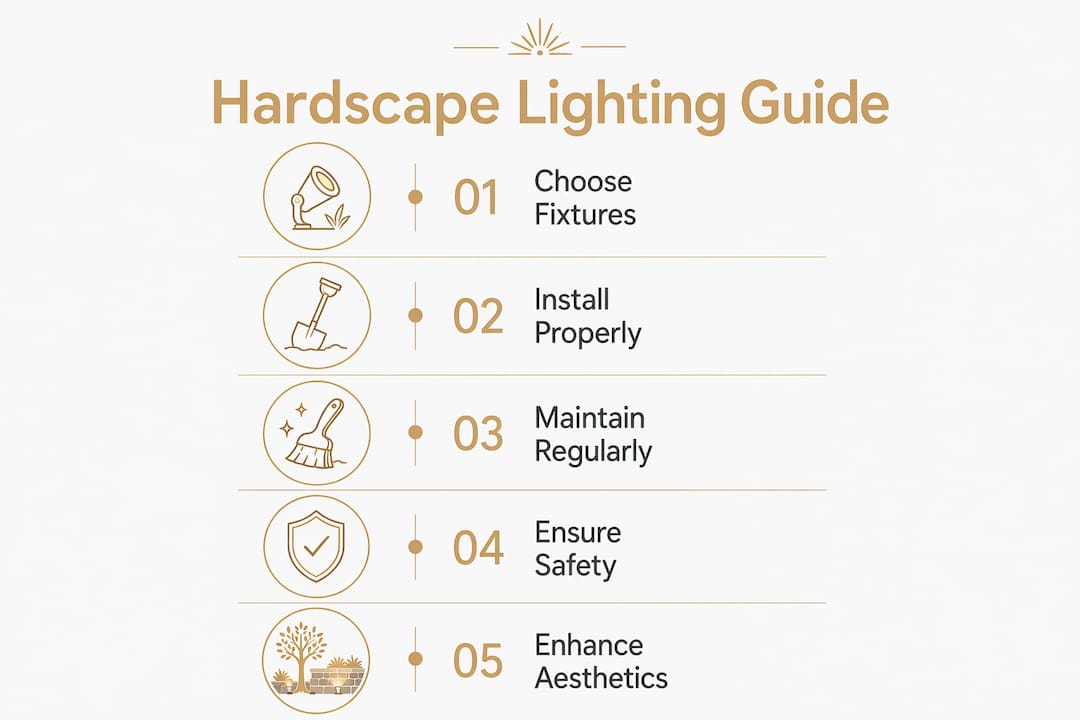
How to install hardscape lighting for lasting results
Installation quality determines whether a hardscape lighting system performs well for 15 years or fails within two. The single most important decision happens before the first stone is laid.
Integrating wiring conduit during the hardscape construction phase is far more effective than retrofitting afterward. Retrofitting requires cutting into finished surfaces, which is expensive, disruptive, and often compromises the look of the installation. Planning conduit runs during construction costs almost nothing extra and gives you clean, hidden wire paths to every fixture location.
A practical installation sequence looks like this:
- Plan fixture locations before construction begins. Mark every step, wall cap, and patio section that will receive a fixture. Run conduit through the structure as it is built.
- Size your transformer correctly. Add up the total wattage of all fixtures, then choose a transformer rated at least 20% above that total. Undersized transformers cause voltage drop, which dims fixtures unevenly across the run.
- Divide long wire runs into zones. Voltage drop is the most common technical failure in DIY hardscape lighting installs. Splitting a 100-foot run into two 50-foot zones fed from separate transformer terminals keeps brightness consistent from the first fixture to the last.
- Space uplights evenly along retaining walls. The standard guideline places uplights every 4–6 feet along the base of a stone retaining wall for balanced, dramatic illumination without dark gaps.
- Install aluminum channels with diffusers for all linear LED applications. Snap the LED strip into the channel, apply the diffuser cover, and the result is a smooth glow line rather than a dotted strip.
Pro Tip: Always use direct-burial wire rated for outdoor use between the transformer and each fixture junction. Standard indoor wire degrades quickly in soil and can create a shock hazard or a fire risk.
How does hardscape lighting work with traditional landscape lighting?
Hardscape lighting and traditional landscape lighting serve different purposes. Understanding the difference helps homeowners build a complete outdoor lighting design rather than a patchwork of fixtures.
Hardscape lighting provides directional, focused illumination on built structures. It defines edges, highlights architectural features, and guides movement through a space. Traditional landscape lighting, by contrast, casts softer washes of light over organic elements like garden beds, trees, and shrubs. It creates atmosphere and frames the natural elements of your yard.
Combining both creates what lighting designers call a layered lighting system. The three layers work together:
- Task lighting: Hardscape step lights and path lights that make movement safe after dark.
- Accent lighting: Uplights on trees, spotlights on architectural features, and wall-grazing fixtures that add visual interest.
- Ambient lighting: Soft, diffused light from recessed patio fixtures or string lights overhead that sets the overall mood of the space.
A patio with only hardscape lighting feels functional but flat. Add uplights on surrounding trees and soft ambient light overhead, and the same space feels like an outdoor room. The goal is not maximum brightness. The goal is controlled visibility that makes the space feel intentional and inviting. Hardscape lighting anchors that system by defining the structure; landscape lighting fills in the atmosphere around it.
How do you maintain hardscape lighting over time?
LED hardscape lighting systems are low-maintenance by design. Quality fixtures rated to IP67 or higher and powered by a properly sized transformer require very little attention once installed correctly.
The most common maintenance task is cleaning. Diffuser covers on linear LED strips collect dust, pollen, and grime over time, which reduces light output and creates uneven brightness. Wiping diffusers with a damp cloth twice a year keeps the glow line clean and consistent. Recessed patio fixtures benefit from the same treatment, particularly after heavy rain washes debris into the recess.
Periodic wiring inspections matter more than most homeowners expect. Rodents occasionally chew through direct-burial wire, and ground movement from freeze-thaw cycles can stress connections at fixture junction points. A quick visual check each spring catches problems before they become failures.
The most effective maintenance strategy is choosing quality components at installation. LED systems built for longevity last 15–20 years with minimal intervention. That lifespan means the cost per year of ownership is low, but only if the fixtures, wire, and transformer were specified correctly from the start.
Pro Tip: Keep a simple record of your transformer zones, fixture locations, and wire gauge used during installation. If a zone dims or fails years later, that record cuts troubleshooting time from hours to minutes.
Key Takeaways
Hardscape lighting is the most effective way to make built outdoor structures safe, usable, and visually compelling after dark.
| Point | Details |
|---|---|
| Definition and purpose | Hardscape lighting embeds fixtures into built structures like walls, steps, and patios for focused, permanent illumination. |
| IP67 rating is the minimum | All outdoor hardscape fixtures must meet IP67 waterproof standards to withstand rain, snow, and irrigation exposure. |
| Plan wiring during construction | Integrating conduit during the build phase prevents costly retrofitting and delivers cleaner aesthetics. |
| Layer hardscape with landscape lighting | Combining task, accent, and ambient lighting creates a complete outdoor environment rather than isolated bright spots. |
| LED systems last 15–20 years | Quality low-voltage LED fixtures require minimal maintenance and deliver a low cost per year of ownership over their lifespan. |
What I’ve learned from watching homeowners get this wrong
Most homeowners treat lighting as the last item on the outdoor project checklist. The patio gets built, the retaining wall goes up, and then someone asks about lighting. That sequence is the single most expensive mistake in outdoor design.
I’ve seen beautiful stone walls get cut apart to run conduit that could have been installed for almost nothing during construction. The finished result never looks as clean, and the retrofit cost often exceeds the original lighting budget. Planning lighting from day one is not a luxury. It is the only way to get a result that looks intentional.
The second mistake I see constantly is treating hardscape lighting as a standalone system. Homeowners install step lights and under-cap fixtures, then wonder why the space still feels dark and uninviting at night. Hardscape lighting defines the structure. Without landscape lighting filling in the atmosphere around it, the space looks like a parking garage, not an outdoor living room.
The best outdoor spaces I’ve seen use hardscape lighting as the skeleton and landscape lighting as the skin. Get both right, and the space becomes genuinely usable and beautiful after dark. Get only one right, and you’ve spent money on a system that underperforms every night.
— Dave
Professional hardscape lighting from Foreverglowlighting
Hardscape lighting delivers the most value when it is designed and installed as a complete system, not assembled fixture by fixture from a home improvement store.
Foreverglowlighting specializes in custom outdoor lighting design and professional installation for homeowners across Charlotte and the surrounding area. We plan wiring during the construction phase, size transformers correctly, and select IP67-rated fixtures built for the Carolina climate. The result is a system that performs consistently for years without the headaches that come from DIY installs. Contact Foreverglowlighting today for a free estimate and see what a properly designed hardscape lighting system looks like on your property.
FAQ
What is hardscape lighting used for?
Hardscape lighting illuminates built outdoor structures like retaining walls, steps, patios, and seating walls. It improves safety, extends usability after dark, and enhances the visual appeal of outdoor spaces.
What waterproof rating do hardscape lighting fixtures need?
Hardscape lighting fixtures require an IP67 waterproof rating or higher. This rating confirms the fixture can withstand temporary water submersion, which is the minimum standard for any fixture embedded in an outdoor surface.
How far apart should hardscape uplights be spaced?
Uplights along stone retaining walls should be spaced every 4–6 feet for balanced illumination. Wider spacing creates dark gaps; tighter spacing can produce an overly bright, uniform effect that loses visual depth.
Can I add hardscape lighting to an existing patio or wall?
Retrofitting is possible but significantly more expensive than planning lighting during construction. Cutting into finished hardscape surfaces to run conduit disrupts the structure and rarely produces results as clean as integrated installation.
How long do hardscape lighting systems last?
Quality low-voltage LED hardscape lighting systems last 15–20 years with minimal maintenance. Longevity depends on using IP67-rated fixtures, correctly sized transformers, and direct-burial wire rated for outdoor use.