
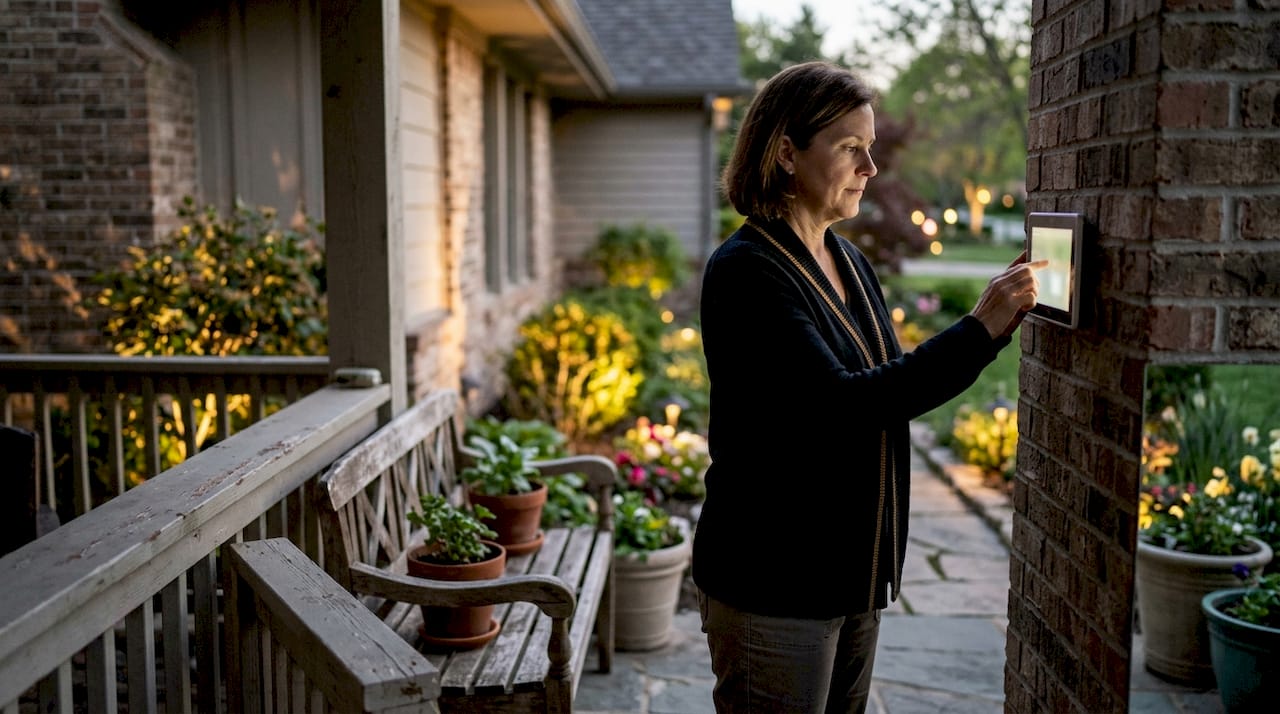
Outdoor lighting scene setting is defined as the practice of programming and controlling outdoor lights to match specific activities, moods, and times of night. It uses smart control systems to adjust intensity, color, and zones across your property, covering everything from pathway safety to party ambiance. The Illuminating Engineering Society (IES) recognizes layered outdoor lighting as the professional standard for residential spaces, combining ambient, accent, and task lighting into coordinated scenes. Foreverglowlighting designs these systems for Charlotte homeowners who want their outdoor spaces to look great every night, not just on special occasions.
What is outdoor lighting scene setting and why does it matter?
Outdoor lighting scene setting is the strategic programming of light zones to serve different functions at different times of night. Professional planning recommends at least three distinct scenes for any residential property: Everyday, Late Night, and Event. Each scene adjusts intensity, color temperature, and which zones are active.
The Everyday scene runs at moderate intensity during the evening hours, keeping pathways clear and the home looking welcoming. The Late Night scene dims most fixtures to 30–50% intensity, reducing energy use while maintaining enough light for safety. The Event scene activates full intensity across all zones, often with warmer or color-enhanced tones to support entertaining. These three scenes cover the full range of how homeowners actually use their outdoor spaces.
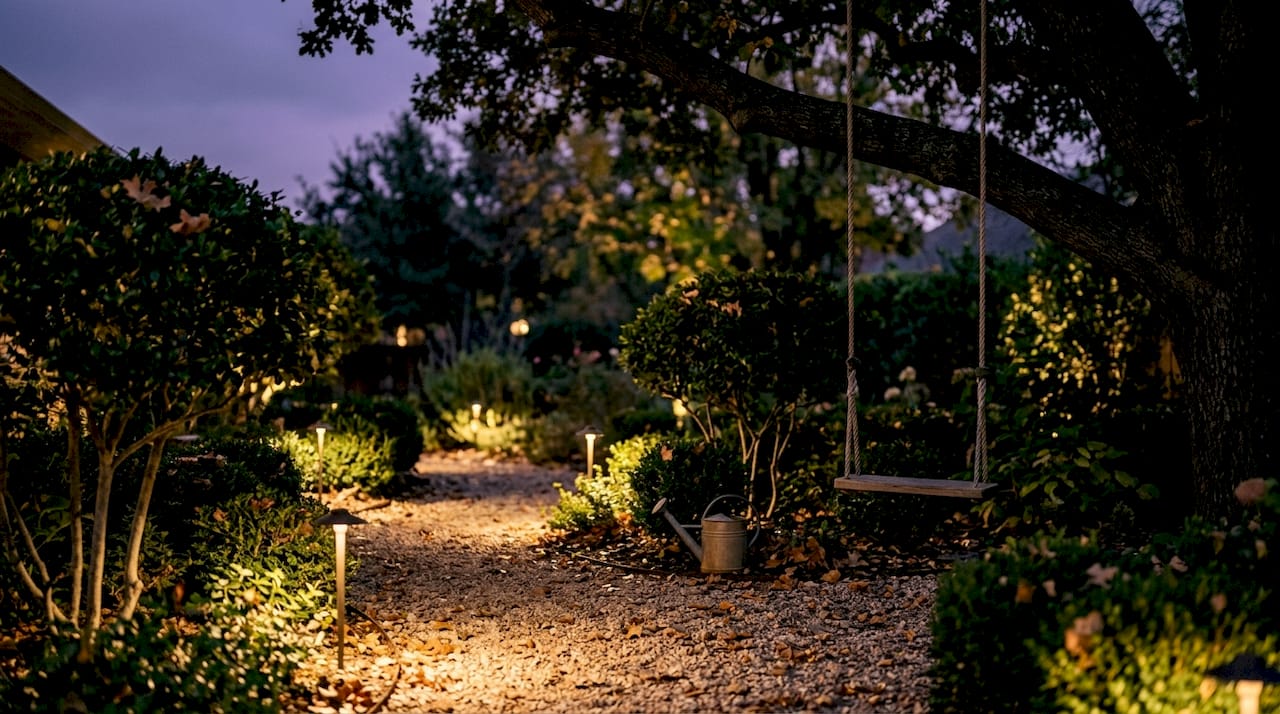
Scene setting matters because uniform brightness is a common misconception in outdoor lighting design. Layering multiple lighting types creates visual comfort, reveals texture, and supports both safety and aesthetics far better than flooding every area with the same level of light.
What are the core components of effective outdoor lighting design?
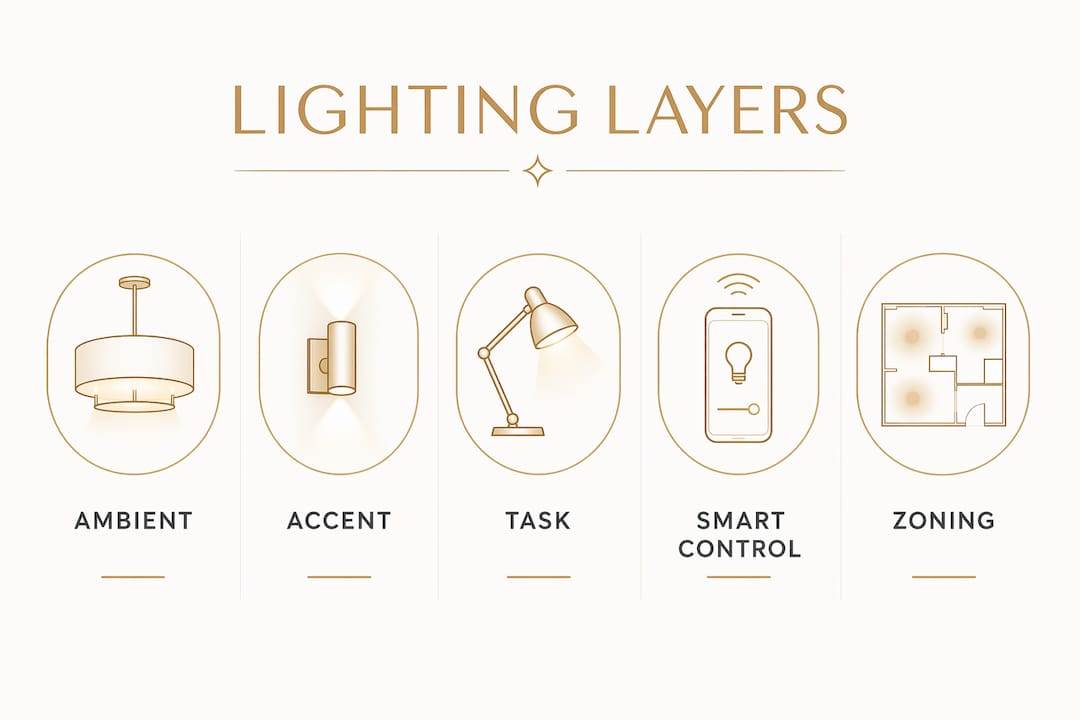
Effective outdoor lighting design uses three layers: ambient, accent, and task lighting. Each layer serves a different purpose, and all three work together to create a balanced, comfortable outdoor space.
Ambient lighting provides the overall base illumination for an outdoor area. Think of it as the background glow that makes a space feel open and safe without drawing attention to any single fixture.
Accent lighting highlights specific features. This includes uplighting on trees, wall washing on architectural details, and grazing light across stone or brick textures. Layering accent lighting reveals shapes and spatial hierarchy that daytime light takes for granted.
Task lighting handles functional areas. Pathways, steps, and outdoor kitchens all need reliable, directed light for safe use. Safe path navigation requires 1–2 foot-candles of illumination, with a contrast ratio no higher than 4:1 between the brightest and darkest areas. Exceeding that ratio creates glare and visual discomfort.
| Lighting Layer | Fixture Types | Ideal Use |
|---|---|---|
| Ambient | Post lights, wall sconces, string lights | General yard and patio illumination |
| Accent | Uplights, spotlights, well lights | Trees, architecture, garden features |
| Task | Path lights, step lights, deck lights | Walkways, stairs, outdoor kitchens |
Pro Tip: Keep your contrast ratio below 4:1 between lit and unlit areas. Higher contrast creates harsh shadows that reduce both comfort and safety.
How does outdoor lighting scene setting use smart controls and zoning?
Smart control systems are what turn a collection of outdoor fixtures into a true scene setting system. Dimming controls and zoning let homeowners shift between functional and atmospheric lighting without rewiring or changing fixtures. You program the scenes once, and the system handles the rest.
Zoning groups fixtures by function rather than location. A typical residential property might have four zones:
- Pathways and entry: Task lighting that stays on at consistent brightness for safety
- Entertainment area: Accent and ambient lighting that dims for relaxed evenings or brightens for gatherings
- Architectural features: Uplights and spotlights that can shift color temperature for different moods
- Perimeter and security: Motion-activated or scheduled lights that run at low intensity through the night
Color temperature consistency is one of the most overlooked factors in scene setting. A consistent 2700K warm white across all exterior zones creates visual harmony. Mixing warm and cool tones in the same view causes visual confusion and weakens the overall ambiance.
Automated astronomical clocks take scheduling further by activating scenes at local sunset and adjusting through the night without manual input. This supports energy efficiency and removes the need to remember to turn lights on or off. Foreverglowlighting installs systems with smartphone control, so homeowners can override any scene instantly from their phone.
Pro Tip: Before committing to a full installation, set up a small mockup with 6 accent lights and observe the effect over several nights. Most homeowners find they need less light than they initially planned.
What are best practices and common pitfalls in outdoor lighting scene setting?
The most common mistake homeowners make is over-lighting. More fixtures do not automatically produce better results. Experts advise starting with a small number of accent lights and observing their impact before expanding the layout. This approach saves money and prevents the flat, overexposed look that comes from too many fixtures at full intensity.
Most homeowners overestimate how much light their outdoor space needs. A well-placed set of 6 accent lights often creates more visual interest than 20 fixtures at full brightness. Start small, observe the effect over several nights, and add only what the space genuinely requires.
Fixture placement determines whether a scene feels polished or amateur. Visible light sources and glare destroy ambiance and cause eye strain. The goal is to see the lighting effect, not the fixture or bulb itself. Shielding, aiming angles, and recessed placement all help achieve this.
Here are the essential best practices for outdoor lighting scene setting:
- Start with a site analysis. Walk your property at night and identify which zones need safety lighting, which deserve accent treatment, and which can stay dark.
- Define zone functions before selecting fixtures. A purposeful zone layout prevents mismatched fixture choices and wasted budget.
- Space path lights every 6–10 feet. Pathway lights spaced at this interval provide even illumination without glare or clutter.
- Use uplighting with a 10°–40° beam spread for trees and architectural features. Narrower beams create drama; wider beams provide softer washes.
- Program gradual transitions between scenes. Abrupt changes in brightness are jarring. A slow fade from Event to Late Night mode feels natural and comfortable.
- Avoid mixing color temperatures. Stick to one standard, such as 2700K warm white, across all zones for a unified look.
- Revisit your scenes seasonally. Foliage changes in spring and fall affect how light travels through trees and shrubs, so scene adjustments keep results consistent year-round.
How can homeowners apply scene setting to improve safety and ambiance?
Applying outdoor lighting scene setting to your own property starts with a clear evaluation of the space. Walk the property after dark and identify three categories: areas that need reliable task lighting for safety, features worth highlighting with accent light, and zones that benefit from ambient glow for atmosphere. This evaluation shapes every decision that follows.
Once zones are defined, assign a scene function to each one. Pathways and entry points belong in every scene at consistent brightness. Entertainment areas need flexibility, bright for gatherings and dimmed for quiet evenings. Security perimeter zones work best on automated schedules tied to astronomical clocks, so they activate at sunset without any manual input.
| Scene | Intensity | Color Temperature | Primary Zones |
|---|---|---|---|
| Everyday | Moderate (60–70%) | 2700K warm white | Pathways, entry, patio |
| Late Night | Low (30–50%) | 2700K warm white | Pathways, perimeter |
| Event | Full (100%) | 2700K or color-enhanced | All zones |
| Security | Low with motion trigger | 3000K neutral white | Perimeter, entry |
Smart lighting systems from Foreverglowlighting include smartphone control, scheduling, color adjustment across millions of colors, and zone-based programming. These features let homeowners manage all four scene types from a single app without touching a single fixture. The safety benefits of layered lighting extend beyond aesthetics, reducing trip hazards on steps and paths while removing dark areas that compromise home security.
Professional landscape lighting design also reduces long-term energy costs. LED fixtures running at 30–50% intensity during Late Night scenes consume a fraction of the power of traditional lighting running at full output all night.
What I’ve learned after years of watching homeowners light their outdoor spaces
The single biggest mistake I see is treating outdoor lighting like indoor lighting. Homeowners often want every corner bright, every shadow eliminated. That instinct produces flat, uninviting spaces that look more like a parking lot than a home.
The outdoor spaces that genuinely impress people share one quality: restraint. They use light to reveal, not to flood. A single well-aimed uplight on a mature oak tree does more for a backyard than six floodlights pointed at the lawn. Scene setting is the tool that makes restraint practical, because you can program a dramatic Event scene for Saturday night and return to a subtle Everyday scene by Sunday morning without touching a single fixture.
Technology has made this easier than most homeowners expect. Once a system is programmed, it runs on its own. The astronomical clock handles the schedule, the zones handle the grouping, and the smartphone handles any override. The complexity lives in the setup, not the daily use.
My honest recommendation: involve a professional for the initial design and zone layout, then take ownership of the scene programming yourself. You know your habits better than any designer does. You know when you host, when you want privacy, and when security matters most. A good system gives you that control. A good designer makes sure the fixtures are placed where the control actually works.
— Dave
Foreverglowlighting’s approach to outdoor scene setting
Foreverglowlighting brings professional scene programming and custom LED installation to Charlotte homeowners who want results without the guesswork of a DIY approach.
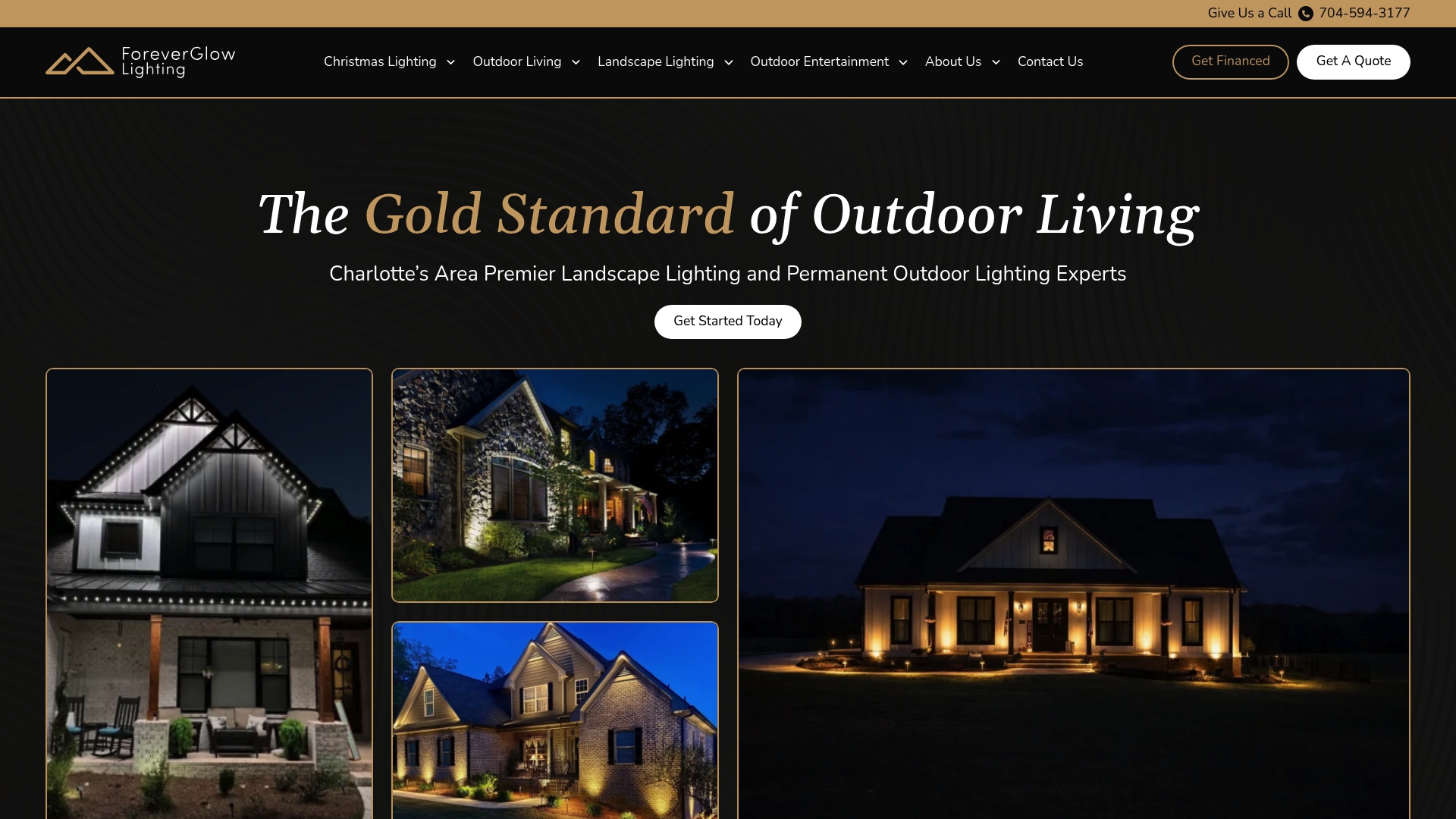
Our permanent LED track systems install along your roofline and integrate with zone-based smart controls, giving you full scene management from your smartphone. Whether you need reliable pathway safety, architectural accent lighting, or full-color event scenes, we design and install systems built for your specific property. Our landscape lighting services cover everything from initial site analysis to final scene programming. Contact Foreverglowlighting today for a free estimate and see what a professionally designed scene setting system looks like on your home.
FAQ
What is outdoor lighting scene setting?
Outdoor lighting scene setting is the practice of programming smart control systems to adjust the intensity, color, and active zones of outdoor fixtures for different activities and times of night. Professional standards recommend at least three scenes: Everyday, Late Night, and Event.
How many lighting scenes does a residential property need?
Most residential properties benefit from three to four scenes: Everyday, Late Night, Event, and a Security scene with motion activation. Each scene serves a distinct function and can be automated to activate on a schedule.
What color temperature works best for outdoor scene setting?
A consistent 2700K warm white is the standard recommendation for residential outdoor lighting. Mixing warm and cool tones across zones creates visual confusion and reduces the overall quality of the ambiance.
How far apart should path lights be spaced?
Path lights should be spaced every 6–10 feet to provide even illumination without glare or clutter. This spacing works for most residential walkways and garden paths.
Can outdoor lighting scene setting improve home security?
Layered outdoor lighting with automated scheduling removes dark areas around a property and increases the likelihood that any suspicious activity is visible. A Late Night security scene running at 30–50% intensity provides consistent coverage without the energy cost of full-brightness operation all night.