
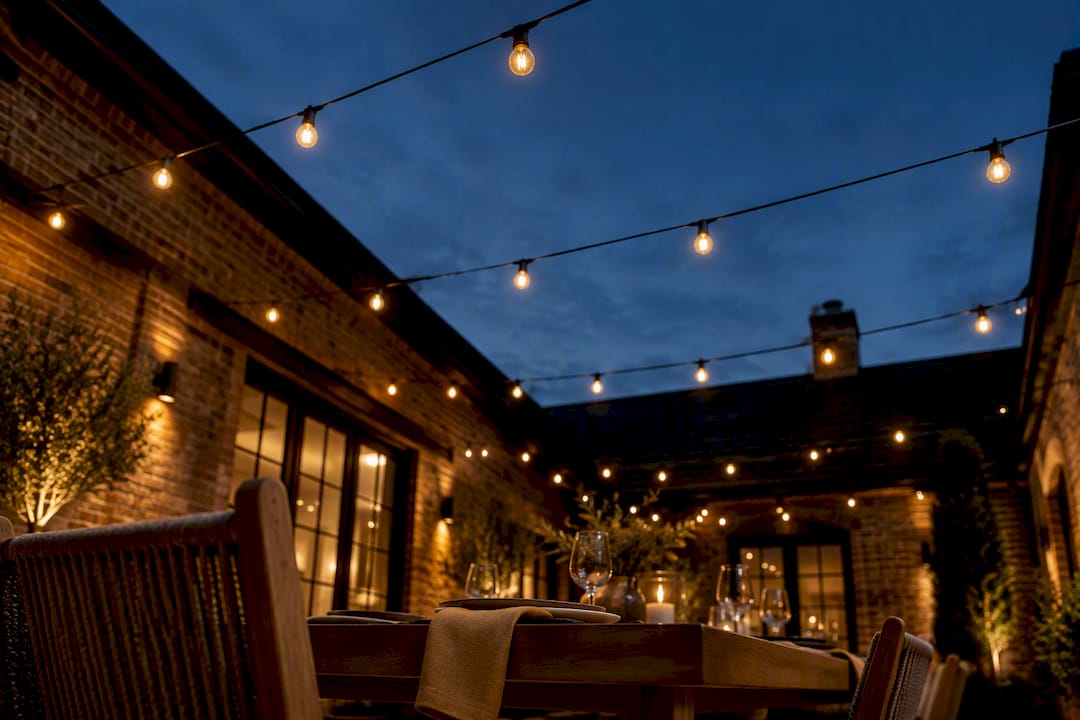
A canopy or zigzag of warm white bistro lights transforms a plain patio into a café-style dining space, and either pattern is achievable with a handful of anchors and the right bulbs. The best bistro lighting ideas rely on a small set of proven layouts: canopy, zigzag, draped, and tree-wrap, paired with warm color temperature and correct mounting height. This guide walks through the patterns, the layout math, bulb choices, safety checks, and when a permanent installed system beats a plug-in string.
TL;DR:
- Using tension wire systems for permanent bistro lighting ensures the run remains straight and stable in wind, reducing sag and stretch over time.
- Warm white bulbs between 2200K and 3000K create the most inviting café atmosphere by flattering skin tones and food, especially when layered with other lighting.
- Over dining areas, a dense canopy pattern provides the strongest visual impact, while zigzag and draped patterns work better for larger or more relaxed outdoor spaces.
- Anchoring options vary from hooks and eye bolts to magnetic mounts and tension wires, with permanent systems recommended for year-round use and professional installation.
- Smart controls with app-based dimming and color options enhance flexibility, but power source choices influence whether plug-in strings or wired setups are more suitable.
Table of Contents
- Bistro Lighting Ideas Worth Copying
- How to Plan and Hang Bistro Lights the Right Way
- Picking Bulbs and Controls That Set the Right Mood
- Matching the Layout to Your Space
- Keeping Bistro Lights Safe and Working for Years
- When a Permanent Install Beats a Plug-In String
- Get a Free Estimate for Permanent Bistro Lighting
- Sources
- FAQ
Bistro Lighting Ideas Worth Copying
Most successful outdoor lighting setups borrow from a short list of layouts that professional installers and hospitality designers return to again and again. Each one solves a different problem, whether that’s covering a dinner table, lighting a whole party, or softening a hard architectural line.
- Canopy over the dining table. A dense overhead grid of string lights, crisscrossed between four or more anchor points, drops warm light directly onto the table and creates the strongest café feel of any layout. It works best over a defined seating area rather than a whole yard, since the visual weight comes from density, not length.
- Zigzag or fan from house to posts. Running strings in a fan pattern from the house eaves out to several posts or trees covers a broad area with fewer strings than a canopy needs, which makes it a practical choice for parties and larger gatherings.
- Draped or woven overhead runs. Letting strings sag gently between anchors, rather than pulling them taut, adds a softer, more textured look. This pattern reads as more relaxed and works well over lounge seating rather than a formal table.
- Straight lines or crosshatch along a pergola. Pergola rafters give you a built-in frame, so running lights in parallel lines or a simple crosshatch grid looks intentional without much extra hardware.
- Tree-wraps and branch-hangs. Wrapping trunks and draping lower branches adds vertical interest at the edges of a yard, which helps a canopy or zigzag over the patio feel like part of a larger, layered scene rather than an isolated island of light.
None of these patterns work in isolation forever. Layering string or bistro lights with path lights and accent uplighting adds the depth that separates a genuinely inviting patio from one that just has lights strung across it. Combining a canopy overhead with low uplighting on a tree or wall gives the eye multiple planes to rest on, which is closer to how a real café balances its light sources.
How to Plan and Hang Bistro Lights the Right Way
Getting the pattern right on paper only matters if the installation holds up outdoors. Start by measuring the actual run length between anchor points, then check the bulb spacing on your chosen string (most run 12 inches apart) to calculate how many sockets and strings you’ll need to fill the space without stretching a string past its rated length.
Height matters more than most people expect. For any run over a dining or walking area, keep the lowest bulbs at 8 to 10 feet above the ground so no one clips a string reaching up from a chair, and so the light spreads rather than glares directly into eyes at table height.
Anchor choices depend on how permanent you want the result to be:
- Hooks or eye bolts screwed into fascia, posts, or pergola beams work for most temporary and seasonal setups.
- Freestanding poles let you create a canopy or zigzag with no structure to attach to, useful for open patios or rental properties.
- Tension wire systems stretch a steel cable between anchors first, then clip lights to the wire instead of hanging their own weight, which keeps the run straight and low sag through wind and time.
- No-drill options, like magnetic mounts on metal pergola frames or clamp-style brackets, suit anyone who can’t put a hole in the structure.
Tension wire is the better call for anything meant to stay up year-round; hooks and simple string weight are fine for a few weekends of entertaining but sag and stretch under longer-term wind and heat exposure. If your run spans a long distance, or crosses a large open area with real wind exposure, a professional install is worth pricing out before you commit to a DIY hook layout.
Pro Tip: Buy one extra string and a handful of spare bulbs before you start. A single burned-out bulb in an older incandescent-style string can take out the rest of that run, and having a replacement on hand means you fix it in minutes instead of driving back to the store mid-party.
Picking Bulbs and Controls That Set the Right Mood
Color temperature does more to create a café feel than any layout choice. Warm white bulbs in the 2200K to 3000K range mimic old-style incandescent glow, and lighting guides built for dining spaces consistently point to that lower range as the coziest option, since it flatters both skin tones and food in a way cooler white light doesn’t.
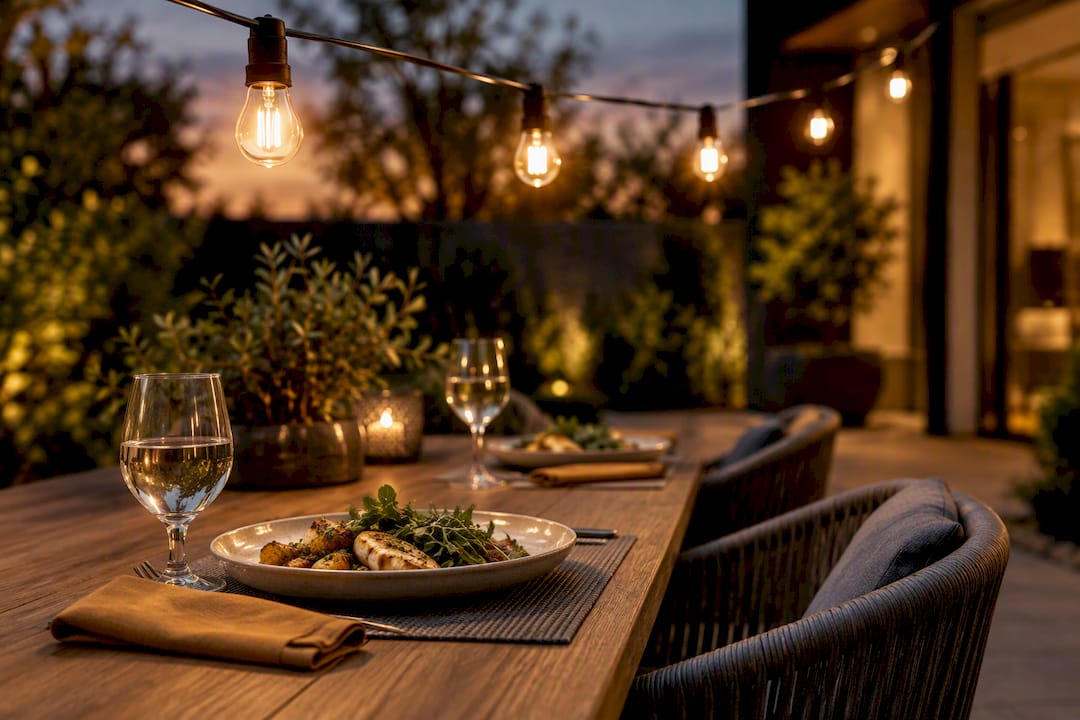
LED has mostly replaced incandescent bistro bulbs for good reason: lower energy draw, far longer bulb life, and less heat near fabric umbrellas or dry foliage. Several outdoor LED string light lines now pair a 2200K warm white output with shatter-resistant bulbs and heavy-duty cording rated for year-round exposure, which matters if your patio sees real weather.
A few things worth checking before you buy:
- Confirm the IP (Ingress Protection) rating is suited for outdoor, uncovered exposure, not just “outdoor safe” in fine print.
- Look for shatter-resistant or acrylic bulbs near seating areas, since glass breakage near a dinner table is a real hazard.
- Decide whether you want dimmable strings or a smart controller. Being able to dial the same install from a lively party brightness down to a quiet dinner glow is one of the most underrated upgrades a homeowner can make.
- Smart outdoor string lights now offer app control, tens of millions of color options, and higher waterproof ratings for anyone who wants scene changes at the tap of a phone rather than classic, fixed warm globes.
Power source shapes which of these options are realistic. Plug-in sets are the fastest path to trying a layout, but a permanently wired system removes extension cords from the equation and supports smart dimming controls that plug-in strings usually can’t match.
Matching the Layout to Your Space
The same patterns play out differently depending on what you’re lighting. A patio built for dinner parties calls for a different approach than a narrow garden path or a small balcony.
- Patio dining areas do best with a canopy focused tightly over the table, paired with low uplighting along the perimeter so the edges of the space don’t fall into total darkness once the overhead lights come on.
- Pergolas give you rafters to work with directly, or a tension wire run across the beams for a cleaner line; metal-framed pergolas are a good candidate for magnetic, no-drill mounting hardware if you’re renting or don’t want permanent holes.
- Decks and lounge areas call for a softer, lower-intensity drape rather than a bright canopy, and pairing that drape with dedicated deck and step lighting keeps stair edges visible once the ambient light dims.
- Gardens and paths benefit from strings run tree to tree along a walkway, with branch-wraps adding depth at the edges, guiding guests without a single bright floodlight.
- Balconies and small patios usually look best with one clean line or a single perimeter run. A dense canopy in a tight space reads as cluttered rather than cozy.
Keeping Bistro Lights Safe and Working for Years
Bistro lights that look great in July can turn into a maintenance headache by the following spring if a few basics get skipped.
- Check IP ratings on connectors, not just bulbs, and plug outdoor strings into GFCI-protected outlets to guard against shock in wet conditions.
- Inspect the run each season for frayed cords or sockets that have worked loose, and wipe bulbs down gently rather than blasting them with a hose.
- Coil temporary strings loosely for storage instead of wrapping them tightly, which prevents cracked housings and stressed wiring over winter.
- Respect the manufacturer’s maximum number of strings connected end to end. Overloading one circuit or daisy-chaining too many sets is a common cause of tripped breakers and premature bulb failure.
- If you’re replacing the same string every year or two, that’s usually the signal it’s time to upgrade to a permanent, engineered system rather than keep patching a temporary one.
When a Permanent Install Beats a Plug-In String
Plug-in strings are the right call for a single party or a rental. But once you’re rehanging the same lights every spring, replacing sagging cords, or wishing you could dim the whole yard from your phone, the math shifts toward a permanent system, one engineered for HOA compliance, wind load, and smart control instead of a hook and a hope.
— Dave
Get a Free Estimate for Permanent Bistro Lighting
Permanent patio and bistro lighting systems built around commercial-grade, climate-optimized hardware offer a durable alternative to seasonal strings that need rehanging every year. Unlike plug-in kits that provide one fixed color and a wall switch, permanent lighting systems can offer smart controls, dimming, and maintenance options, allowing versatile use for different occasions without ladder use.
A free estimate covers a full site walk of your patio, pergola, or deck, layout options for canopy, zigzag, or draped patterns, a look at control options including app-based dimming and color scenes, and straightforward budgeting so there are no surprises once the crew shows up. If your yard also needs step or deck lighting worked into the plan, that gets covered in the same visit. Start by requesting a quote through Bistro & String Lighting or explore the full patio lighting services page to see what a permanent install actually looks like before you commit.
Sources
- How to design the lighting for an indoor-outdoor café — IKEA Business
- Govee Outdoor Clear Bulb String Lights — Govee US
FAQ
What’s the difference between string lights and bistro lights?
“String lights” is the broad category covering any lights strung along a wire or cord, while bistro lights specifically refer to the warm, round-bulb style modeled after classic café patio lighting. Bistro lights almost always use warm white bulbs in a lower color temperature range, rather than the cooler or multicolor bulbs found on general-purpose string lights.
How do I set up bistro lights?
Measure your run length first, pick anchor points (hooks, poles, or a tension wire system), then hang strings so the lowest bulbs sit 8 to 10 feet above any walking or dining area. Choose a pattern, canopy, zigzag, or draped, based on whether you’re lighting a table, a whole yard, or a lounge space, then plug into a GFCI-protected outlet or wire the run into a permanent circuit.
What café lighting is most inviting?
Warm white bulbs in the 2200K to 3000K range read as the most inviting because they mimic old-style incandescent glow and flatter food and skin tones better than cooler light. Layering that warm decorative lighting with accent and path lighting rather than relying on one source alone is what gives a space real café depth.
What are some unique and quirky lighting ideas?
Tree-wraps that follow individual branches, mixed-height draped runs over a lounge area, and smart color-changing bistro lights that shift from warm white for dinner to a colored scene for a party all break from the standard straight-line look. Combining a canopy over the table with branch-wraps at the yard’s edges also creates a layered, less predictable effect than a single flat pattern.
Should I install bistro lights myself or hire a professional?
A simple plug-in string over a small patio is a reasonable DIY weekend project. Longer runs, spans with real wind exposure, or any setup you want to leave up permanently are better handled with a professional tension wire install, which is worth requesting a free estimate for before buying hardware.