
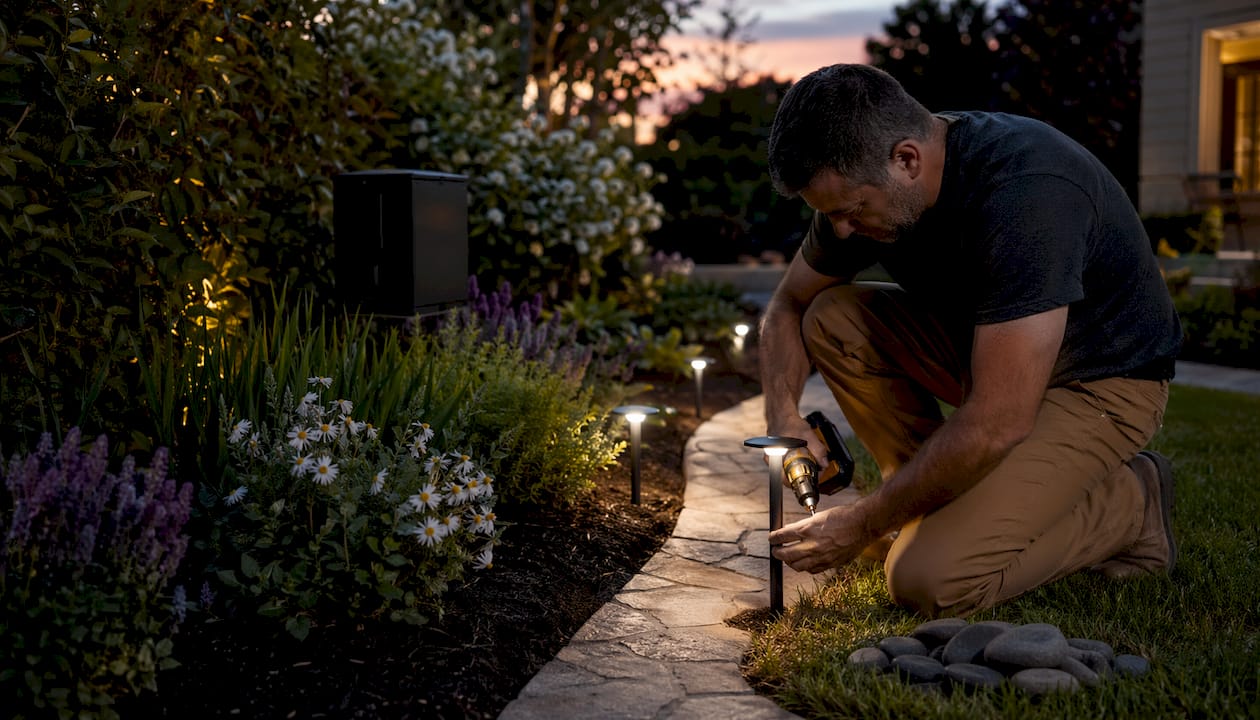
LED landscape lighting is defined as the use of light-emitting diode technology to illuminate outdoor spaces, including pathways, trees, architectural features, and garden beds. The role of LED in landscape lighting goes far beyond simple illumination. LEDs deliver energy savings of 85–90% compared to traditional halogen systems, while lasting more than ten times longer. They also give homeowners precise control over brightness, color temperature, and scheduling. Foreverglowlighting, Charlotte’s leading permanent outdoor lighting provider, builds every custom system around LED technology because the performance difference is not marginal. It is fundamental.
How do LED lights improve energy efficiency and durability?
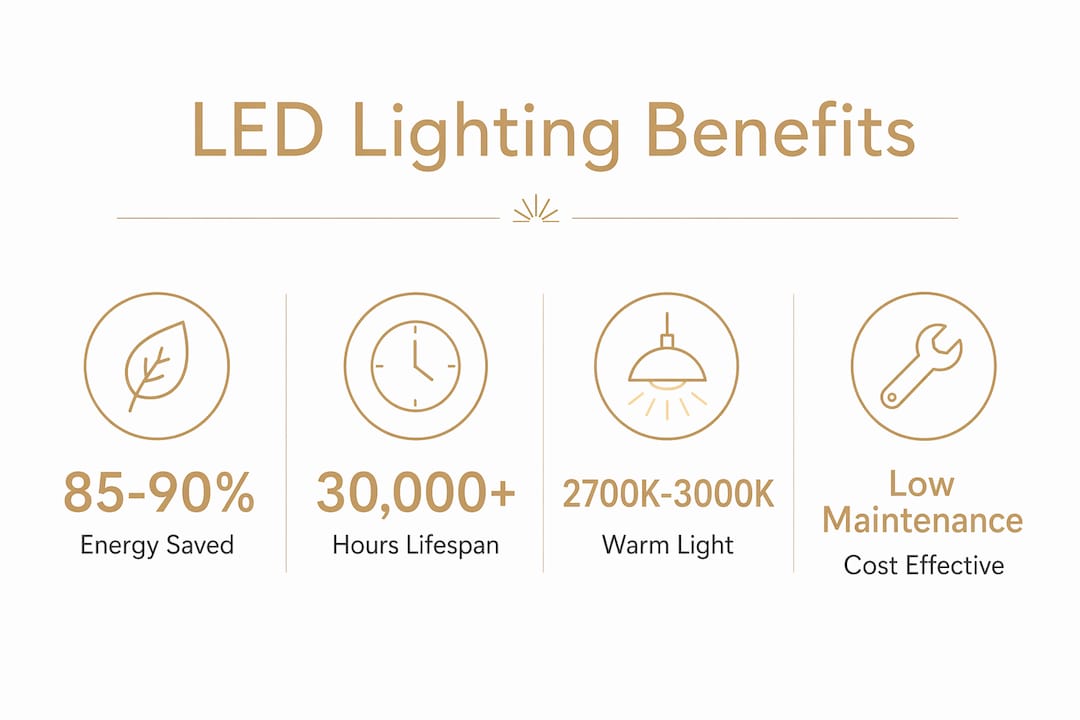
A 5-watt LED produces light comparable to a 35–50 watt halogen bulb. That single fact explains why energy consumption drops by 85–90% when homeowners switch from halogen to LED landscape systems. For a yard with 20 fixtures running four hours a night, that reduction translates to a meaningful drop in monthly utility costs without sacrificing brightness.
Durability is the other major advantage. LED lamps exceed 30,000 hours of operational life, while standard halogen bulbs last only 2,000–3,000 hours. That is more than a 10x difference. A homeowner who installs LED fixtures today may not need to replace a single bulb for over a decade, compared to replacing halogens every one to two years.
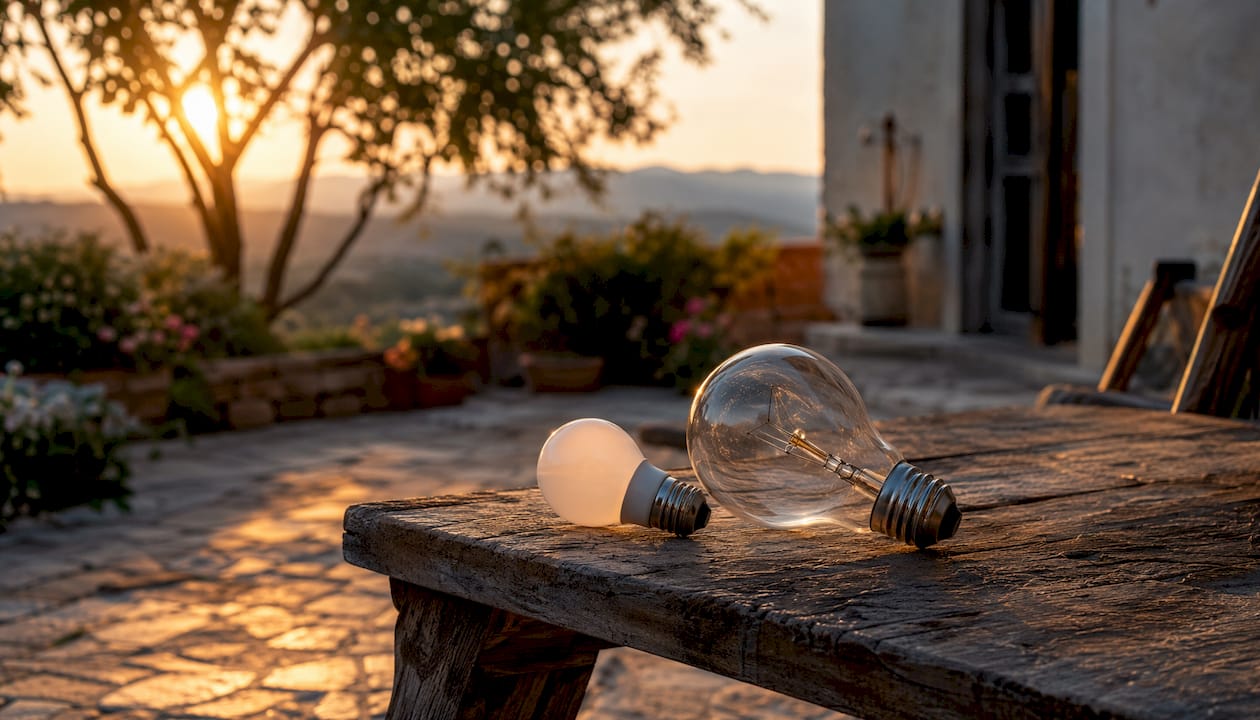
Lower maintenance frequency also reduces the risk of fixtures being left dark due to burned-out bulbs. A well-lit yard is a safer yard. Foreverglowlighting designs systems with this long-term reliability in mind, selecting fixtures rated for outdoor exposure and thermal stability. The result is consistent performance with minimal upkeep.
What types of LED bulbs are used in landscape lighting?
Choosing the right LED bulb type is as important as choosing the right fixture. The two most common bases in LED landscape bulbs are the MR16 and the G4 bi-pin. MR16 bulbs are the workhorses of accent and spotlighting. G4 bi-pins appear in smaller path lights and decorative fixtures where a compact form is needed.
Beam angle determines whether a fixture washes a surface broadly or focuses light tightly on a single point. Spot angles typically run around 38°, while flood or wash angles reach 45° or wider. Narrow beams work well for uplighting a tree trunk or highlighting architectural details. Wider beams suit pathway lighting and ground-level wash effects.
Color temperature shapes how a yard feels at night. Most landscape applications use bulbs in the 2700K to 3000K range, which produces a warm white light that looks natural against plants and stone. A Color Rendering Index (CRI) of 80 or above ensures that colors appear accurate rather than washed out. Higher CRI values matter most when lighting plants with rich green or red tones.
Pro Tip: Always match your replacement bulb’s beam angle and color temperature to the original fixture spec. Swapping a 38° spot for a 45° flood in a tree uplight will spread the beam too wide and dilute the visual impact.
| Bulb type | Base | Beam angle | Best use |
|---|---|---|---|
| MR16 LED | GU5.3 | 38°–45° | Spotlighting, uplighting |
| G4 bi-pin LED | G4 | Wide | Path lights, small fixtures |
| PAR36 LED | Screw terminal | Narrow to medium | Flood and area lighting |
| Integrated LED | Fixed | Varies | Modern fixtures with built-in arrays |
Fixture compatibility is a practical concern when retrofitting. Not every MR16 LED works in every MR16 fixture. Heat dissipation and housing design affect bulb longevity significantly. Aluminum housings draw heat away from the LED chip. Enclosed fixtures that trap heat shorten bulb life, even if the bulb is rated for 30,000 hours in open air.
What is the role of dimmers in landscape lighting?
Dimmers are not just an energy-saving tool. They are a core design element. Professional dimming systems allow brightness adjustment from 100% down to approximately 10%, giving homeowners full control over ambiance. A front walkway lit at 100% for security can drop to 30% for a dinner party without changing a single fixture.
Compatibility is where most homeowners run into problems. Successful LED dimming requires alignment between four components: the transformer type, the dimmer control protocol, the LED driver inside the bulb, and the wire gauge. A mismatch at any point in that chain causes buzzing, flickering, or lights that fade unpredictably.
Magnetic transformers require a minimum load to function correctly with LEDs. Electronic transformers handle low wattage loads more efficiently and are generally the better choice for LED systems. The dimmer protocol also matters. TRIAC, ELV, PWM, and 0-10V are all different control methods, and each requires compatible hardware throughout the system.
Smart controls add another layer of capability. Z-Wave relays on low-voltage circuits enable zone control, scheduling, and security integration without requiring proprietary apps. Most installations use on/off relay control for simplicity. True dimming through smart systems requires compatible hardware and is worth confirming with a professional before purchase.
Pro Tip: Avoid installing a standard 120V line-voltage dimmer on a low-voltage LED landscape circuit. Input-side dimming at line voltage is often ineffective and can damage LED drivers. Control dimming on the 12V side using PWM or a compatible electronic controller instead.
- Use electronic transformers rated for LED loads.
- Match the dimmer protocol to the LED driver specification.
- Confirm minimum and maximum load ratings before adding or removing fixtures.
- Test for flicker at low brightness levels before finalizing installation.
- For smart outdoor lighting, use dedicated compatible transformers or PWM controllers rather than adapting legacy hardware.
How should you install and maintain LED landscape lighting?
Transformer sizing is the first decision in any LED landscape lighting installation. The transformer must handle the total wattage of all connected fixtures, plus a safety buffer of roughly 20%. Undersizing a transformer causes voltage drop, which dims fixtures unevenly and shortens LED life. Oversizing wastes money but causes no harm.
Voltage drop is a real problem in longer cable runs. When voltage falls below the fixture’s rated input, LEDs produce less light and may flicker. The two standard solutions are increasing wire gauge or using a multi-tap transformer that allows voltage adjustment at different output terminals. Wire gauge selection depends on the total load and the cable run length. Heavier gauge wire carries more current with less resistance.
Retrofitting an existing halogen system to LED requires checking transformer compatibility. Many older magnetic transformers do not perform well with the low wattage draw of LED bulbs. Replacing the transformer with an electronic model rated for LED loads is often the most reliable fix. Fixture sockets and wiring can usually stay in place.
Recommended installation best practices:
- Calculate total fixture wattage and add 20% to determine minimum transformer capacity.
- Select wire gauge based on total load and run length to minimize voltage drop.
- Use electronic transformers rated for LED minimum loads.
- Test each zone for flicker and consistent brightness before burying cables.
- Install fixtures with aluminum housings to manage heat and extend bulb life.
- Schedule an annual system check to inspect connections, clean lenses, and verify voltage at fixture terminals.
Pro Tip: A professional landscape lighting design review before installation catches transformer sizing errors and voltage drop issues before they become expensive problems. The cost of a design consultation is far less than rewiring a finished system.
Well-designed LED lighting also contributes directly to home safety. Consistent illumination on pathways, steps, and entry points reduces trip hazards and removes dark areas where intruders could hide. A system that stays bright and reliable for years delivers that safety benefit without ongoing maintenance costs.
Key Takeaways
LED technology is the definitive standard for landscape lighting because it combines 85–90% energy savings, lifespans exceeding 30,000 hours, and precise dimming control that halogen systems cannot match.
| Point | Details |
|---|---|
| Energy efficiency | A 5W LED replaces a 35–50W halogen, cutting energy use by up to 90%. |
| Lifespan advantage | LEDs last over 30,000 hours, more than 10x longer than halogen bulbs. |
| Dimmer compatibility | Transformer type, dimmer protocol, and LED driver must all align to avoid flicker. |
| Bulb selection | Match beam angle and color temperature (2700K–3000K) to the specific landscape application. |
| Installation quality | Proper transformer sizing and wire gauge selection prevent voltage drop and uneven brightness. |
What I’ve learned after years of watching LED systems succeed and fail
The biggest mistake I see homeowners make is treating LED landscape lighting as a simple bulb swap. They pull out the halogens, drop in LED MR16s, and wonder why half the fixtures flicker or the transformer hums all night. The bulbs are not the problem. The system around them is.
Heat management is the detail most people overlook entirely. I have seen brand-new LED bulbs fail within a year because they were installed in enclosed fixtures that trapped heat. The bulb’s rated lifespan assumes it runs cool. Put it in a sealed housing and that 30,000-hour rating becomes meaningless.
Dimming compatibility is the second area where I see consistent frustration. Homeowners buy a smart dimmer, wire it in, and get a buzzing transformer and lights that won’t dim below 50%. The fix is almost always the same: replace the magnetic transformer with an electronic model and confirm the dimmer protocol matches the LED driver. That combination works. Guessing at compatibility does not.
The homeowners who get the best results are the ones who think about the whole system before buying a single fixture. Wiring quality, transformer selection, fixture housing, and control protocol all interact. Get one wrong and the others suffer. Get all four right and you have a system that runs beautifully for a decade with almost no attention.
— Dave
Foreverglowlighting’s approach to LED landscape lighting
Foreverglowlighting designs and installs custom LED landscape lighting systems for homeowners across Charlotte and the surrounding area. Every system starts with a professional design review that accounts for transformer sizing, wire routing, fixture selection, and control compatibility before a single cable goes in the ground.

Whether you want subtle pathway lighting, dramatic architectural uplighting, or a fully automated system you control from your phone, the team at Foreverglowlighting builds it to last. Explore the full range of LED landscape lighting options and request a free estimate today. If your current system is underperforming, a lighting system upgrade consultation can identify exactly what needs to change and what can stay.
FAQ
What is the main benefit of LED over halogen in landscape lighting?
LEDs use 85–90% less energy than halogen bulbs while producing comparable brightness. They also last more than 10 times longer, which reduces both energy costs and maintenance frequency.
What color temperature works best for outdoor landscape lighting?
The 2700K to 3000K range produces warm white light that looks natural against plants, stone, and wood. A CRI of 80 or above keeps colors accurate and prevents a washed-out appearance.
Why do LED landscape lights flicker after installation?
Flickering is almost always a compatibility issue between the transformer type, dimmer protocol, and LED driver. Magnetic transformers often require a minimum load that LED systems do not meet, causing instability.
Do I need a special transformer for LED landscape lighting?
Yes. Electronic transformers handle the low wattage draw of LED loads more reliably than older magnetic models. Using the wrong transformer type is the most common cause of flickering and buzzing in LED systems.
Can I control LED landscape lights with a smart home system?
Smart control is possible using Z-Wave relays or compatible PWM controllers on low-voltage circuits. On/off scheduling works reliably in most setups. True dimming through smart systems requires compatible hardware confirmed before installation.