
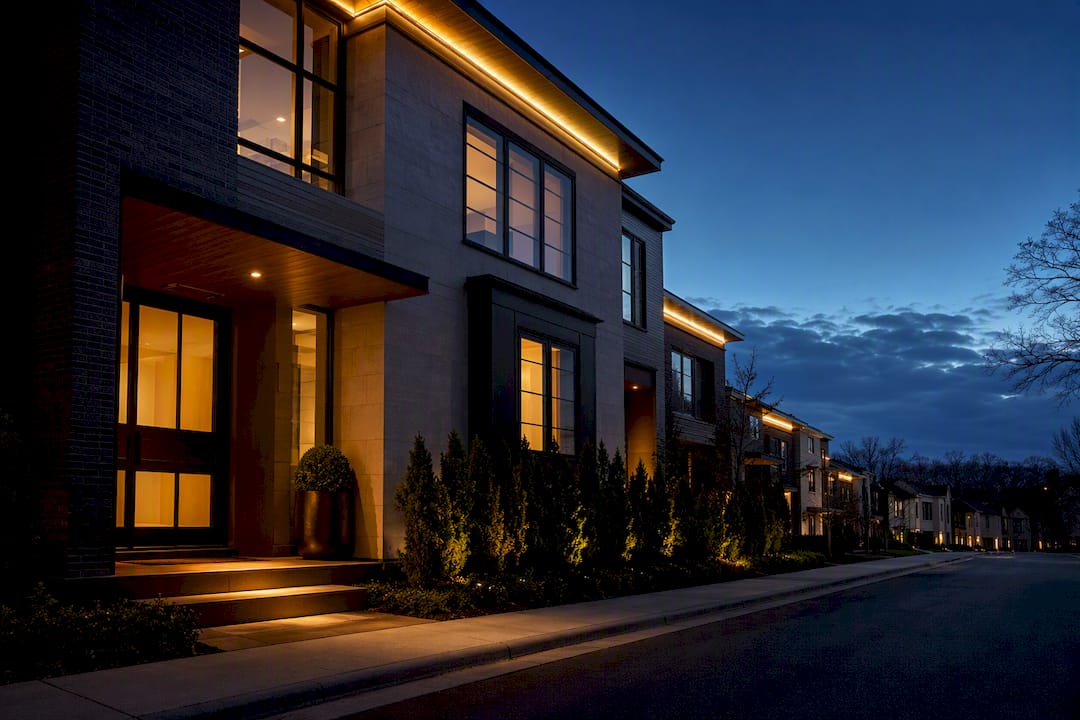
Yes, most HOAs can regulate outdoor and holiday lighting under their CC&Rs and architectural guidelines, covering fixture style, brightness, color, and placement. The single next step is checking your community’s CC&Rs and ARC (Architectural Review Committee) requirements before you install anything permanent or seasonal. Boards typically restrict color temperature, cap lumen output, require shielded fixtures, and set curfews as part of common flagpole types and footing rules for home or business regulations that homeowners should also consider when planning exterior features.
TL;DR:
- HOAs can regulate outdoor lighting fixture style, placement, brightness, color temperature, and curfews, but approval must follow community-specific review processes.
- Permanent lighting installations are treated as exterior modifications requiring ARC approval, with standards often including warm white color temperatures between 2700K and 3000K.
- An ARC request should include detailed spec sheets, site photos, wiring plans, installation credentials, and a simple summary of key settings to prevent delays or denials.
- Using concealed wiring, downward-aimed fixtures, and default white settings reduces the likelihood of HOA pushback and streamlines approval.
- Most HOA violations stem from skipping ARC approval or installing fixtures with cool-white or blue-rich light; providing documented settings can help avoid disputes.
Table of Contents
- What Can HOAs Regulate About Outdoor Lighting?
- Permanent Lighting vs. Holiday Lighting: Why the Rules Differ
- How Does the ARC Approval and Enforcement Process Work?
- What Technical Standards Do HOAs Cite Most Often?
- What Should You Include in an ARC Request?
- Installation Choices That Reduce HOA Pushback
- An Installer’s View on Avoiding Lighting Disputes
- Get an ARC-Ready Lighting System From Forever Glow Lighting
- Sources
- FAQ
What Can HOAs Regulate About Outdoor Lighting?
HOA authority over lighting comes from three documents: the CC&Rs (covenants, conditions, and restrictions), the bylaws, and separate architectural guidelines the board adopts and updates. Together, these give the board legal standing to require review before a homeowner changes anything visible from the street or a neighboring lot.
In practice, boards commonly regulate:
- Fixture style and finish — matching approved materials and colors to keep the community’s exterior look consistent
- Mounting height and placement — where fixtures can sit relative to rooflines, walkways, and property lines
- Brightness and lumen caps — limits designed to prevent glare spilling onto neighboring yards
- Color temperature — often restricted to warm white tones outside holiday windows
- Motion versus steady illumination — security lights are frequently exempted from decorative restrictions
- Timers and curfews — automatic shutoff times for non-security lighting
Security lighting tends to get more leeway since it serves a safety purpose, but even then, many sample community policies require it to be shielded so it doesn’t shine directly into a neighbor’s windows.
Permanent Lighting vs. Holiday Lighting: Why the Rules Differ
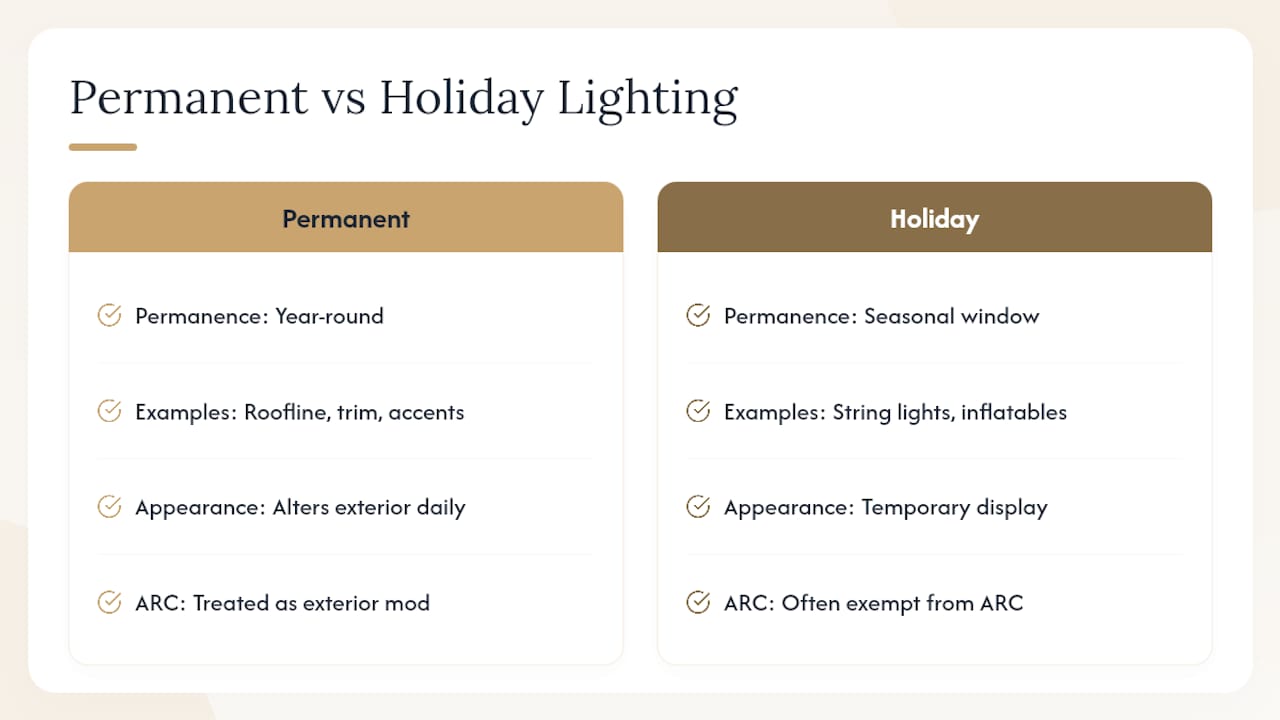
Permanent lighting includes roofline tracks, trim lighting, and architectural accents wired into the structure of the home. Temporary holiday lighting includes string lights, inflatables, and seasonal displays taken down after a set window. The distinction matters because permanent systems change a home’s exterior appearance every day of the year, not just in December.
That’s why permanent installations are usually treated as exterior modifications requiring ARC approval, the same category as a new fence or a repainted door. Mulcahy Law Firm’s guidance on permanent lighting advises boards to draft standards specific to permanent systems rather than stretch holiday-decor rules to cover them. Common policy choices include a required default white state outside holidays, limits on animated color effects, and mandatory professional installation to guarantee code compliance and neat wiring.
How Does the ARC Approval and Enforcement Process Work?
Getting lighting approved follows a fairly consistent sequence across most communities, even though exact forms vary by board.
- Submit an ARC application with spec sheets showing lumen output and color temperature, photos of the planned location, a mounting plan, and installer credentials if a professional is doing the work.
- Wait for review, typically 30 to 60 days depending on the community’s bylaws. If you hear nothing by the stated deadline, follow up in writing and ask for a status update on record.
- Install only after written approval arrives, not a verbal green light from a board member at a meeting.
If a violation happens anyway, enforcement generally follows a process of written notice, a cure period to fix the issue, and potential fines or removal orders per community rules. Most governing documents also guarantee a hearing or appeal right before penalties become final, according to LegalClarity’s rundown of HOA exterior lighting rules. Skipping the ARC step entirely is the fastest way to end up at step three of that process.
What Technical Standards Do HOAs Cite Most Often?
Boards leaning on real lighting science tend to converge on a handful of numbers and terms, and knowing them before you buy fixtures saves a redo.
- Color temperature: warm white in the 2700K to 3000K range is the most commonly approved band, largely because blue-rich light at night has been linked to disrupted sleep, giving boards a health-adjacent reason to favor amber tones over cool white or blue.
- Lumen caps: front-entry accent lighting usually faces tighter limits than dedicated security fixtures, which get more brightness allowance in exchange for motion-activation or timer controls.
- Shielding: fixtures are commonly required to be full-cutoff or downward-facing to stop light trespass onto neighboring lots.
- Animated effects: banned outside approved holiday windows in most sample policies.
Many associations require decorative, non-security lighting to shut off by 11:00 p.m. nightly, with light trespass onto neighboring property cited as one of the most common grounds for HOA fines, according to Mulcahy Law Firm.
DarkSky’s Five Principles (Useful, Targeted, Low Level, Controlled, Warm-colored) back up nearly every one of these rules and give boards a ready-made framework instead of writing standards from scratch.
What Should You Include in an ARC Request?
A complete ARC package rarely gets delayed. An incomplete one almost always does. Here’s what belongs in the submission:
- Manufacturer spec sheets showing lumens and color temperature (Kelvin rating) for every fixture type
- Photos of the installation site and a simple site plan marking fixture locations
- The wiring route, noting where cables will be concealed or buried
- Mounting details, including height and attachment method
- Installer credentials or a copy of their license and insurance
- A screenshot or written description of the default white profile the system will use outside holidays
Submit everything at once rather than trickle it in over multiple emails. Ask the board to confirm approval in writing, and keep a folder with every timestamp and reply. If the board denies the request, ask specifically what would make it approvable. Negotiation over timer settings or a locked default color often resolves a denial faster than a formal appeal.
Pro Tip: Attach a one-page summary at the top of your ARC packet that lists the color temperature, lumen count, and curfew setting in plain language. Reviewers approve faster when they don’t have to dig through spec sheets to find the three numbers they actually care about.
If a request gets denied and negotiation stalls, most CC&Rs outline a formal appeal or hearing process, and persistent disputes sometimes warrant a consultation with a real estate attorney familiar with community association law.
Installation Choices That Reduce HOA Pushback
Boards approve requests faster when the technical details are already handled. A few choices consistently make that difference:
- Concealed tracks and color-matched trim that blend into the roofline instead of standing out as visible hardware
- Recessed or buried wiring so nothing is exposed for a reviewer, or a neighbor, to flag
- Downward-aimed fixtures that keep light on the property instead of spilling onto the street or next door
- Locked default-white settings with holiday color changes limited to a scheduled window
- Documented installer settings that a board can reference if a question comes up later
Pro Tip: Ask your installer for a written settings sheet showing the default color temperature, curfew time, and holiday schedule. Handing that document to the ARC alongside your application answers half their usual questions before they’re asked.
A maintenance plan or warranty backing the system also reassures boards that a malfunctioning fixture won’t sit broken and noncompliant for months.
An Installer’s View on Avoiding Lighting Disputes
The same mistakes show up again and again: homeowners skip the ARC application, install cool-blue fixtures instead of warm white, or leave wiring exposed along the fascia. A technical partner who prepares ARC-ready documentation upfront, and offers timed color use or reversible settings as a compromise, resolves most board objections before they become violations.
— Dave
Get an ARC-Ready Lighting System From Forever Glow Lighting
Foreverglowlighting is the alternative to a ladder, a box of tangled string lights, and a guessing game with your board. Every installation is designed with concealed wiring, color-matched trim, and downward-aimed fixtures, plus a documented default white profile you can hand straight to your ARC alongside your application.
Smart controls allow homeowners to lock a default white state year-round and open a scheduled holiday window only when the board has signed off, a common compromise many boards accept. The GlowCare Maintenance Subscription keeps that system running correctly long after installation day, which matters if your board ever asks for proof that the fixtures still meet the settings you submitted. Whether you want a permanent holiday display or architectural accent lighting along your roofline, Forever Glow Lighting builds the spec sheet and installer documentation into the project from day one. Request a free estimate and ask about an ARC-ready lighting package for your next board meeting.
Sources
Share Mulcahy Law Firm’s legal guidance for drafting language, DarkSky’s principles for technical best practices, and a sample community policy for example wording. If your property sits near a coastline, also check municipal conservation ordinances, since rules like sea turtle lighting restrictions can override HOA preferences entirely.
- Homeowners associations | DarkSky
- HOA exterior lighting rules, restrictions, and penalties – LegalClarity
FAQ
Do HOAs have to change the outdoor lamp?
No. HOAs typically require homeowners to submit lighting changes for ARC approval, but the association itself isn’t obligated to replace or upgrade existing fixtures unless its governing documents say otherwise.
My neighbor’s outside lights are too bright. What can I do?
File a written complaint with your HOA board citing the specific rule violated, such as unshielded fixtures or exceeding lumen caps; most associations investigate light trespass complaints through the standard notice-and-cure process.
What is the 5’7" lighting rule?
This isn’t a recognized standard in HOA or municipal lighting codes; definitions of it vary by source, so treat any claim about a universal “5’7” rule" with caution and check your specific community’s guidelines instead.
What are the new outdoor lighting rules for homeowners associations in 2026?
Specific state-level HOA legislation changes yearly and varies widely, so check your state’s official HOA statute updates directly. What has stayed consistent across most communities is the trend toward requiring ARC approval for permanent systems and citing warm color temperatures like 2700K to 3000K as the preferred standard.
Does Forever Glow Lighting handle HOA-compliant installations?
Yes. Forever Glow Lighting designs installations with concealed wiring, color-matched trim, and documented default-white settings intended to meet common HOA and architectural review requirements; current pricing is available by requesting a free estimate.