
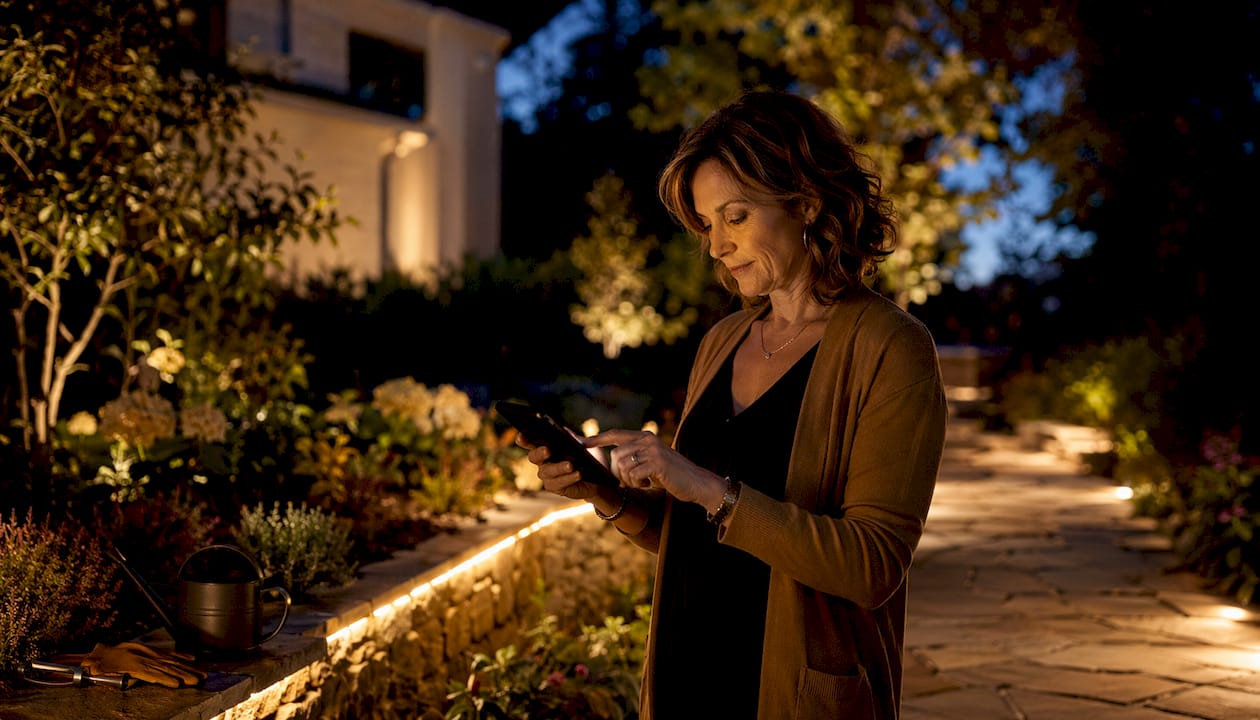
Seasonal lighting automation is defined as the use of timers, smart controllers, and location-aware scheduling to turn outdoor lights on and off automatically based on time of year, sunset and sunrise times, and preset scenes. For homeowners and property managers, this means your holiday and architectural lighting runs exactly when you want it, without manual intervention. Automated lighting systems deliver 40–60% energy savings compared to traditional incandescent setups by eliminating the hours lights run unnecessarily. The result is a property that looks polished every evening, costs less to operate, and requires far less hands-on effort throughout the year.
What is seasonal lighting automation and how does it work?
Seasonal lighting automation works through a combination of smart plugs, digital timers, dedicated controllers, and smartphone apps that communicate over Wi-Fi, Zigbee, or Bluetooth. Each device type serves a different level of complexity. A basic smart plug handles simple on/off scheduling for a single outlet. A dedicated lighting controller manages multiple zones, color scenes, and effects across an entire roofline or landscape.
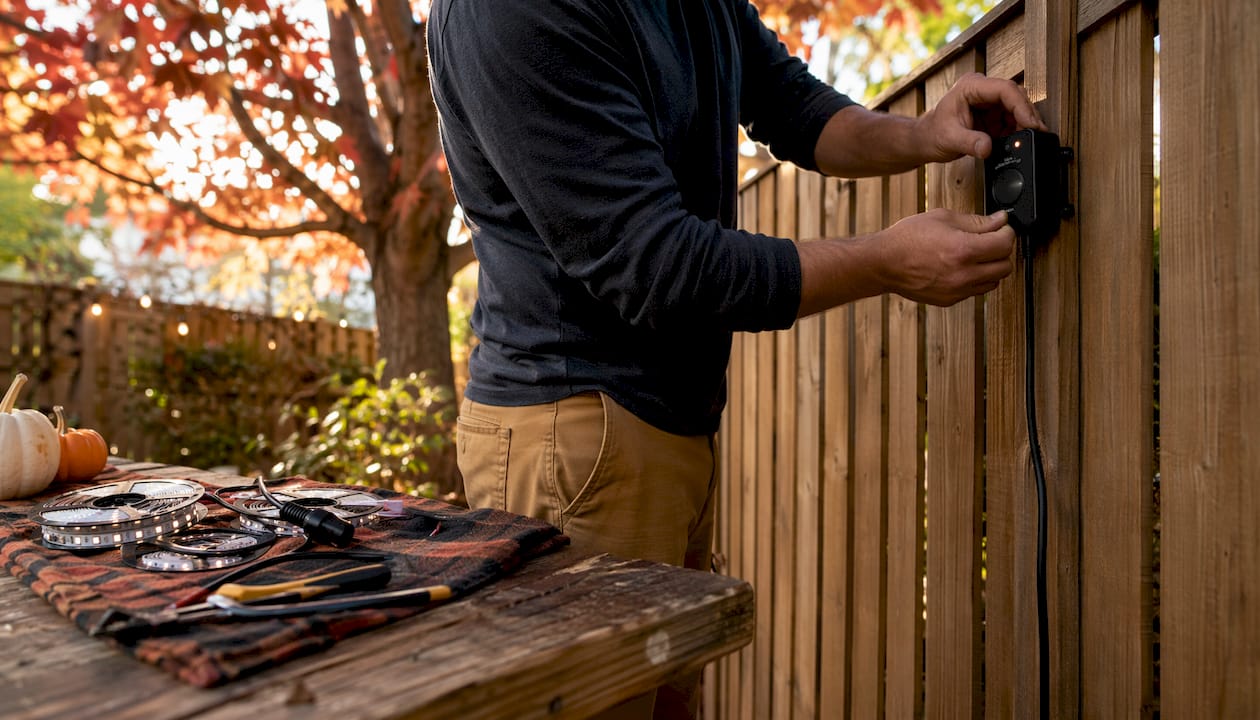
The most reliable scheduling method uses astronomical clock settings, also called sunset-relative triggers. Sunset shifts roughly 90 minutes between late november and late december, which means a fixed 5:30 PM timer becomes inaccurate by mid-season. Astronomical scheduling reads your geographic coordinates and adjusts the on/off time daily, so lights activate at dusk regardless of the date.
Zoning lights by area adds another layer of control. Front roofline, backyard, and pathway lights can each run on separate schedules and color scenes. A property manager handling multiple units can assign different brightness levels or holiday themes to each zone without touching a single switch.
- Smart plugs: Entry-level control for one or two circuits; supports basic scheduling and remote on/off
- Digital timers with astronomical clocks: Adjust automatically for seasonal daylight shifts; no manual reprogramming needed
- Dedicated LED controllers: Manage multiple zones, color effects, and music sync; connect via Wi-Fi or Zigbee
- Smartphone apps: Provide remote access, scene creation, and schedule editing from anywhere
Pro Tip: Set your controller to activate lights 10 minutes after calculated sunset rather than exactly at sunset. This accounts for twilight and gives your property a more natural, polished appearance every evening.
How does automation improve energy efficiency and reliability?
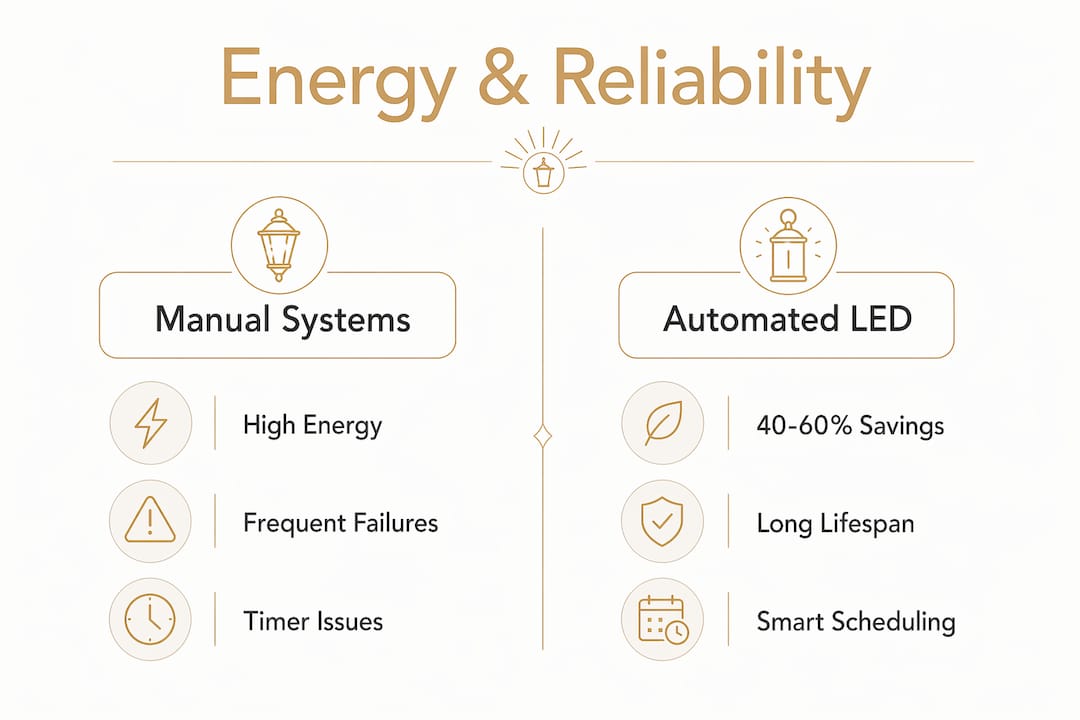
Automated seasonal lighting delivers 40–60% energy savings compared to traditional incandescent lights by scheduling light use precisely. Manual systems frequently leave lights running two to three extra hours daily. Those extra hours add up to significant wasted electricity across a full holiday season.
Reliability is the other major gain. 68% of homeowners with traditional outdoor lights experienced timer or scheduling failures at least once per season. Mechanical dial timers lose accuracy, battery-backed clocks drift, and manual habits slip. Automated systems connected to the internet maintain accurate time and adjust for daylight saving changes without any input from the homeowner.
Permanent architectural LED lighting systems raise the reliability bar further. LED systems rated at 50,000 hours translate to 10–15 years of daily use. That lifespan eliminates the annual cycle of untangling, testing, and replacing string lights that most homeowners dread.
Power planning is the one technical detail that separates a reliable system from a frustrating one. Overloading lighting zones causes voltage drop, which produces flickering and color inaccuracy in LED strips. Expert installers calculate current draw per linear foot before assigning lights to a zone.
Pro Tip: Before adding lights to an existing zone, calculate the total wattage of all connected fixtures. Stay below 80% of the controller’s rated capacity to maintain consistent brightness and color accuracy.
| Factor | Manual/Traditional Systems | Automated LED Systems |
|---|---|---|
| Energy use | High; lights often run 2–3 extra hours daily | Reduced 40–60% through precise scheduling |
| Timer reliability | 68% of homeowners report seasonal failures | Internet-synced schedules maintain accuracy |
| Lifespan | Seasonal string lights replaced annually | Permanent LEDs rated for 10–15 years |
| Maintenance effort | Annual setup, storage, and replacement | Minimal; software updates handle schedule changes |
Temporary versus permanent seasonal lighting systems
Temporary string lights and permanent architectural LED systems serve different needs, and understanding the difference shapes every automation decision a homeowner makes. Temporary lights are flexible and inexpensive upfront, but they require annual installation, storage, and replacement. Permanent systems carry a higher initial cost and require professional installation, but they operate year-round and integrate directly with smart home controllers.
Low-voltage LED lighting systems reduce shock risk and generate less heat than line-voltage string lights. That safety advantage matters on rooflines and in areas where children or pets are present. Permanent systems mount flush to the roofline and remain invisible during daylight hours, which preserves the home’s architectural appearance.
For homeowners who use holiday lighting for three weeks a year, a quality temporary setup with a smart plug and astronomical timer delivers solid results at low cost. For homeowners who want year-round residential holiday lighting, a permanent LED system pays for itself through eliminated replacement costs, reduced labor, and the ability to switch between holiday themes, security lighting, and accent scenes with a single tap.
Property managers benefit most from permanent systems. A single controller can schedule different color themes for halloween, thanksgiving, and christmas without any physical changes to the installation. The landscape lighting safety benefits of a permanent system also extend beyond aesthetics, providing consistent visibility for residents and deterring unauthorized access year-round.
Best practices for implementing seasonal lighting automation
A phased approach produces the most reliable results. Starting with one zone and one controller lets you learn the scheduling software before expanding to the full property.
- Audit your circuits first. Identify which outdoor outlets are on dedicated circuits and note their amperage. This prevents overloading before you purchase any equipment.
- Choose sunset-relative scheduling from day one. Location-aware automation adjusts daily for seasonal daylight shifts, so your lights always activate at the right time without manual updates.
- Create named zones for each area. Label zones clearly in your app: “front roofline,” “driveway path,” “backyard patio.” Clear labels make seasonal scene changes fast and error-free.
- Build scenes for each holiday or season. Most controllers let you save color and brightness combinations as named scenes. Create a “Christmas” scene, a “Halloween” scene, and a “standard accent” scene so switching themes takes seconds.
- Set maintenance reminders. Schedule a 15-minute annual check of all connections, controller firmware, and mounting hardware. Catching a loose connector early prevents a full zone failure during peak season.
- Test schedules two weeks before each holiday. Run the full automation cycle in daylight to confirm every zone activates correctly. Fixing a scheduling error before guests arrive is far easier than troubleshooting it on the night of a party.
- Plan storage for any temporary components. Label storage bins by zone and include a printed copy of your schedule settings. This eliminates setup time the following year.
For outdoor lighting scene setting, the most effective approach pairs a permanent LED base layer with a few temporary accent pieces for specific holidays. The permanent system handles daily scheduling and security lighting, while the temporary pieces add seasonal character without requiring a full reinstall each year.
Key takeaways
Seasonal lighting automation saves energy, reduces maintenance, and keeps your property looking its best year-round when built on location-aware scheduling and properly sized zones.
| Point | Details |
|---|---|
| Define your scheduling method | Use sunset-relative triggers, not fixed clock timers, to stay accurate across seasonal daylight shifts. |
| Size zones correctly | Stay below 80% of controller capacity to prevent voltage drop and color inconsistency. |
| Permanent systems outperform temporary ones | LED systems rated for 50,000 hours eliminate annual replacement costs and integrate with full smart home control. |
| Start with one zone | A phased rollout lets you learn the system before committing to a full property installation. |
| Automation prevents common failures | Internet-synced schedules eliminate the timer drift and manual errors that affect 68% of traditional setups. |
Why I think most homeowners underestimate this technology
The first thing I notice when homeowners describe their holiday lighting frustrations is that they are solving the wrong problem. They buy better string lights when the real issue is the scheduling method. A $15 mechanical dial timer will fail you every season. A location-aware controller that costs a bit more will run flawlessly for years.
The second mistake I see regularly is ignoring power limits. People add one more strand, then another, and wonder why the last section flickers. Proper power planning is not optional. It is the foundation of a system that works reliably on the night it matters most.
The future of this technology points toward interoperability standards like Matter and Thread, which allow devices from different manufacturers to communicate on a single platform. That means the controller you install today will likely work with whatever smart home system you adopt in five years. Starting now, even with a modest setup, positions you ahead of that curve.
My honest recommendation is to treat seasonal lighting automation as a long-term home improvement, not a seasonal project. The homeowners who get the most value from it are the ones who install a permanent LED base layer, set up proper zone scheduling, and then simply update their scenes each season. The ladder stays in the garage. The lights look professional every single night.
— Dave
Foreverglowlighting: professional seasonal lighting for Charlotte homeowners
Foreverglowlighting specializes in permanent outdoor LED systems that make seasonal lighting automation genuinely hands-free. Our track systems mount flush to your roofline, invisible during the day and fully programmable at night through a smartphone app that controls millions of colors and dozens of preset scenes.
Whether you manage a single residence or a commercial property, our team handles design, installation, and power planning so every zone performs reliably from day one. You get the energy savings, the curb appeal, and the convenience of a system that switches from holiday themes to everyday accent lighting without a single trip up a ladder. Explore our professional landscape lighting options or contact Foreverglowlighting today for a free estimate.
FAQ
What is seasonal lighting automation in simple terms?
Seasonal lighting automation is a system that turns your outdoor lights on and off automatically based on time of year, sunset and sunrise times, and preset schedules. It removes the need for manual switching and keeps your property lit consistently throughout every season.
How much energy does automated holiday lighting save?
Automated systems save 40–60% compared to traditional incandescent lighting by eliminating the two to three extra hours per day that manual setups typically waste.
What is the difference between a smart plug and a dedicated lighting controller?
A smart plug handles basic on/off scheduling for one or two circuits and works well for simple temporary setups. A dedicated lighting controller manages multiple zones, color scenes, and effects across an entire property, making it the right choice for permanent or complex installations.
How long do permanent LED lighting systems last?
Permanent architectural LED systems are rated for 50,000 hours of use, which equals 10–15 years of daily operation. That lifespan eliminates the annual cost and labor of replacing seasonal string lights.
Do I need a professional to install seasonal lighting automation?
Basic smart plug setups are straightforward for most homeowners. Permanent LED systems that involve roofline mounting, zone wiring, and power planning benefit significantly from professional lighting design, which prevents overloading, ensures code compliance, and delivers a cleaner finished result.