
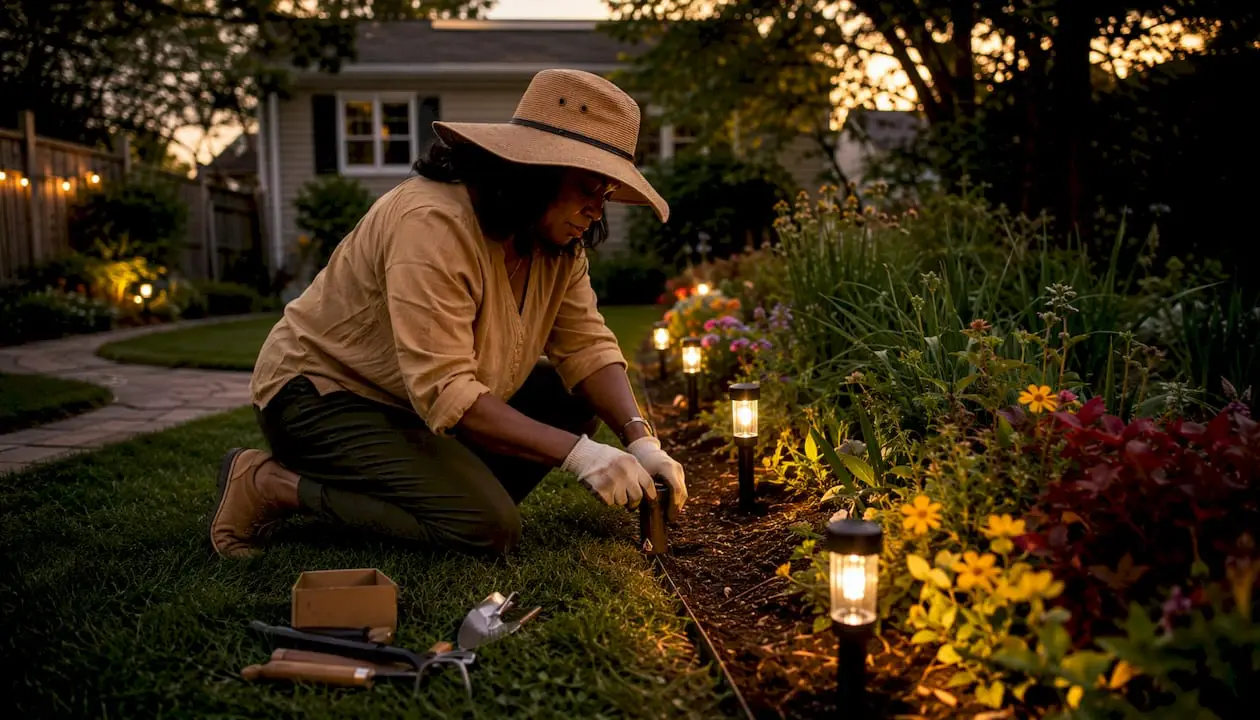
The most effective landscape lighting around flower beds uses three fixture types working together: spread lights for ground covers under 18 inches, pathway lights to define bed edges, and spotlights for taller specimen plants. This layered approach creates depth and visual interest rather than flat, uniform brightness. A few practical principles make the difference between a yard that glows warmly after dark and one that looks like a parking lot:
- Color temperature: Warm white LEDs at 2700K–3000K produce a soft, golden tone that flatters plant colors naturally.
- Voltage: 12-volt low-voltage systems are safe for DIY installation and compatible with all modern LED fixtures.
- Energy efficiency: LED landscape lights last significantly longer than incandescent bulbs and consume far less power.
- Layering: Light ground covers, mid-height plants, and tall focal plants with different fixture types to build dimension.
- Safety: Low-voltage wiring reduces electrical risk and requires no licensed electrician in most U.S. jurisdictions.
Table of Contents
- What types of garden lighting fixtures work best for flower beds?
- Creative flower bed illumination ideas that actually work
- How to choose the right lighting for your flower beds
- Smart LED landscape lighting: what the technology offers now
- Does outdoor lighting affect plant health?
- Foreverglowlighting brings permanent, custom illumination to your outdoor space
- Key Takeaways
What types of garden lighting fixtures work best for flower beds?
Choosing the right fixture starts with knowing your plants. A ground cover sitting 6 inches tall needs a completely different solution than a 6-foot ornamental grass.
Spread lights cast a wide, lateral fan of light downward and outward, making them the go-to choice for low flower beds and ground covers under 18 inches. They sit on short stakes and stay nearly invisible once plants fill in around them.
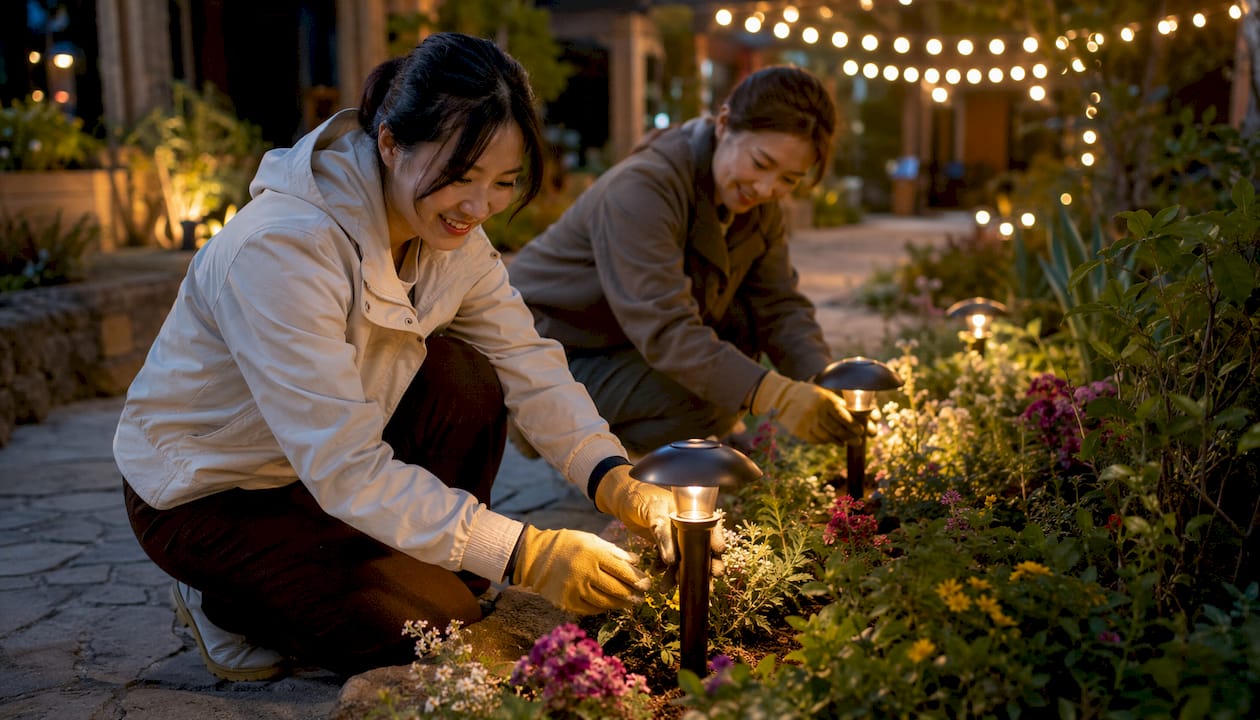
Pathway landscape lights use a mushroom or dome cap to direct light downward along walkways and bed borders. Spacing them several feet apart creates a smooth ribbon of light that defines edges without creating harsh hot spots. Closer spacing suits narrower paths or areas where brighter coverage is needed.
Spotlights and uplights are directional, stake-mounted fixtures aimed upward at taller plants, trees, or architectural features. They create the most dramatic focal points in a garden and work especially well on ornamental grasses, crape myrtles, and specimen shrubs.
Well lights are flush-mounted fixtures installed directly in the soil. Because they sit below grade, they are essentially invisible during the day, making them ideal for formal gardens and permanent plantings where above-ground stakes would look cluttered.
Flood lights cover large surface areas with a wide, diffuse beam. They pair well with pathway lights: the floods handle broad coverage while the pathway fixtures define the edges.
Deck and step lights mounted on raised planters or retaining walls cast attractive side-light across adjacent ground covers and low shrubs, adding dimension to terraced beds.
For fixture durability, IP65-rated or higher housings resist water and dust reliably in outdoor conditions. LED technology dominates for good reason: it delivers superior energy efficiency and longevity compared to incandescent alternatives.
| Fixture type | Beam direction | Ideal plant height | DIY friendly | Best use case |
|---|---|---|---|---|
| Spread light | Lateral/downward | Under 18 inches | Yes | Ground covers, low annuals |
| Pathway light | Downward | Under 24 inches | Yes | Walkway borders, bed edges |
| Spotlight/uplight | Upward/adjustable | taller than 18 inches | Yes | Trees, specimen shrubs |
| Flood light | Wide/diffuse | Any height | Yes | Large bed coverage |
| Well light | Upward | taller than 18 inches | Moderate | Formal or permanent landscapes |
| Deck/step light | Sideways | Ground level | Yes | Raised beds, patios |
Creative flower bed illumination ideas that actually work
Good garden lighting design is about restraint as much as coverage. The goal is depth, not brightness.
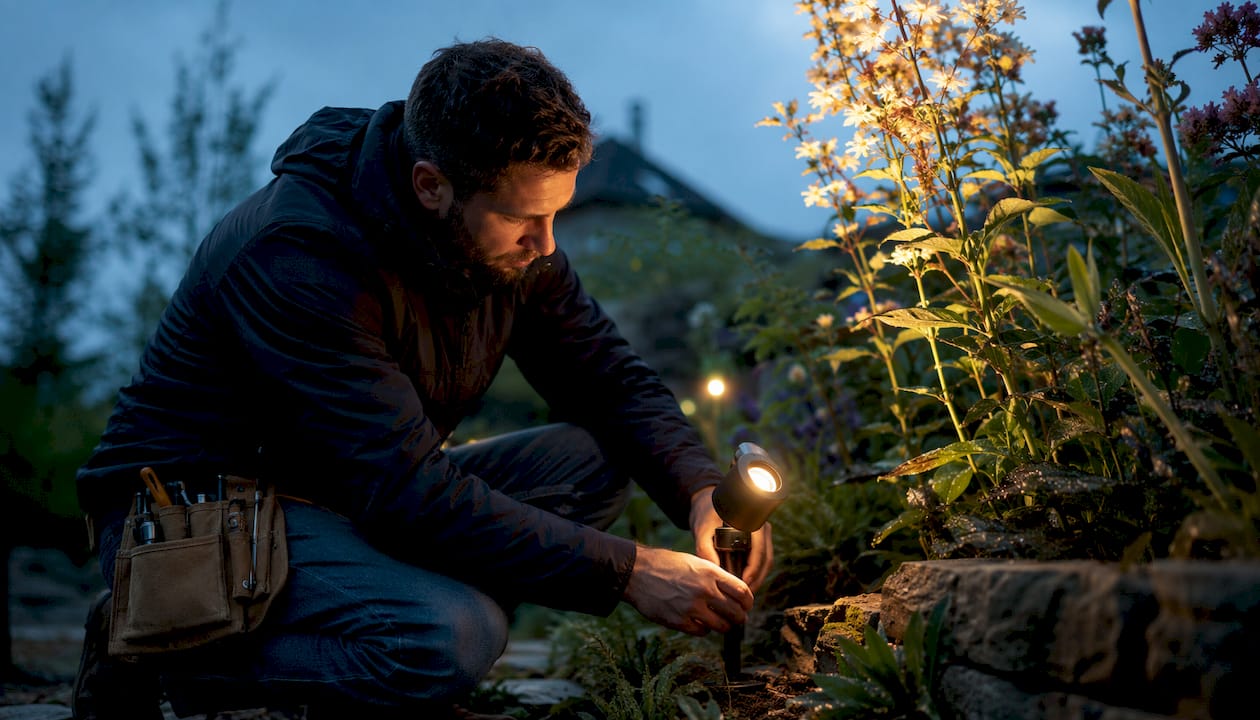
Uplighting at an angle produces the most texture. Positioning a spotlight at roughly 45 degrees rather than straight vertical creates shadows that reveal leaf shape and plant structure. Direct vertical uplighting tends to flatten the effect, producing a clinical look that misses the warmth most homeowners want.
Silhouetting works by placing a light source behind a plant rather than in front of it. The plant becomes a dark, sculptural shape against a lit background, which is particularly striking with ornamental grasses, tall sedums, or plants with interesting branching patterns. Backlighting creates dramatic contrast that front-lighting simply cannot replicate.
Layered lighting builds a scene with three zones: foreground path edges or low beds, mid-level flowering plants or border curves, and background specimen trees or tall shrubs. When each zone receives a different fixture type at a different intensity, the garden reads as deeper and more composed after dark. A practical layout for a medium-size bed might include six pathway lights along a curved walkway, two spotlights aimed at ornamental trees, and three accent lights placed within the planting to add texture.
Linear LED edge lighting is a newer approach worth considering. Integrated linear systems output 50 lumens per foot at 12VAC and eliminate the spotty, scalloped effect that individual fixtures sometimes produce. They also double as garden edging, reducing both materials and trenching time.
A few placement principles that prevent common mistakes:
- Keep brightness in a low to moderate range for most flower bed fixtures; stronger output suits focal points only.
- Avoid the “airport runway” effect by mixing fixture types rather than spacing identical lights at uniform intervals.
- Hide fixtures within foliage or behind low shrubs so plants remain the visual focus, not the hardware.
- Stagger pathway lights on alternating sides of a path to make the walkway feel wider and more natural.
Pro Tip: Light the plant, not the fixture. If you can see the bulb directly from a normal viewing angle, reposition or shield the fixture. The best-lit gardens are the ones where you cannot figure out where the lights are.
| Design technique | Effect achieved | Best fixture pairing |
|---|---|---|
| Uplighting at 45 degrees | Texture, shadow, depth | Spotlight or well light |
| Silhouetting/backlighting | Dramatic contrast | Spotlight behind plant |
| Layered zones | Visual depth, dimension | Spread light + pathway + spotlight |
| Linear LED edging | Uniform glow, clean borders | Integrated linear system |
| Path lighting with staggered spacing | Natural, wider-feeling walkway | Pathway landscape lights |
How to choose the right lighting for your flower beds
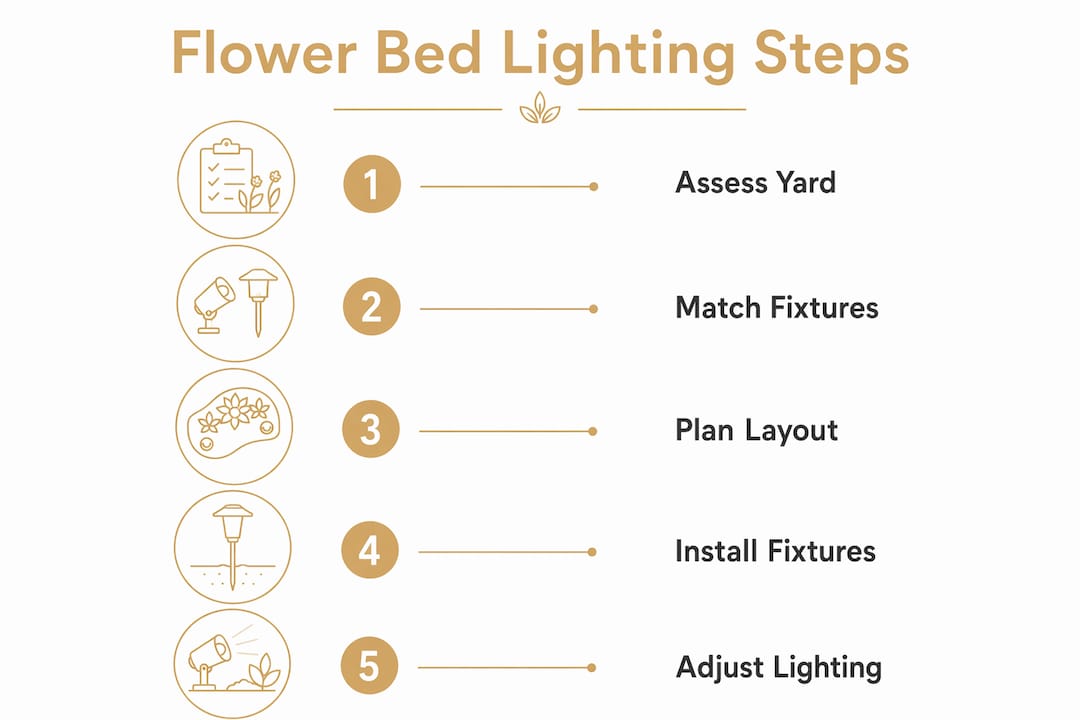
Start by walking your yard after dark and noting where the eye naturally lands and where visibility matters most. That walk tells you more than any catalog.
Match fixture to plant height first. Spread lights handle beds under 18 inches. Pathway lights suit borders and edges up to 24 inches. Spotlights and well lights belong on anything taller. Getting this wrong wastes money and produces uneven coverage.
Color temperature consistency matters more than most homeowners expect. Mixing a 2700K fixture with a 3000K fixture in the same bed creates a visually disjointed look, even if both are technically “warm white.” Pick one Kelvin rating and use it across the entire area. For residential flower beds, 2700K is the standard recommendation; it produces a soft, golden-bronze tone that complements mulch, stone, and most plant colors. The 3000K option suits modern or contemporary designs where a slightly crisper look fits the architecture.
Low-voltage LED systems are the practical default for most homeowners. They operate at 12 volts, well below any electrical shock threshold, and are legal for self-installation in most U.S. jurisdictions without a licensed electrician. Pair your fixtures with a transformer that has at least 20% wattage headroom above your total fixture load. That buffer prevents the transformer from running at capacity and extends its service life. For a deeper look at why low-voltage systems make sense, the low-voltage lighting guide from Foreverglowlighting covers the safety and efficiency case clearly.
Budget planning should account for long-term operating costs, not just purchase price. LED fixtures cost more upfront than incandescent alternatives but consume far less energy and last significantly longer. Integrated LED systems that combine edging and illumination in one product also reduce installation labor, which adds up quickly on larger beds.
Weather resistance is non-negotiable for any fixture that will spend years in soil contact or irrigation zones. IP65 is the minimum acceptable rating for above-ground fixtures; IP67 or IP68 applies to anything buried or in direct water contact.
Smart LED landscape lighting: what the technology offers now
Permanent smart LED systems have changed what is possible for residential flower bed illumination. The most capable systems today allow smartphone control of color temperature, brightness, and scheduling from a single app, without requiring a separate hub for each zone.
Foreverglowlighting specializes in exactly this category. Their custom-installed LED track systems integrate directly into the property’s architecture and landscape, staying invisible during the day while delivering precise, programmable light after dark. Color temperature adjustment means you can run a warm 2700K tone on a quiet weeknight and shift to a brighter, more vivid setting when entertaining. Scheduling eliminates the need for manual timers or dusk-to-dawn sensors, and the systems are compatible with millions of color options for seasonal accent lighting.
Pro Tip: Plan your lighting layout at the same time you plan your planting. Knowing where fixtures will sit before the garden goes in allows you to hide cable runs, position stakes behind plant masses, and avoid digging through established root zones later. Gardens designed with lighting in mind from the start look more natural and require less maintenance over time.
The outdoor lighting scene-setting guide from Foreverglowlighting walks through how to build a programmable lighting plan that adapts across seasons. For homeowners curious about what smart outdoor lighting actually involves day to day, the smart outdoor lighting overview covers the practical details without the technical jargon. Integrating automation into outdoor spaces is increasingly straightforward with modern low-voltage systems, and the payoff in convenience and consistency is real.
Does outdoor lighting affect plant health?
For most residential flower bed lighting, the answer is: very little, provided you make sensible choices. The key variables are light intensity, duration of exposure, and spectrum.
Low-voltage LED fixtures at the lumen levels typical for landscape use do not generate enough heat or light intensity to stress plants. Traditional incandescent and halogen fixtures posed more risk because they produced significant heat at close range. LEDs run cool, which removes that concern for the vast majority of installations.
Duration matters more than intensity for sensitive plants. Leaving lights on all night, every night, can disrupt the natural photoperiod of some flowering plants, potentially delaying or altering bloom cycles. Using a timer or smart scheduling to run lights for 4–6 hours after sunset rather than continuously is a practical way to minimize any photoperiod effect while still achieving the aesthetic you want.
Spectrum is the third factor. Warm white LEDs at 2700K emit very little blue-spectrum light, which is the wavelength most likely to affect plant biological rhythms. The International Dark-Sky Association also recommends warm-spectrum, shielded fixtures to reduce light pollution and protect nocturnal pollinators, which is worth considering if your garden supports native plantings. Keeping fixtures aimed downward and shielded prevents unnecessary light scatter into surrounding habitat.
Foreverglowlighting brings permanent, custom illumination to your outdoor space
Custom landscape illumination done right is not a weekend project with a bag of solar stakes. It is a designed system that accounts for plant heights, cable routing, transformer capacity, and how the light will look as the garden matures.
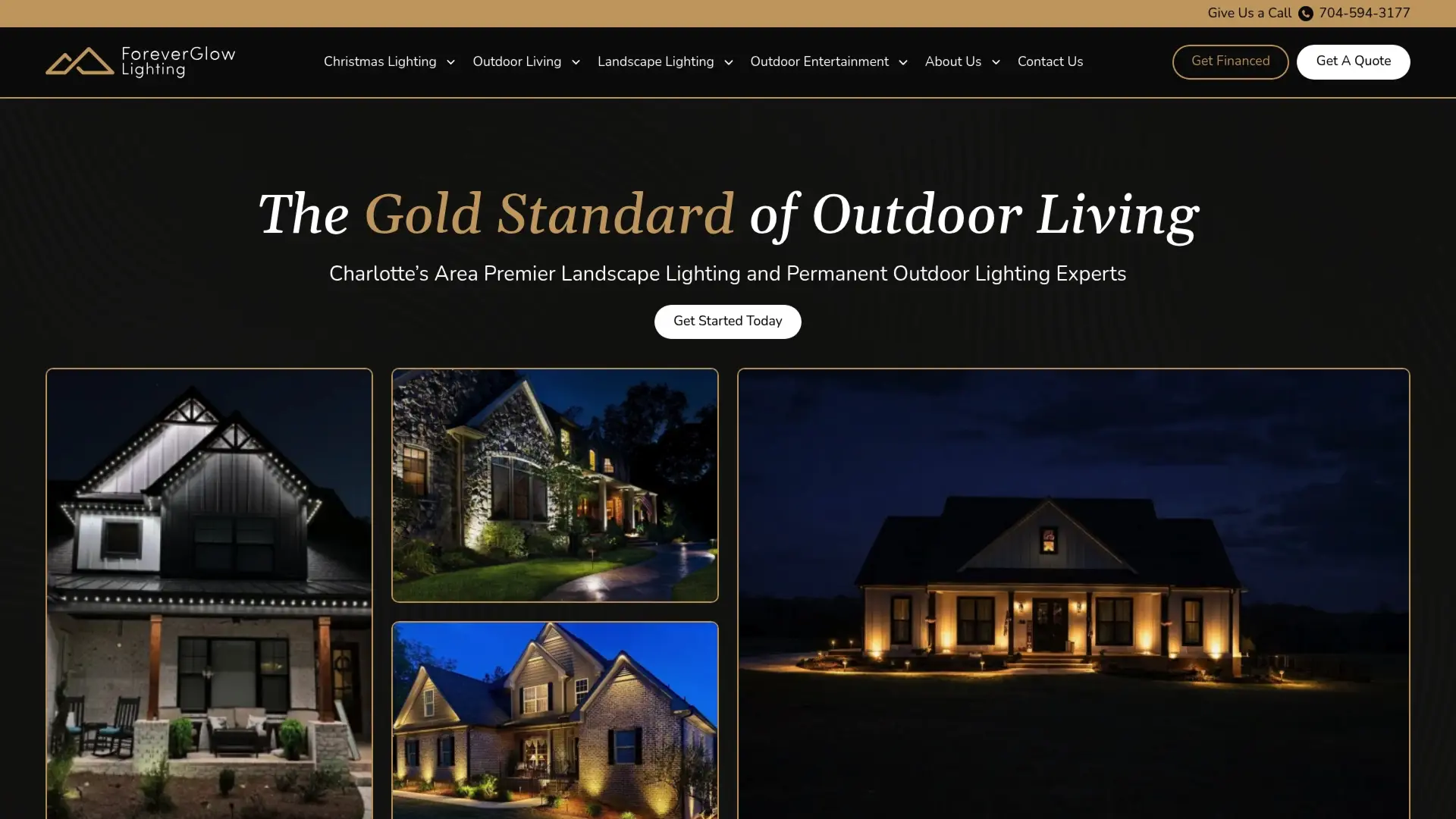
Foreverglowlighting offers exactly that level of planning and installation for homeowners in the Charlotte area. Their permanent LED systems are built to stay, with fixtures positioned to remain effective as plants grow and seasons change. Smartphone control, custom scheduling, and color temperature adjustment come standard, so the system works for a quiet Tuesday evening and a holiday gathering without any manual changes. The professional landscape lighting design approach Foreverglowlighting uses means fixtures are placed with the finished garden in mind, not retrofitted around it. Contact Foreverglowlighting for a free estimate and get a lighting plan built around your specific beds, plants, and property.
Key Takeaways
Effective landscape lighting around flower beds relies on matching fixture types to plant heights, maintaining consistent warm color temperatures, and layering light across multiple garden zones.
| Point | Details |
|---|---|
| Match fixture to plant height | Use spread lights for beds under 18 inches, pathway lights for edges up to 24 inches, and spotlights for taller plants. |
| Color temperature consistency | Use 2700K for residential beds; mixing different Kelvin ratings in the same area creates a visually disjointed look. |
| Low-voltage LED systems | 12-volt systems are safe for DIY installation, energy-efficient, and compatible with smart controls. |
| Layered lighting creates depth | Combine spread lights, pathway lights, and spotlights across foreground, mid-level, and background zones. |
| Foreverglowlighting | Offers custom-installed permanent LED landscape systems with smartphone control and professional design planning. |