
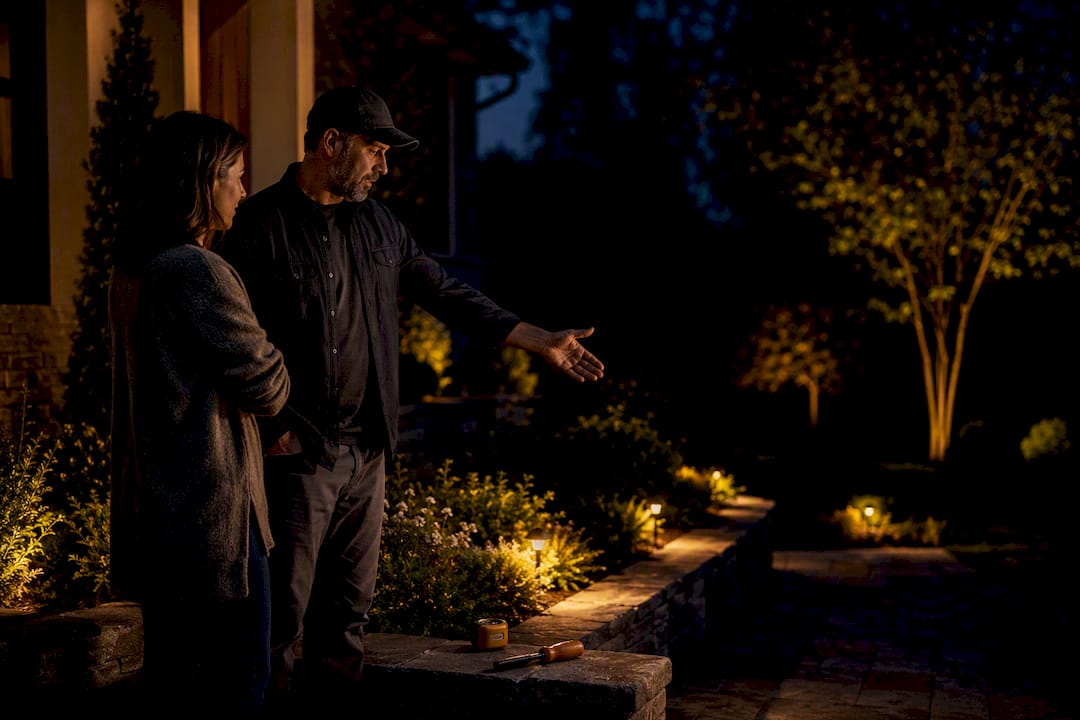
Most homeowners spend between $150 and $600 a year on landscape lighting maintenance, with a typical one-time repair running $100 to $350 depending on the part involved. Costs climb when a system is older, uses lower-grade fixtures, or sits in hard-to-reach spots like tall trees or steep slopes. A well-designed, newer LED system with easy access tends to land at the low end of that range.
TL;DR:
- Regular maintenance costs range from $150 to $600 annually, with the lowest costs applying to newer LED systems with easy access.
- Major repairs outside a contract, such as fixture or transformer replacements, typically cost $40 to $400 depending on the fixture type and failure cause.
- Proper fixture quality, IP rating, and correct transformer sizing significantly reduce maintenance frequency and long-term costs.
- Upgrading to high-quality LED fixtures can save around $158 annually in energy and reduce repair needs, lowering the total cost of ownership.
- Homeowners should request detailed, itemized quotes and prioritize warranties and fixture ratings to avoid hidden costs and ensure system durability.
Table of Contents
- What annual maintenance includes and what it costs
- Itemized repair and replacement costs to expect
- What drives maintenance costs and how to read a quote
- A seasonal schedule and checklist homeowners can follow
- How LED upgrades change maintenance and lifetime costs
- How to budget, get quotes, and choose a maintenance approach
- What I’ve learned about landscape lighting costs
- Consider a maintenance subscription for predictable maintenance costs. These plans often cover recurring inspection, cleaning, and re-aiming work, handled by teams familiar with local climate demands on outdoor fixtures.
- Where these cost and lifecycle figures come from
- Sources
- FAQ
What annual maintenance includes and what it costs
Annual maintenance for a landscape lighting system usually covers more than swapping a burned-out bulb. A typical service visit includes:
- A full inspection of every fixture, connection, and wire run for damage or corrosion
- Lens and fixture cleaning to remove dirt, algae, and mineral buildup that dims output
- Re-aiming fixtures that have shifted from mowing, settling soil, or plant growth
- Minor repairs such as tightening connections, replacing worn gaskets, or resetting clips
- Timer and photocell checks to confirm the system turns on and off correctly
Pricing generally falls into three tiers. A basic tune-up, best suited to a small yard with 10 to 15 fixtures, often costs $150 to $250 for a single annual visit. A standard annual plan for a medium-sized property with 20 to 30 fixtures typically runs $250 to $450 and usually includes two visits, spring and fall. A premium plan for larger properties or estates with 40 or more fixtures, multiple zones, or smart controls can reach $450 to $600 or more, often with quarterly visits and priority response for outages.
Some items fall outside standard maintenance pricing and get billed separately. Major rewiring after storm damage, full transformer replacement, and any job requiring a bucket lift or extensive digging usually come with added labor and material charges. Homeowners comparing quotes should ask whether these exclusions are spelled out, since a suspiciously cheap plan sometimes hides them until the invoice arrives.
Itemized repair and replacement costs to expect
Repairs outside a maintenance contract are usually billed per item, and prices vary by fixture type and the cause of failure. Rough ranges homeowners can expect:
- Fixture replacement: $40 to $100 for a basic LED fixture, more for architectural-grade or brass housings; halogen fixtures often cost less upfront but fail sooner
- Bulb replacement: $10 to $25 per bulb for LED, though many quality LED fixtures are rated for tens of thousands of hours before this is needed
- Transformer replacement: $150 to $400 depending on wattage and whether it includes smart controls
- Wiring repair: $75 to $150 for low-voltage landscape lighting splice repairs, or roughly $2 to $5 per linear foot for longer wire runs
- Timer or photocell replacement: $50 to $120 including labor
- Trip charges and labor minimums: many companies charge a $75 to $150 minimum service call regardless of the fix
Some failures cost more because they compound. Water intrusion into a fixture housing can corrode internal wiring and force a full fixture swap rather than a simple bulb change, often pushing the repair to $150 to $300. Corrosion from irrigation overspray or coastal humidity has a similar effect. Animal damage, particularly from squirrels or rodents chewing through low-voltage wire, can turn a small fix into a $200 or more repair once several runs need replacing.
As a rule of thumb, repair makes sense when the fix costs less than half of a new fixture’s price. Once a fixture needs a second or third repair within a couple of years, replacement is usually the better long-term value.
What drives maintenance costs and how to read a quote
Quotes for the same yard can vary widely, and the differences usually trace back to a handful of factors. Fixture quality and IP rating matter most: a fixture rated IP65 or higher with a solid warranty resists moisture and dust far better than a bargain model, which means fewer service calls over time. Transformer sizing also plays a role. An undersized transformer causes voltage drop across the system, which stresses fixtures and shortens their life, so proper transformer sizing using VA and the 80% rule is worth confirming in any quote.
Other cost drivers include:
- Access and layout complexity, since fixtures buried in dense beds or up in trees take longer to service
- Local labor rates, which shift maintenance pricing from one metro area to another
- The presence of smart controls, which add convenience but occasionally require reprogramming
- System age, since older halogen-based systems generally need more frequent attention than newer LED setups
Climate-optimized hardware, built with better seals and corrosion-resistant materials, costs more at installation but tends to reduce how often a technician has to come back out, which is where the long-term savings show up.
Pro Tip: Before signing off on new fixtures, ask the contractor for the LM-79 photometric test report, the IP rating, and the written warranty terms. These three documents tell you more about long-term reliability than any sales pitch.
A seasonal schedule and checklist homeowners can follow
A landscape lighting system holds up best with a mix of homeowner attention and professional service spread across the year.
- Spring: Schedule a full inspection to check every fixture, wire connection, and the transformer after winter weather, and reset timers for the changing daylight hours.
- Summer: Do quick spot checks after storms or heavy irrigation use, since these are the times fixtures are most likely to shift or take on water.
- Fall: Re-aim fixtures that have drifted from summer plant growth and adjust timers again as daylight shortens.
- Winter: Protect fixtures from freeze damage and check that any exposed wiring is secure before the ground hardens.
Between those seasonal touchpoints, homeowners can handle a few simple monthly tasks themselves: wiping down fixture lenses, doing a quick visual check for exposed wiring or fixtures knocked out of position, and confirming the timer is still firing at the right times. Each of these takes 15 to 30 minutes for an average yard.
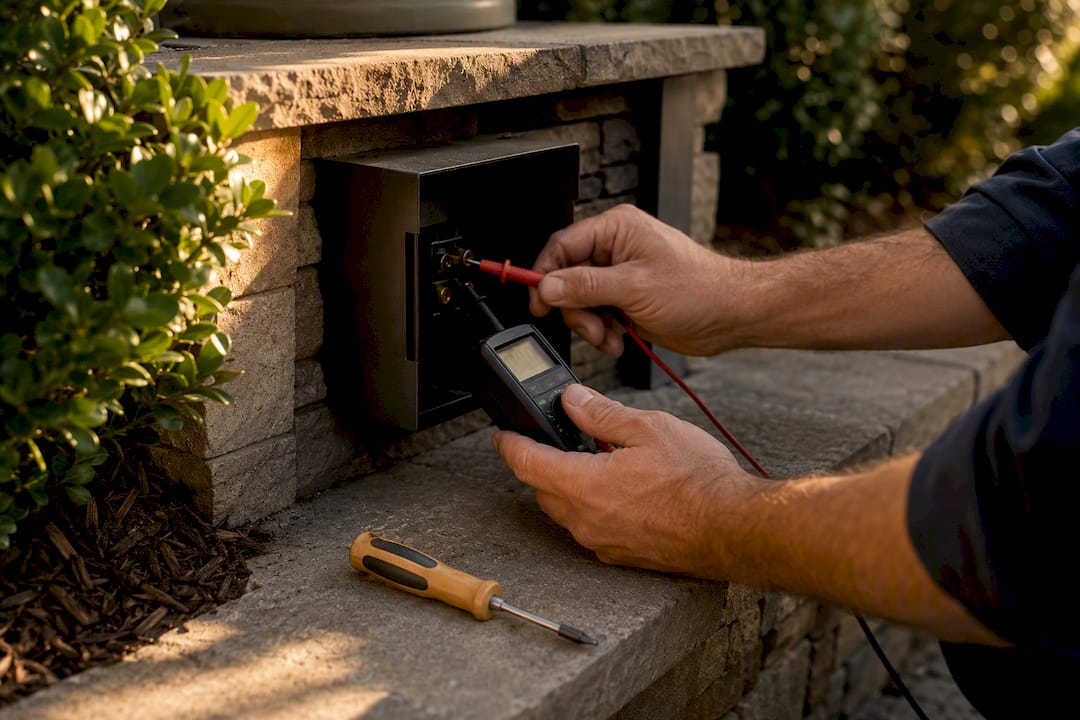
Professionals typically handle the more technical annual work: checking voltage at multiple points along the run, servicing or testing the transformer, re-aiming fixtures for even coverage, and validating that light output still meets the seasonal adjustments the system was designed around. A full professional visit for a medium yard generally takes one to two hours.
How LED upgrades change maintenance and lifetime costs
Fixture technology has a direct effect on how much a system costs to keep running. Well-designed LED outdoor fixtures can reach a rated life of 50,000 hours or more, but that number depends heavily on thermal management. A fixture that runs hot loses lumen output faster and can fail well before its rated life, which is why the L70 rating, the point at which output drops to 70% of its original level, matters more than the headline hour count.
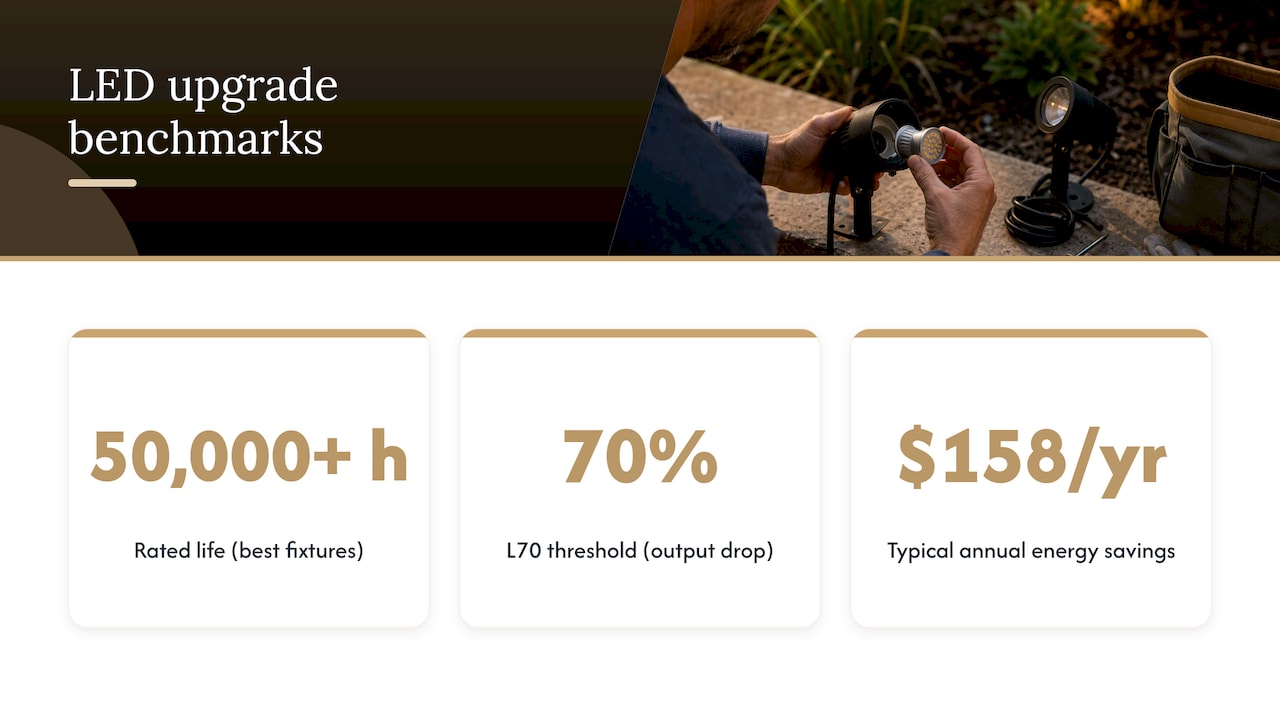
On the energy side, swapping older halogen fixtures for LED equivalents can save roughly $158 a year in electricity costs for a typical residential system, on top of fewer bulb changes. That combination of lower energy use and longer fixture life is where LED systems earn back their higher upfront cost.
Maintenance is a real share of a lighting system’s lifetime cost, not an afterthought. One GSA evaluation found that a significant portion of the total savings from converting to LED came from reduced maintenance rather than from energy savings alone, which underscores why fixture quality is worth paying for upfront.
Upgrading to higher-grade LED fixtures tends to lower total cost of ownership specifically when the original system used cheap halogen or entry-level LED hardware with poor seals, since those are the systems generating the most service calls.
How to budget, get quotes, and choose a maintenance approach
Before requesting quotes, spend 20 minutes walking the property. Count the fixtures, take photos of each one, and note anything already acting up, like flickering lights or a dead zone in the yard. This prep work makes quotes far more accurate and comparable.
When quotes come in, look for a few specifics:
- An itemized breakdown separating parts and labor rather than one lump number
- Clear warranty terms on both fixtures and the labor performed
- Transformer VA sizing that matches the system’s actual load
- IP ratings and expected fixture lifespan stated in writing
Red flags to watch for include vague scopes of work, no mention of a warranty, or a bid that comes in far below every other estimate you received, since that often means corners get cut on materials or the quote excludes work that will show up as a change order later.
For homeowners who want the most predictable costs, a maintenance subscription is worth considering. It tends to make the most sense once a system has 20 or more fixtures, uses smart controls, or when the homeowner would rather not track service dates themselves.
Pro Tip: Ask any contractor how they price emergency repairs outside a subscription. A plan that covers standard visits but charges full trip fees for every outage can end up costing more than it looks like on paper.
What I’ve learned about landscape lighting costs
The cheapest system rarely stays cheap. Homeowners who chase the lowest quote usually pay it back in repair calls within a year or two, while those who ask for LM-79 reports, real IP ratings, and a written warranty tend to spend less over the life of the system. In a climate like North Carolina’s, with humidity, storms, and temperature swings, that upfront diligence matters more than the sticker price. Spend a little more on hardware built for the weather it actually has to survive.
— Dave
Consider a maintenance subscription for predictable maintenance costs. These plans often cover recurring inspection, cleaning, and re-aiming work, handled by teams familiar with local climate demands on outdoor fixtures.
Getting a free estimate is straightforward. Have your fixture count, a few photos of the current setup, and any known trouble spots ready, and a Forever Glow Lighting technician can put together an accurate quote without multiple site visits.
- GlowCare covers scheduled inspections, cleaning, re-aiming, and minor repairs
- Free estimates are available for new landscape lighting design or for adding maintenance to an existing system
- Systems are installed with climate-optimized hardware designed to hold up against Charlotte-area humidity and storms

If your current system needs attention or you’re planning a new install, request a free estimate through Forever Glow Lighting’s landscape lighting page to get a quote built around your yard.
Where these cost and lifecycle figures come from
The lifecycle and maintenance figures in this guide draw from the DOE and GSA’s LED and controls guidance, the DOE’s outdoor area lighting fact sheet, and ENERGY STAR’s LED fixture checklist for LM-79 and warranty guidance.
Sources
- LED Lighting and Controls Guidance for Federal Buildings (GSA) — 2024
- LED outdoor area lighting guidance (U.S. DOE)
- LED fixture datasheet checklist (ENERGY STAR guidance)
FAQ
What is the average cost to install landscape lighting?
Installation costs vary widely based on fixture count, system design, and property size, and pricing is best obtained through a custom quote from a licensed installer. Forever Glow Lighting provides free estimates for landscape lighting design based on your property’s specific layout.
Why do landscapers charge so much for maintenance?
Exterior lighting maintenance often costs more than expected because outdoor fixtures are exposed to weather and sometimes need special equipment to service, unlike indoor lighting. Labor also covers diagnostic time, since finding a wiring fault or voltage drop takes more skill than simply replacing a bulb.
What is the average cost of permanent outdoor lighting?
Permanent outdoor lighting pricing depends on the scope, from accent lighting to full roofline systems, and is typically quoted after a site visit rather than as a flat rate. Homeowners interested in permanent lighting can request a free, no-obligation estimate from Forever Glow Lighting.
Do landscape lights use a lot of electricity?
Landscape lights, especially LED fixtures, use relatively little electricity compared to older halogen systems. Switching from halogen to LED landscape lighting can save around $158 a year in energy costs for a typical residential setup, while also reducing how often bulbs need replacing.
How often should landscape lighting be professionally maintained?
Most systems benefit from at least one professional inspection each year, with two to four visits recommended for larger or more complex setups. Spring and fall are the most common times to schedule service, since they follow winter weather and summer plant growth that can knock fixtures out of position.