
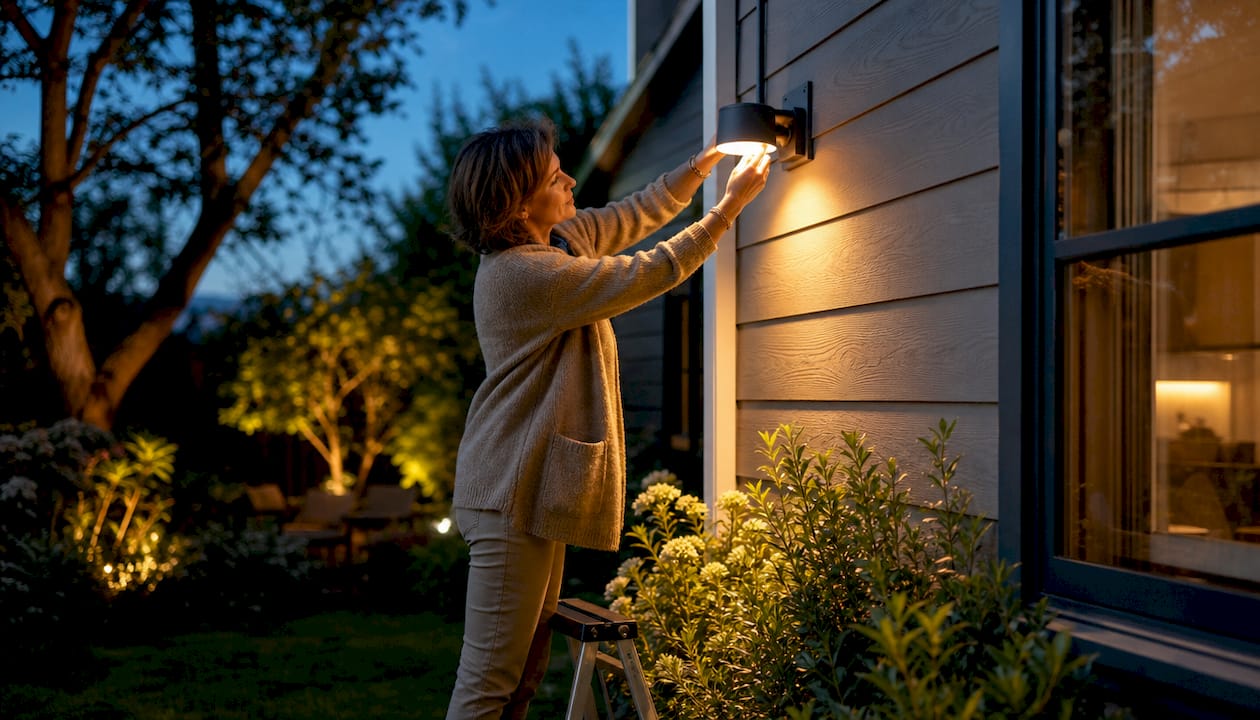
Night sky friendly lighting is outdoor illumination that reduces glare, light trespass, and skyglow by directing light downward and using warm, controlled light sources. The industry term for this practice is dark sky compliance, a standard developed and maintained by DarkSky International. Every homeowner who installs outdoor lighting makes a choice that affects neighbors, local wildlife, and the visibility of the night sky. The good news is that dark sky compliant lighting does not mean dim or unsafe. It means smarter, more intentional light that works better for people and the environment alike.
What is night sky friendly lighting and why does it matter?
Night sky friendly lighting is defined by fixtures that prevent upward light emission, use warm color temperatures of 3000K or lower, and include controls to limit usage. DarkSky International’s guidelines recommend limiting light emitted above the horizontal plane to 2% or less. That single standard eliminates the vast majority of skyglow caused by residential properties.
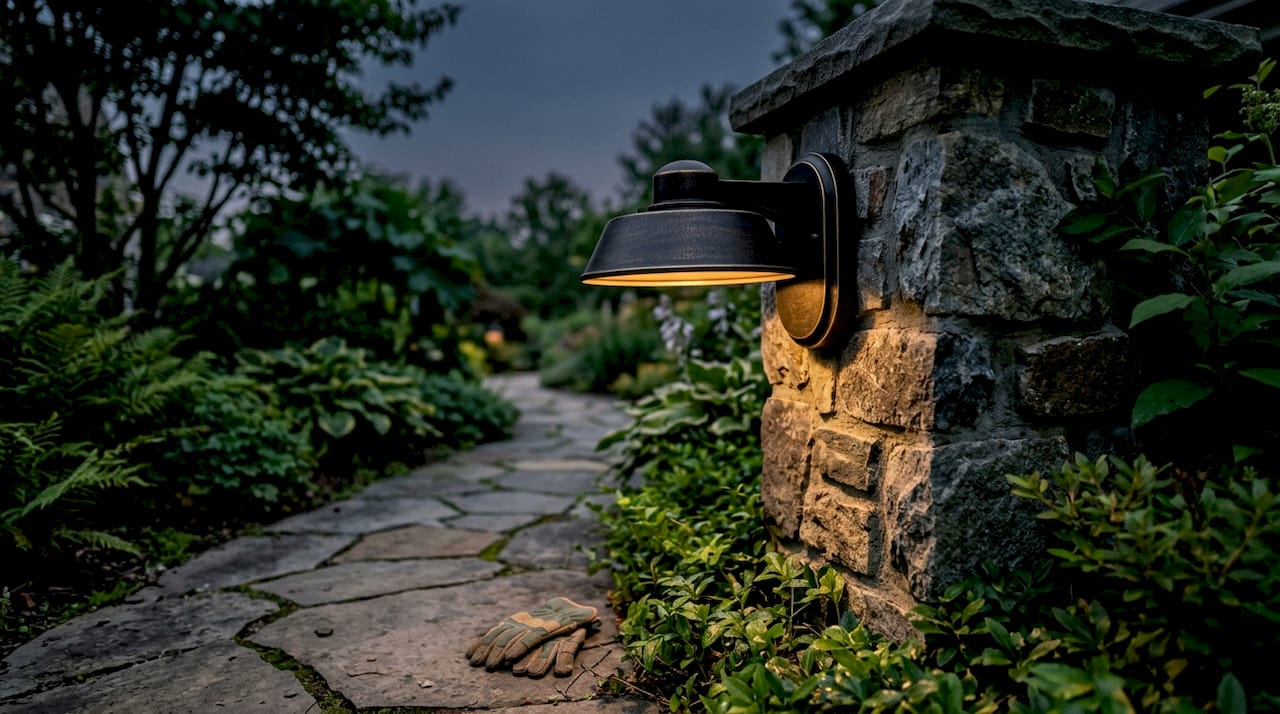
The term “dark sky compliance” is the recognized industry label. You will see it referenced in municipal codes, fixture specifications, and certification programs. Night sky friendly lighting is the plain-language version of the same concept, and both phrases describe the same set of practices.
Skyglow is the orange or white glow visible above cities and suburbs at night. It forms when artificial light scatters upward into the atmosphere. A single unshielded floodlight on a garage wall contributes to that glow. Multiply that by millions of homes, and the cumulative effect erases stars from view and disrupts ecosystems across entire regions.
What are the environmental and health benefits of night sky friendly lighting?
Reducing artificial light at night delivers measurable benefits for human health and local wildlife. Light pollution disrupts sleep by suppressing melatonin production, which regulates the human circadian rhythm. Chronic disruption of that rhythm is linked to sleep disorders, mood changes, and long-term health risks.
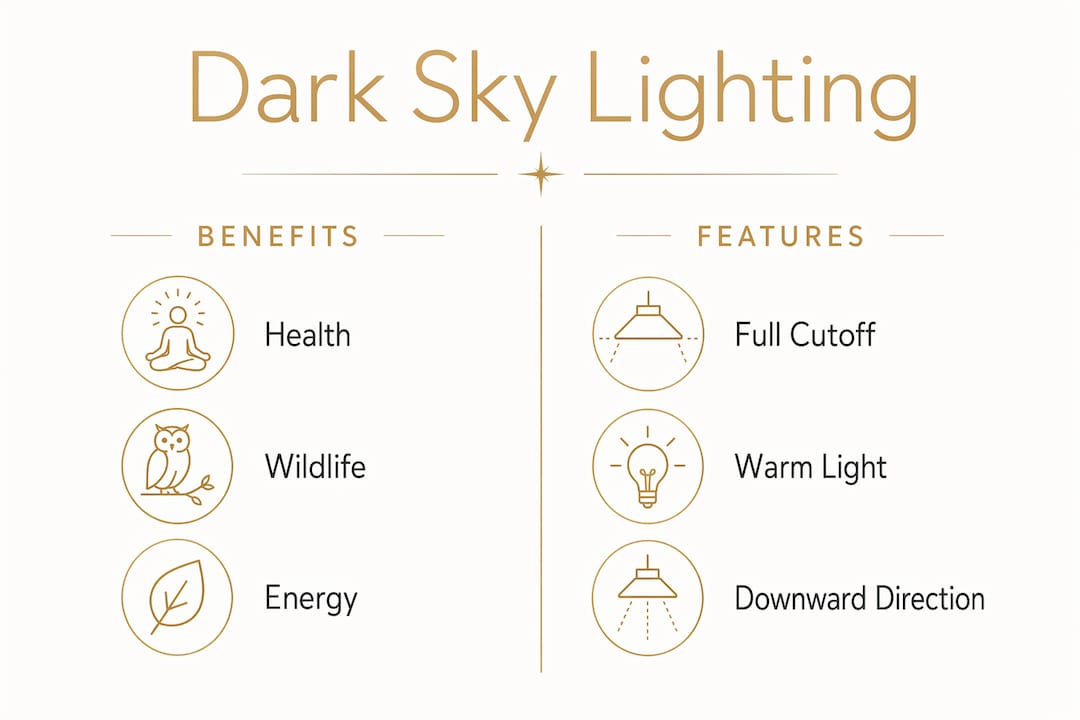
Wildlife suffers directly from poorly directed outdoor light. Migratory birds navigate by starlight and moonlight. Artificial skyglow disorients them, causing millions of bird deaths annually from collisions with buildings and structures. Bats, pollinators like moths, and sea turtle hatchlings are all documented victims of light pollution.
The energy argument is equally compelling. Transitioning to dark sky lighting reduces energy use by 30–60% compared to conventional unshielded fixtures. That reduction translates directly into lower electricity bills and reduced greenhouse gas emissions from power generation.
“Artificial light at night is an anthropogenic pollutant with documented effects on human health, animal behavior, and ecosystem function. Reducing unnecessary upward light emission is one of the most cost-effective environmental interventions available to homeowners.”
Warm amber bulbs amplify these benefits. Amber light mimics incandescent bulbs and is measurably less disruptive to circadian rhythms and animal behavior than blue-white LED light. Choosing a 2700K or 3000K bulb over a 5000K daylight bulb is one of the highest-impact decisions a homeowner can make.
What key features define night sky friendly fixtures?
Dark sky compliant fixtures share five defining characteristics. Understanding each one helps homeowners evaluate products before purchasing.
- Full shielding: The fixture housing blocks all light from escaping above the horizontal plane. Look for a U0 uplight rating on the specification sheet. A U0 uplight rating is a reliable indicator of full cutoff design.
- Warm color temperature: Bulbs rated at 3000K or below produce amber-toned light. Bulbs above 4000K emit blue-shifted light that scatters more in the atmosphere and disrupts wildlife more severely.
- BUG ratings: The BUG system rates fixtures on Backlight, Uplight, and Glare. A fixture with low scores in all three categories meets dark sky standards.
- Controls: Motion sensors, timers, and dimmers reduce light output when full illumination is not needed. Dimmable lighting allows reduction from 100% to 0%, preventing wasted energy between uses.
- Intentional placement: Fixtures should illuminate only the target area. Spillover onto neighboring properties or the road is light trespass, which dark sky design eliminates.
DarkSky International organizes these characteristics into five core principles: purpose, direction, brightness, timing, and color. Controlled, intentional lighting is the goal, not the elimination of outdoor light.
| Feature | Dark sky compliant | Standard unshielded |
|---|---|---|
| Light direction | Downward only | Upward and outward |
| Color temperature | 3000K or below | 4000K–6500K common |
| Uplight rating | U0 | Unrated or high |
| Controls | Motion sensor or timer | Always on |
| Glare | Minimal | High |
Pro Tip: When shopping for fixtures, search specifically for “full cutoff” or “DarkSky Approved” labels. These terms appear on compliant products and save you from reading through technical spec sheets line by line.
How can homeowners install dark sky lighting outdoors?
Installing night sky friendly lighting in your outdoor spaces does not require a full replacement of every fixture. Many improvements cost nothing and take under an hour.
- Audit your existing fixtures. Walk your property after dark and note every light source. Identify which ones shine upward, sideways, or onto neighboring properties. These are your priority targets.
- Tilt floodlights downward. Many standard floodlights are angled too high. Angling existing floodlights properly redirects light onto your driveway or pathway without purchasing new hardware.
- Add inexpensive shields. Clip-on barn shields attach to most standard floodlight housings and block upward and sideways light. Low-cost modifications can redirect light and reduce skyglow effectively.
- Replace globe or unshielded fixtures. Globe fixtures scatter light in every direction. Swap them for fully shielded downward-directed versions. This single change produces the largest visible improvement.
- Choose the right bulb. Select LED bulbs rated at 2700K or 3000K. Lower wattage is usually sufficient because shielded fixtures direct all their light onto the target area rather than wasting it upward.
- Apply correct fixture height and spacing. Matching fixture height to distance at a 1:1.5 ratio helps ensure uniform light coverage without spillover. A fixture mounted 8 feet high should illuminate an area roughly 12 feet in diameter.
- Install motion sensors and dimmers. Motion sensors keep pathways dark until someone approaches. Dimmers let you reduce brightness during late-night hours when full illumination is unnecessary.
Pro Tip: Start with the fixture that bothers your neighbors most. A single unshielded light aimed at a property line creates more friction than a dozen well-placed downlights. Fix the obvious offender first, then work through the rest of your audit list.
Professional installation matters for complex projects. Photometric planning and fixture placement require calculations that go beyond simple bulb swaps, especially for driveways, large yards, and architectural lighting. A professional ensures that every fixture is level, properly aimed, and connected to the right controls.
How does night sky friendly lighting balance safety and ecological needs?
A common concern among homeowners is that darker outdoor lighting means less security. The evidence says the opposite. Well-designed dark sky lighting improves both safety and visual comfort by eliminating harsh glare and improving eye adaptation to darkness.
Glare is the real enemy of nighttime visibility. A bright, unshielded floodlight pointed outward creates a blinding pool of light surrounded by deep shadow. Anyone standing in that shadow is invisible to the person standing in the light. Shielded, downward-directed fixtures eliminate that contrast and allow the human eye to adapt more effectively to the surrounding darkness.
“The goal is not to eliminate outdoor lighting. The goal is to use light where it is needed, when it is needed, at the intensity required for the task. Anything beyond that is waste.”
Practical applications make this balance clear. A pathway light mounted 18 inches above the ground and aimed at the walking surface provides safe footing without illuminating the sky. A motion-activated landscape lighting system on a driveway turns on when someone approaches and turns off when they leave, providing security without constant light pollution.
The International Commission on Illumination confirms that lighting design should balance human functional needs with ecological impact rather than eliminating outdoor lighting entirely. That position gives homeowners a clear framework. Light what you need, when you need it, with fixtures that keep the light where it belongs.
Key Takeaways
Night sky friendly lighting reduces light pollution, protects wildlife, cuts energy use by 30–60%, and improves nighttime visibility by eliminating glare through shielded, warm-toned, controlled fixtures.
| Point | Details |
|---|---|
| Full cutoff fixtures | Choose fixtures with a U0 uplight rating to prevent light from escaping above the horizontal plane. |
| Warm color temperature | Select bulbs rated at 3000K or below to reduce skyglow and protect wildlife circadian rhythms. |
| Simple DIY upgrades | Tilting floodlights downward or adding clip-on shields costs little and delivers immediate results. |
| Controls reduce waste | Motion sensors and dimmers limit light output to when and where it is actually needed. |
| Safety improves with shielding | Eliminating glare helps the human eye adapt to darkness, improving visibility and security. |
Why I think most homeowners are solving the wrong lighting problem
Homeowners almost always ask me about adding more light. More fixtures, higher wattage, broader coverage. The assumption is that more light equals more safety. After years of working with outdoor lighting, I can tell you that assumption is wrong more often than it is right.
The properties I see with the best nighttime security are not the brightest ones. They are the ones with consistent, directed coverage and no dark pockets created by glare contrast. One well-placed, shielded downlight on a pathway does more for safety than three unshielded floodlights aimed at the sky.
The ecological argument used to feel abstract to homeowners. It does not anymore. When people realize their porch light is contributing to bird deaths and disrupting their own sleep quality, the motivation to change becomes personal. That shift in perspective is what makes dark sky lighting stick as a long-term practice rather than a temporary trend.
My advice is always to start small. Fix one fixture. Notice the difference. Then work through the rest of your property systematically. Incremental upgrades are easier to budget, easier to evaluate, and far more likely to result in a lighting plan you are genuinely happy with.
— Dave
Foreverglowlighting’s approach to responsible outdoor lighting
Foreverglowlighting designs and installs outdoor lighting systems in Charlotte that balance beauty, safety, and environmental responsibility. Every project starts with a site assessment to identify where light is needed and where it is being wasted.
Our custom outdoor lighting projects show what thoughtful fixture selection and professional placement look like in real residential settings. From permanent roofline systems to landscape and pathway lighting, we build systems that direct light where it belongs and keep it off your neighbors’ property and out of the sky. Contact Foreverglowlighting today for a free estimate and see what responsible outdoor lighting looks like on your home.
FAQ
What is dark sky compliance in outdoor lighting?
Dark sky compliance means a fixture limits upward light emission to 2% or less, uses a warm color temperature of 3000K or below, and includes controls like motion sensors or timers. DarkSky International certifies fixtures that meet these standards under its DarkSky Approved program.
Does night sky friendly lighting reduce home security?
No. Shielded, downward-directed lighting eliminates glare contrast, which actually improves nighttime visibility and eye adaptation. Unshielded floodlights create bright spots surrounded by deep shadows that reduce overall security.
What color temperature bulb should I use for dark sky lighting?
Choose bulbs rated at 2700K or 3000K. These produce warm amber light that is less disruptive to wildlife and human sleep cycles than blue-white bulbs rated above 4000K.
Can I make my existing lights dark sky friendly without replacing them?
Yes. Tilting floodlights downward and adding clip-on barn shields are low-cost adjustments that redirect light and reduce skyglow without purchasing new fixtures.
How much energy does dark sky lighting save?
Transitioning to dark sky compliant fixtures reduces energy use by 30–60% compared to conventional unshielded lighting, lowering electricity bills and reducing greenhouse gas emissions from power generation.