
Most permanent Christmas lighting systems run between $18 and $40 per linear foot installed, with full residential projects landing between $2,500 and $8,000 depending on roofline length and system quality. A quick way to budget is to measure your roofline in feet and multiply by a typical midpoint rate. The sections below break down what drives that number up or down, plus a checklist for comparing quotes.
TL;DR:
- Installed costs typically range from $18 to $40 per linear foot, with total project prices usually between $2,500 and $8,000, depending on system quality and roofline length.
- Costs vary based on roof complexity, number of zones, hardware requirements, weatherproofing, and labor hours, especially for steep or multi-story roofs.
- DIY kits cost $3 to $10 per foot but lack professional installation, including wiring, mounting, and app setup, which professional services cover with warranties.
- Accurate quotes depend on measured linear footage, detailed component counts, and clarifying whether costs include permits, warranty, and ongoing maintenance.
- Foremost cost drivers are system size, roof shape, hardware choices, and installation difficulty, making precise measurement and detailed quotes essential for budgeting.
Table of Contents
- Permanent Christmas Lights Cost: What You’re Actually Paying For
- How Much Are Permanent Christmas Lights: Per-Foot Pricing and Sample Totals
- What Makes Two Quotes So Different
- DIY Kits vs. Professional Installation
- Getting Accurate Quotes: A Homeowner’s Checklist
- A Publisher’s Take on What Homeowners Actually Get
- How Forever Glow Lighting Prices and Installs Your System
- Where These Cost Figures Come From
- Sources
Permanent Christmas Lights Cost: What You’re Actually Paying For
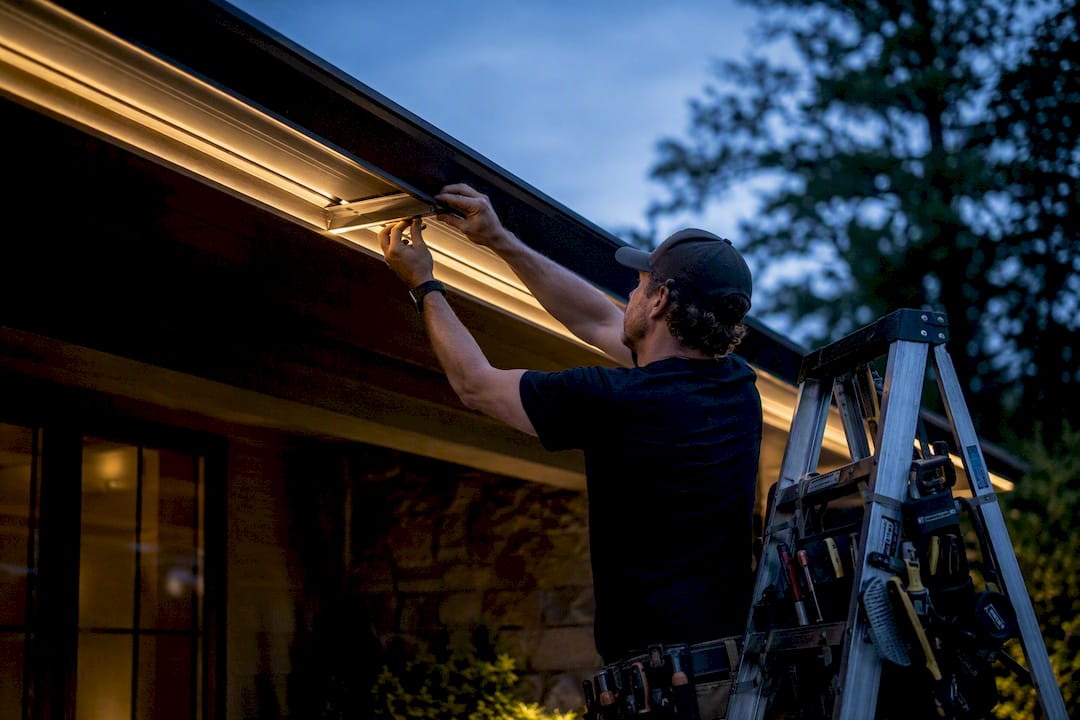
Permanent Christmas lights aren’t the same product as the string lights you drape over a gutter each December. They’re mounted tracks, usually aluminum or PVC channel, that run along your roofline, fascia, or trim year-round and house LED strips you control from a smartphone. The lights stay invisible by day and switch on for any holiday, sports event, or Tuesday-night porch glow you want.
Your invoice reflects several distinct components, and each one carries its own cost:
- Track or channel: the physical housing mounted to the roofline or trim, usually sold and priced by the linear foot
- LED strip: single-color, RGB, or RGBW diodes, with RGBW commanding a premium for color range and brightness
- Controller(s): the hardware that translates app commands into lighting patterns across zones
- Power supply: transformers that step down household voltage to what the LEDs need, sized to the run length
- Connectors, fasteners, and wiring: the small parts that account for surprisingly little of the total but a lot of installer labor
- Weatherproofing: sealants and IP-rated housings that determine how long the system survives outdoors
Entry-level systems with single-color LEDs and basic controllers sit at the low end of the pricing scale. Premium RGBW systems with better weatherproofing and IP ratings cost more upfront but hold up longer against Charlotte’s humidity swings and summer storms.
How Much Are Permanent Christmas Lights: Per-Foot Pricing and Sample Totals
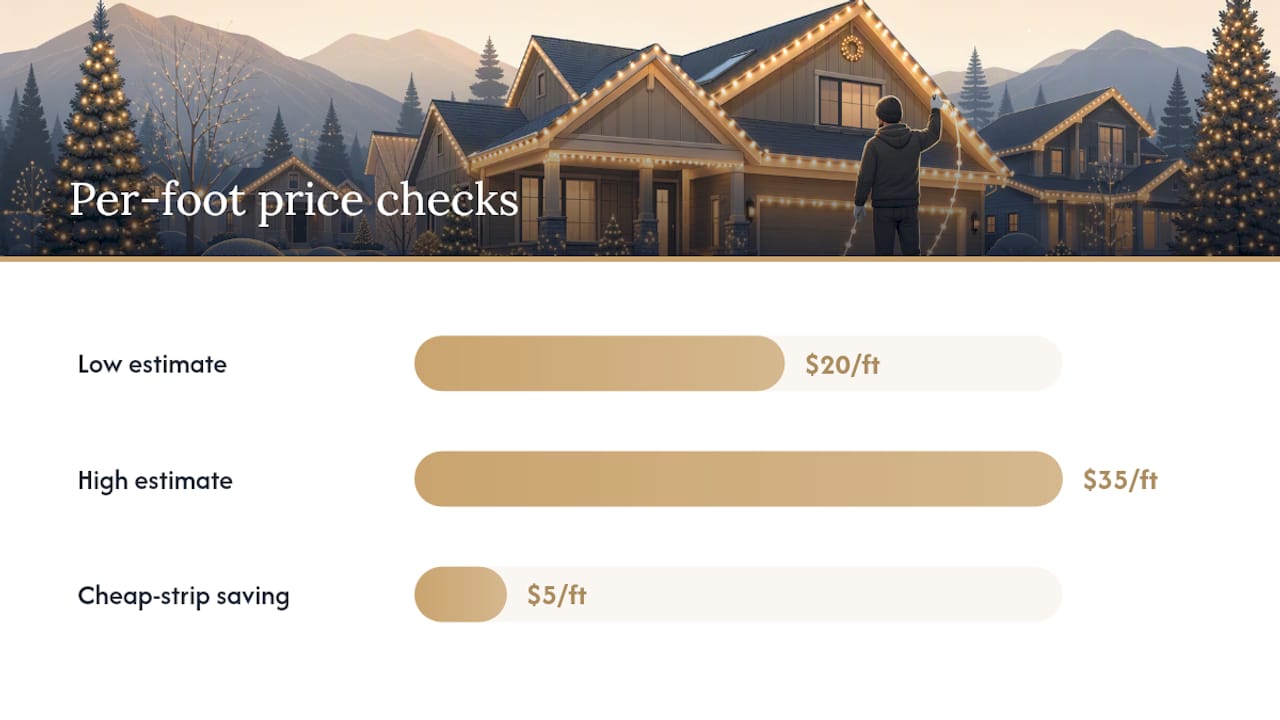
Ask five installers for a quote and you’ll get five different numbers, but they tend to cluster in a predictable band. One cost calculator puts installed pricing at $18 to $40 per linear foot, with typical project totals between $2,500 and $8,000 or more depending on system tier and roof access. Another industry guide narrows that further, citing $20 to $30 per foot installed with most homeowners landing between $4,000 and $8,000 for a full system. A third source, JellyFish Lighting, reports installer-quoted ranges of $25 to $35 per foot, with an average installed cost near $4,600 for lighting just the street-facing sides of a home.
Pro Tip: Measure your roofline with a hundred-foot tape or a laser measure, round up to the nearest ten feet, and multiply by $28. That gets you within shouting distance of a real quote before you ever call an installer.
Here’s how those per-foot ranges translate into real project sizes:
A contractor breakdown for a Charlotte-area project offers a useful reality check: materials alone ran about $653, and after a typical 30 percent contractor markup, the illustrative installed total came to roughly $849 for that specific scope. It’s a small-scale example, not a full-home system, but it shows how materials and markup stack. For a deeper local breakdown, see our Charlotte cost guide.
What Makes Two Quotes So Different
Homeowners often get two quotes for what feels like the same job and see prices double. The gap almost always traces back to five factors.
Linear feet and zones. Installers price by measured footage, not square footage of your house. A single-story rectangular ranch with 120 feet of roofline costs far less than a two-story home with dormers, bay windows, and a wraparound porch adding footage in every direction.
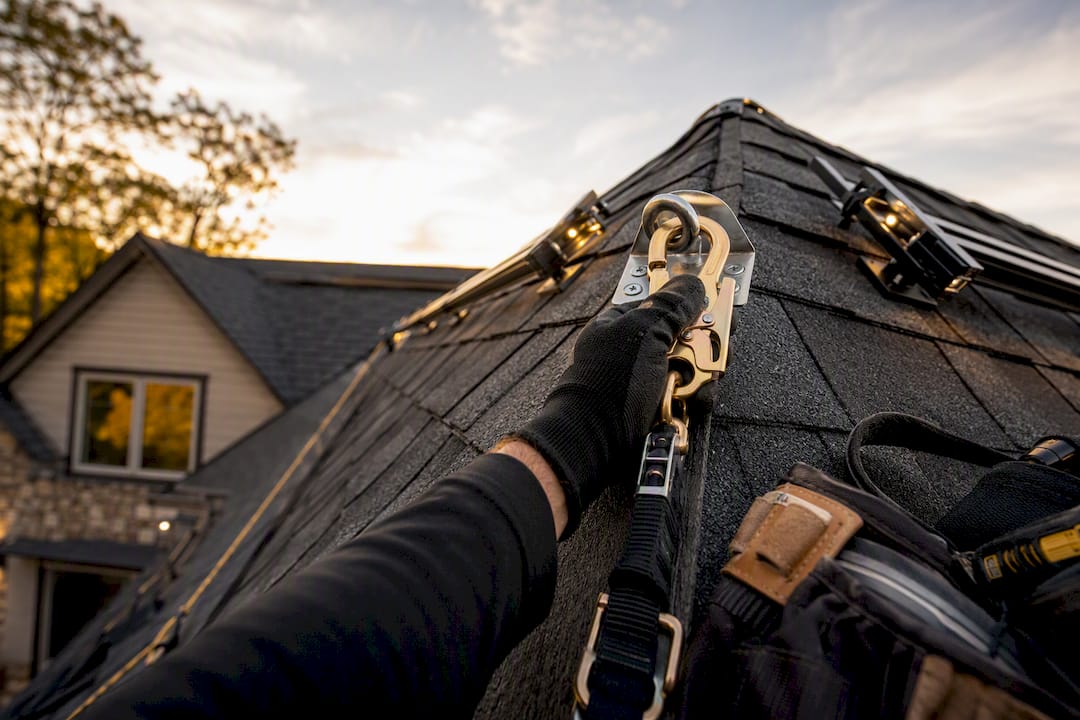
Roof complexity. Steep pitches, multiple stories, and dormers slow down installation and often require additional safety equipment. A crew that can walk a single-story roofline in an afternoon might need two days and a lift for a steep three-story colonial.
Controllers and power supplies. Every lighting system needs enough controllers and transformers to power its full run, and one controller typically covers a finite stretch of LED strip, sometimes around 263 feet depending on the system. Longer rooflines or homes with separate zones (front, back, accent areas) need more hardware, and that hardware adds up.
Material grade. Higher IP-rated housings and RGBW diodes cost more per foot but resist moisture and UV damage better, which matters more in humid climates than dry ones.
Labor and timing. Height, roof pitch, and whether an electrician needs to run new circuits all affect labor hours. Scheduling installation outside the peak fall rush tends to lower rates and shortens wait times, since installers aren’t juggling a backlog before the holidays.
DIY Kits vs. Professional Installation
DIY permanent lighting kits typically run $3 to $10 per foot in materials alone, a fraction of the fully installed price. That gap is the whole story here, and it’s worth walking through in order.
- What DIY kits leave out. Kit pricing covers track, LEDs, and a basic controller, but not the labor, ladder work, weatherproof electrical connections, or troubleshooting that comes with mounting on a roof edge two stories up.
- What professional installation adds. A contracted install includes labor, code-compliant wiring, clean mounting that survives wind and ice, app configuration across every zone, and a warranty backing the whole system.
- When DIY makes sense. A single-story home with a simple roofline and a homeowner comfortable on a ladder can reasonably tackle a small DIY run. Anything with multiple stories, steep pitches, or complex trim work belongs with a professional.
- How maintenance plans change the math. A maintenance subscription turns unpredictable repair costs into a flat annual fee, which matters more over a system’s 10+ year lifespan than the upfront install price alone.
Getting Accurate Quotes: A Homeowner’s Checklist
A written quote should list linear feet measured, not estimated from a satellite photo. It should itemize track, LED strip type, controller count, and power supply count separately, along with labor hours and any scaffolding or lift rental. Ask specifically whether the price includes app setup, a workmanship warranty, and ongoing maintenance, since these often show up as optional add-ons that change the total significantly.
- Confirm the linear footage matches your own tape measurement, not a rough guess
- Ask how many controllers and power supplies the design requires and why
- Request the warranty term in writing, including what it covers versus what counts as a paid repair
- Clarify whether permits are needed for your municipality and who pulls them
Pro Tip: If a quote comes back suspiciously low, ask what IP rating the LED strip carries. A cheap, low-rated strip might save $5 a foot now and cost you a full replacement in three years.
Multiply your measured footage by $20 and by $35 to get a fast low-high range before any installer visits, then compare that math against the written quote line by line.
A Publisher’s Take on What Homeowners Actually Get
A typical project moves from design consultation to roofline measurement, installation, app configuration, and a follow-up check once the system is live, a process detailed in our installation walkthrough. What homeowners report most often afterward isn’t the light show itself. It’s not climbing a ladder every November, running the system for a birthday or a football game in July, and noticing the electric bill barely moves.
— Dave
How Forever Glow Lighting Prices and Installs Your System
Forever Glow Lighting is the alternative to hiring a seasonal installer every year and re-paying that labor cost each December. Our smart LED track systems mount once, blend into your roofline year-round, and let you switch between millions of colors from your phone, no annual re-install fee eating into your budget.
A Forever Glow estimate breaks down exactly what we covered above: measured linear footage, component tier, controller and power supply count, and labor, so you’re never guessing where the number comes from. Every install is HOA-compliant by design and backed by our GlowCare maintenance program, which shifts unpredictable repair costs into a predictable annual plan rather than a surprise bill. If you’re weighing DIY against a professional system, our installation process guide walks through what our crews handle at every stage. And if you’re curious how a permanent system pays off outside of the holidays, our year-round use cases page covers everything from patriotic displays to everyday accent lighting. Request a free estimate today and get a written, itemized quote for your specific roofline.
Where These Cost Figures Come From
The per-foot ranges and totals cited here come from a mix of installer pricing calculators, industry cost guides, and one itemized contractor example. Happy Homes Lighting’s cost calculator and Thunder Lighting Supply’s pricing guide supplied the broad per-foot ranges. JellyFish Lighting contributed the installer-quoted example and controller capacity figures. The Charlotte, NC contractor breakdown provided the itemized materials example, and Forbes supplied context on recurring seasonal installation costs.
Sources
- How Much Do Permanent Lights Cost?
- Cost to install permanent christmas lights in Charlotte, NC
- Forbes: Holiday light installation cost guidance