
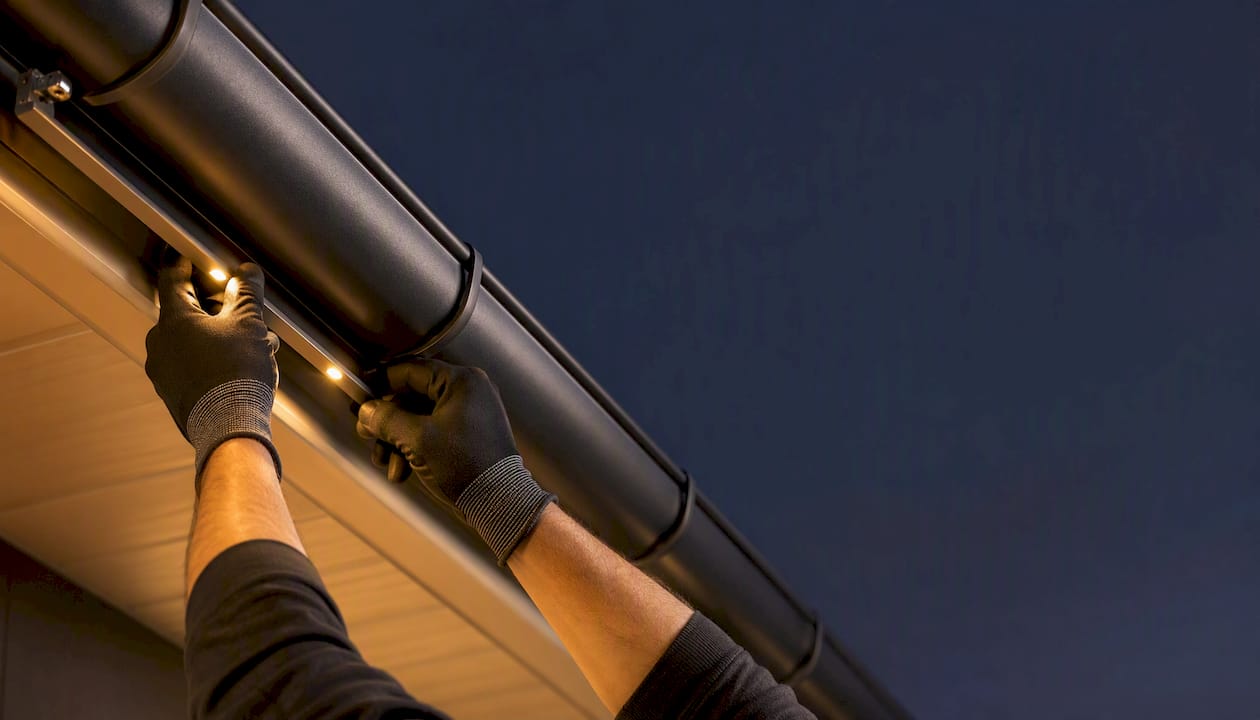
Yes, you can add permanent lighting near your gutters, but the safest, longest-lasting approach avoids drilling into the gutter itself. Professional roofline and track systems mount to the fascia or structure behind the gutter, while purpose-made gutter clips work fine for lightweight accent fixtures. Anything beyond a simple DIY kit, and any hardwired transformer work, should follow National Electrical Code guidelines or go to a licensed electrician.
TL;DR:
- Gutter clips can support lightweight LED strings but typically max out at 0.5 pounds per foot, making them unsuitable for heavier or longer runs.
- Professional roofline and track systems mount to fascia or roof structures, offering a lifespan of over 10 years and avoiding gutter damage or rust issues.
- Low-voltage wiring, sealed with heat-shrink tubing and outdoor-rated connectors, prevents flickering and shorting caused by weather or water intrusion.
- Installation must comply with National Electrical Code and HOA rules, with permits and licensed electricians required for hardwired systems.
- Regular maintenance includes twice-yearly fastener checks, cleaning lenses, and inspecting wiring to prevent seasonal failures and structural issues.
Table of Contents
- DIY Gutter Clips vs Professional Roofline Track Systems
- What Are the Best Mounting Methods for Gutter-Adjacent Lighting?
- How Do You Wire and Weatherproof Permanent Gutter Lights?
- What Safety and Code Rules Apply to Gutter Lighting?
- How Do You Maintain and Troubleshoot Permanent Gutter Lights?
- Why Professional Installation Changes the Long-Term Outcome
- The Real Trade-Off Nobody Tells You About
- Getting a Free Estimate for Permanent Gutter Lighting
- Sources
DIY Gutter Clips vs Professional Roofline Track Systems
Choosing between a weekend DIY kit and a professional install comes down to how long you want the lights to last and how much control you want over the final look.
DIY gutter light kits typically clip directly onto the gutter’s lip using plastic or metal clips, sometimes reinforced with adhesive strips. They’re inexpensive, quick to install, and forgiving if you change your mind about placement. Some kits, like the Govee Permanent Outdoor Lights Pro, use VHB adhesive and clips for fast setup, but they cap total run length and the manufacturer recommends professional installation for larger, truly permanent systems.
Professional track systems take a different approach entirely. Instead of relying on the gutter as an anchor point, they mount to the fascia or roofline structure, which distributes weight properly and keeps the gutter’s drainage function untouched.
Here’s the trade-off in practice:
- DIY kits: $50 to $300 in materials, 2 to 6 hours of labor, lifespan of 2 to 5 years depending on UV exposure and clip fatigue
- Professional systems: $2,000 to $6,000+ installed, engineered for 10+ years of service, backed by installer warranties
- Gutters aren’t always the right mounting point at all. Homes with vinyl or older aluminum gutters, or gutters already sagging under debris weight, do better with soffit or fascia mounting instead
If your gutters are original to a home built before the 2000s, don’t assume they can bear even the modest weight of a light run without reinforcement.
What Are the Best Mounting Methods for Gutter-Adjacent Lighting?
Every mounting method for permanent lighting near gutters comes with its own weight limits, tools, and failure points. Here’s how the main options stack up.
- Gutter clip and J-channel mounts. These clamp onto the outer lip of the gutter without penetrating the metal. They work well for lightweight LED node strings but typically max out around 0.5 pounds per foot of run before sagging becomes visible.
- Non-drill adhesive and clip systems. VHB tape and snap clips avoid holes entirely, but they struggle with thermal expansion. Aluminum gutters expand and contract across seasonal temperature swings, and adhesive bonds that hold fine in April can peel by August. UV exposure accelerates this breakdown over 2 to 3 years.
- Drilling into the gutter. Avoid this method. Holes compromise the gutter’s water seal, invite rust at the puncture point, and can void a gutter manufacturer’s warranty outright. It’s the single most common mistake homeowners make when trying to make lights “extra secure.”
- Professional track and fascia-mounted systems. These anchor to the roofline structure itself rather than the gutter, which is why manufacturer installation guidance treats adhesive tape as a temporary positioning aid only, not a permanent fastening method. Structural mounting spreads load properly and keeps the gutter doing its actual job: moving water off the roof.
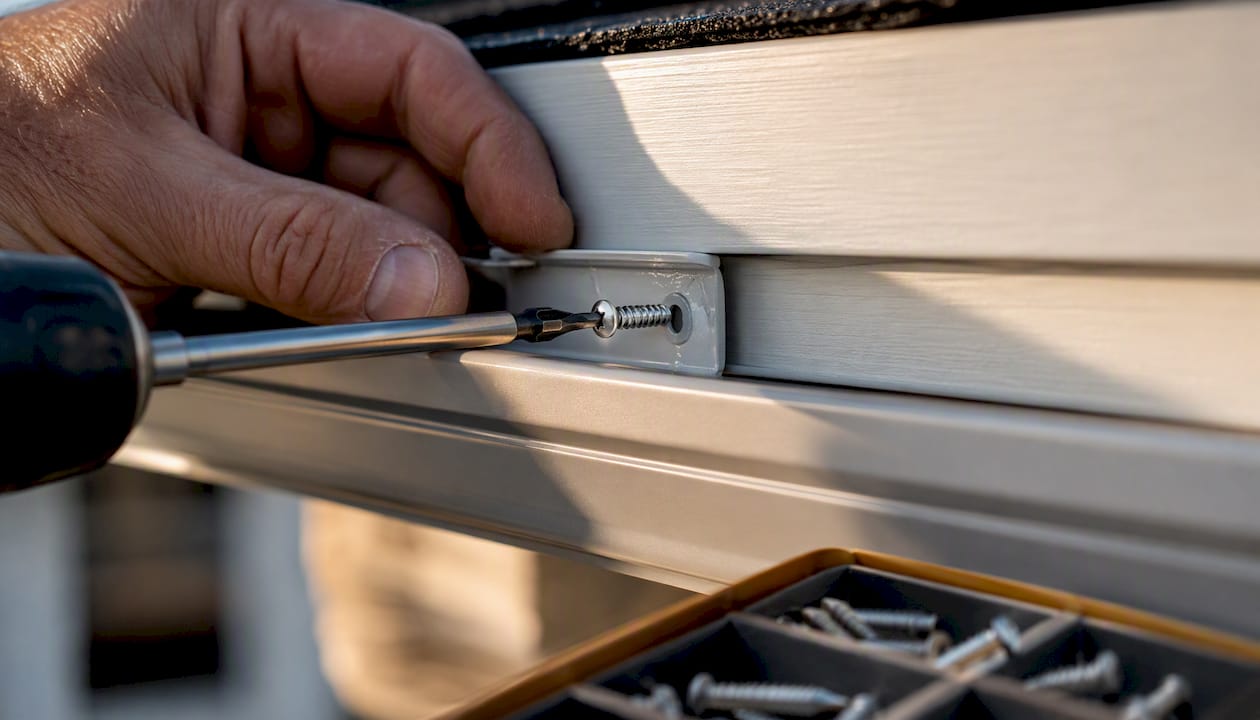
Whichever method you choose, fastener material matters as much as placement. Standard zinc-plated screws corrode within a season or two of exposure to runoff.
Pro Tip: Use stainless steel or coated exterior-rated screws for any gutter-adjacent hardware. The few extra dollars per box save you a callback visit when standard fasteners rust through and drop a light string in year two.
How Do You Wire and Weatherproof Permanent Gutter Lights?
Most permanent lighting systems run on low-voltage power, typically 12 or 24 volts, stepped down from household current by a transformer mounted in a dry, accessible location like a garage wall or protected eave. Low voltage matters for two reasons: it’s safer to work with during installation, and it reduces the fire risk of a compromised connection sitting against a metal gutter for years.
Running wire discreetly often means threading it through downspouts rather than stapling it along the roofline in plain sight. Installers commonly use a pull technique, fishing a weighted line down the spout first, then taping the wire to it and pulling it through. This works well, but leaf guards complicate things. If your gutters have leaf guard inserts, you’ll likely need to cut a small access point, and that penetration should be sealed with UV-resistant silicone so it doesn’t become a leak or a clog.
Weatherproofing the connections themselves is where most DIY installs fail over time.
- Use heat-shrink tubing over every splice, not just electrical tape
- Choose waterproof connectors rated for outdoor, submersible-adjacent use
- Confirm the light nodes carry an IP65 or IP67 rating, and check that your power supply enclosure carries its own separate rating, since controllers often need less protection than the exposed light run
- Seal any wire entry points into siding or fascia with UV-rated exterior caulk, not standard indoor sealant
Skipping any one of these steps is how a system that worked fine in October starts flickering or shorting out by February. If your plan involves a hardwired controller box or a dedicated circuit, that’s the point to call a licensed electrician rather than push through on your own.
What Safety and Code Rules Apply to Gutter Lighting?
Before you touch a ladder, a few ground rules keep the project from turning into a hospital visit or a code violation.
- Never work a ladder alone on two-story roofline sections; use a spotter and confirm the base sits on level, stable ground
- For steep or multi-story rooflines, rent scaffolding or hire a pro instead of stretching an extension ladder past its safe reach
- Check that transformer placement and outdoor wiring comply with the National Electrical Code and your local code amendments; manufacturers explicitly warn that noncompliance can void product warranties and create real shock or fire hazards
- Review your HOA guidelines before drilling or clamping onto rooflines, since some communities restrict visible hardware or require pre-approval for permanent fixtures
- If the job involves a new dedicated circuit or hardwired connection to your panel, expect to need an electrical permit and a licensed electrician, not a weekend DIY session
Pro Tip: Call your HOA before you call an electrician. A beautifully installed system that violates a covenant is a removal order waiting to happen.
How Do You Maintain and Troubleshoot Permanent Gutter Lights?
A permanent system still needs seasonal attention, just far less than traditional string lights you’d take down every January.
- Check fasteners twice a year, spring and fall, for loosening from wind load or thermal cycling, and look for early rust spots on any exposed screw heads.
- Clean lenses and covers when you clean your gutters. Pollen film and grime cut visible brightness more than most homeowners expect.
- Manage seasonal debris and ice since leaves clogging a gutter with a light run inside it can trap moisture against wiring, and heavy ice buildup can pull clips loose.
- Diagnose common failures fast: a single dark section usually means a loose connector, not a dead run. A flickering zone often points to water intrusion at a splice. Most smart controllers just need a power cycle reset before you assume hardware failure.
- Call a professional if you see water staining near a gutter seam, repeated outages after a reset, or any visible gutter damage. Those are structural issues, not lighting issues, and they compound if ignored.
A landscape lighting checklist built for your specific climate zone makes these seasonal passes faster and less likely to miss something.
Why Professional Installation Changes the Long-Term Outcome
Vendor and installer guidance is consistent on one point: professional roofline and track systems are built to avoid damaging shingles, fascia, or gutters while still delivering weatherproof, app-controlled lighting year-round. That structural mounting approach is why professional systems anchor to the roofline rather than the gutter lip itself.
A professional estimate typically covers more ground than a DIY kit purchase ever could:
- A full roofline inspection to identify the best structural mounting points
- A wiring plan that routes power discreetly and keeps transformers accessible for service
- Smartphone-based color and scheduling control, so the same system handles holiday displays, security lighting, and everyday accent lighting
- A maintenance conversation covering warranty terms and what ongoing service includes
Beyond holidays, the same permanent roofline lighting supports security presence lighting, outdoor entertaining, and event-specific color schemes without another ladder trip.
The Real Trade-Off Nobody Tells You About
Most articles on this topic treat DIY versus professional installation as a budget question. It isn’t, not primarily. It’s a question of what you’re willing to have fail quietly.
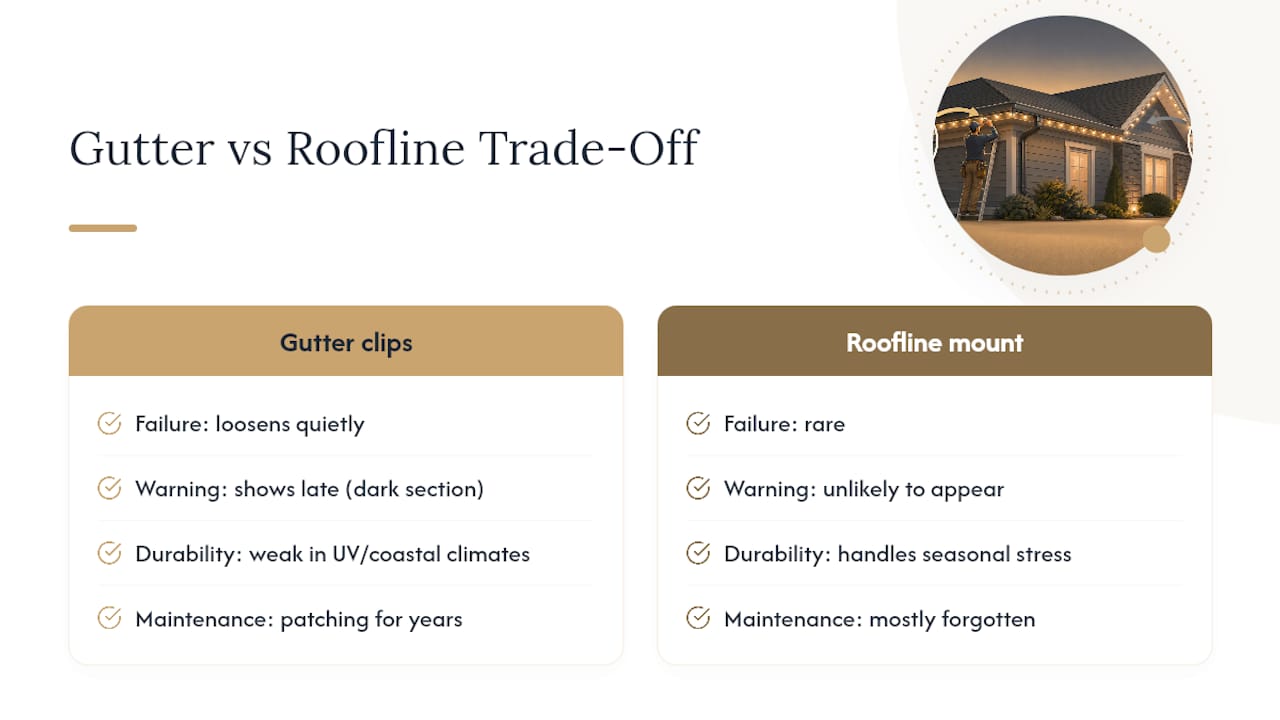
A gutter clip system that loosens after two seasons doesn’t announce itself. You notice a dark section, assume it’s a bulb, and don’t realize until your gutter is sagging at the mounting point that the real problem started months earlier with a bracket rated for far less weight than you hung on it. The conventional advice, “just clip it on, it’s not permanent,” undersells how much seasonal stress a coastal or high UV climate puts on adhesive and plastic clips.
What the research actually supports is more specific than “hire a pro if you can afford it.” It’s this: decide upfront whether you want the gutter doing double duty as both drainage and light support, or whether you want the lighting load moved entirely onto the roofline structure. Homeowners who skip that decision end up patching problems for years. Homeowners who mount to structure from day one mostly don’t think about their lights again, which is the whole point of calling something permanent.
— Dave
Getting a Free Estimate for Permanent Gutter Lighting
Skipping the ladder entirely is the real advantage here. Instead of researching clip weight ratings and adhesive UV ratings yourself, a professional estimate walks your roofline, identifies the strongest structural mounting points, and builds a wiring plan that keeps your gutters doing their actual job.

A solid estimate should cover four things: a physical inspection of your fascia and roofline, a specific mounting recommendation (not a generic quote), a wiring and weatherproofing plan, and a clear cost range before any work starts. When you’re comparing installers, ask directly about warranty terms, the IP rating of the light nodes and power supply, and whether ongoing maintenance is available as a subscription or a one-off service call.
If you want to see how the mounting and color options actually look on a real roofline before committing, the outdoor lighting scene-setting guide walks through common configurations. From there, requesting a free estimate takes a few minutes and gets a technician on your roofline instead of you.
Sources
- Installing gutter mounts for landscape lighting: a comprehensive guide
- Nanoleaf Permanent Outdoor Lights | Smart Multicolor LED Lighting
- CL-495 installation / technical document
- Permanent Outdoor Lights | Custom LED Track Lighting Systems