
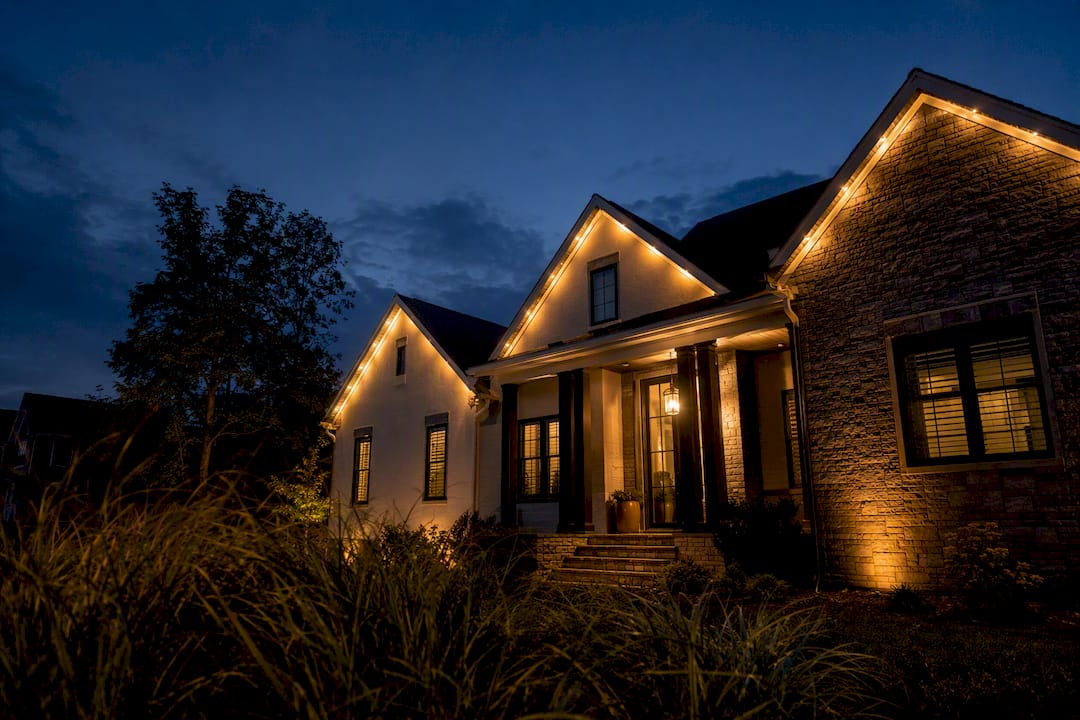
A well-installed permanent roofline lighting system can last multiple decades of realistic homeowner use, backed by LED nodes rated for 50,000 hours or more. The real determining factors are installation quality and weather sealing, not the bulbs themselves. Foreverglowlighting has watched enough installs age in the Carolina heat and humidity to know that the number on the box matters far less than the hands that put it up.
TL;DR:
- Proper installation, weather sealing, and quality components are critical to achieving the 20 to 30-year lifespan of roofline LED systems, not just bulb ratings.
- Ensuring IP65 or higher enclosures, high-quality drivers, and robust sealing significantly extends system longevity and prevents early failure.
- Regular seasonal maintenance, including inspections and cleaning, is essential to maintain performance and reach the maximum expected lifespan.
- Warranty coverage should explicitly include LEDs, drivers, and workmanship, with particular attention to moisture intrusion protection.
- The environmental benefits of permanent systems become clearer over time, as they reduce waste and energy consumption compared to yearly replacement of string lights.
Table of Contents
- Permanent Roofline Lights Lifespan: The Hour Ratings Explained
- What Actually Shortens or Extends the Lifespan of Roofline Lights
- How to Maintain Permanent Roofline Lights for Maximum Life
- What Warranties on Permanent Roofline Lighting Should Cover
- Cost vs. Value: Is the Lifespan Worth the Investment?
- What We’ve Learned Installing Roofline Lighting Long-Term
- The Environmental Side of Permanent Roofline Lighting
- Who Should Actually Invest in Permanent Roofline Lighting
- Getting the Full Lifespan Out of Your Roofline System
- Sources
Permanent Roofline Lights Lifespan: The Hour Ratings Explained
Manufacturers rate LEDs in hours, and translating that into years depends entirely on how often you run the system. Here’s how the common bands break down for roofline installations:
- Conservative rating (20,000 to 30,000 hours): Found in budget systems, these hold up fine for occasional use but wear faster under daily cycling.
- Typical rating (30,000 to 55,000 hours): The most common range reported for outdoor LED fixtures, and where most quality residential systems land.
- Premium rating (50,000 to 100,000 hours): Higher-end systems approach or claim this range, though the upper figures near 100,000 hours are usually lab-condition marketing numbers rather than a guarantee for your roofline.
Run the math and the picture gets interesting. At 6 hours a day, a 50,000 hour rating stretches to roughly 22 years of LED node life. If you only flip the system on for the holiday season, roughly 45 to 60 days a year, the cumulative hours stay so low that even a modestly rated system can last decades in practice.
One distinction homeowners miss: the hour rating describes the LED node itself, not the whole system. Drivers, connectors, and mounting hardware often fail before the diodes do, which is why installation quality ends up mattering more than the sticker on the package.
What Actually Shortens or Extends the Lifespan of Roofline Lights
The gap between a system that dies in year 5 and one still glowing in year 20 almost always comes down to four things you can check before signing a contract.
- IP rating and enclosure material. Look for IP65 or higher on anything mounted along a roofline, since that rating confirms real resistance to dust and driving rain, not just splashes.
- Driver quality and heat management. Cheap drivers overheat in direct summer sun and fail years before the LEDs they power do.
- Sealing, fasteners, and surge protection. Loose connectors let moisture creep in during winter freeze-thaw cycles, and a single power surge can take out an entire run if there’s no protection built in.
- Climate exposure. Salt air, intense UV, and repeated freezing all accelerate wear on housings and seals faster than the LED components inside them.
Pro Tip: Ask any installer bidding your job whether their drivers carry their own separate warranty from the LED nodes. If they hesitate or don’t know, that’s a sign the system wasn’t built with long-term durability in mind.
Durability of roofline lights also depends on where the tracks physically live. A system designed to sit flush and stay invisible by day tends to shed water and debris better than one that’s exposed or improvised with clips and zip ties.
How to Maintain Permanent Roofline Lights for Maximum Life
Maintenance of roofline lights is lighter than most homeowners expect, but skipping it entirely is how a 20 year system turns into a 10 year one.
- Twice a year, visually inspect the track for cracked seals, discoloration, or gaps where water could enter.
- Clean debris out of the channels each spring and fall, since trapped leaves and pollen hold moisture against the housing.
- Test the power supply and driver at the start of each season to catch flickering or dimming before it spreads.
- Watch for uneven color or fading nodes, which usually signal a driver issue rather than a bad LED batch.
- Call a professional if you spot condensation inside the housing, since that almost always points to a compromised seal rather than a cosmetic problem.
Most homeowners spend little on upkeep beyond an annual cleaning, and a step-by-step cleaning routine keeps that cost predictable rather than reactive.
What Warranties on Permanent Roofline Lighting Should Cover
Warranty length is one of the clearest signals of how confident a manufacturer or installer is in their own hardware. Before you commit, check that the warranty separates three distinct components:
- LED nodes for color shift or complete failure.
- Drivers and power supplies, which typically fail before the LEDs and deserve their own coverage window.
- Workmanship, covering the physical installation, sealing, and mounting labor.
Vendors vary widely on what their warranty fine print actually includes, and water intrusion is the detail most often buried or excluded. A warranty that only covers the bulbs and ignores labor or moisture damage leaves you paying out of pocket for the failures most likely to happen.
Cost vs. Value: Is the Lifespan Worth the Investment?
Permanent roofline lighting costs more upfront than a box of string lights, but the comparison flips once you factor in years of ownership. Consumer string lights commonly fail after roughly 1,500 to 2,000 hours, largely from connector wear and storage damage between seasons, meaning most households replace them every year or two.
- No annual repurchase. A permanent system installed once can outlast a decade of string-light replacement cycles.
- Lower energy costs. LEDs use up to 80% less energy than incandescent string lights, which adds up over years of holiday and accent use.
- No ladder time. Removing the annual hanging and takedown labor is worth real money, even before counting the safety benefit.
- Consistent curb appeal. A system that works every night, not just during setup week, changes how a home looks and feels year-round.
A comparison of roofline systems against traditional string lights shows the payback math tends to favor permanent installs somewhere around the 3 to 5 year mark for most households, once energy and replacement savings are added together.
What We’ve Learned Installing Roofline Lighting Long-Term
The most common failure we see in the field isn’t a burned-out LED. It’s a driver that overheated because it was mounted in a spot with no airflow, or a connector that corroded because the track wasn’t sealed properly on day one.
- We install with sealed tracks rated IP65 or higher for every exposed roofline run.
- We spec drivers rated for the thermal swings Charlotte summers and winters actually produce.
- We add surge protection standard, since one bad storm can otherwise take out an entire circuit.
For homeowners weighing system types, our guide to roofline lighting options breaks down how construction choices affect long-term durability.
The Environmental Side of Permanent Roofline Lighting
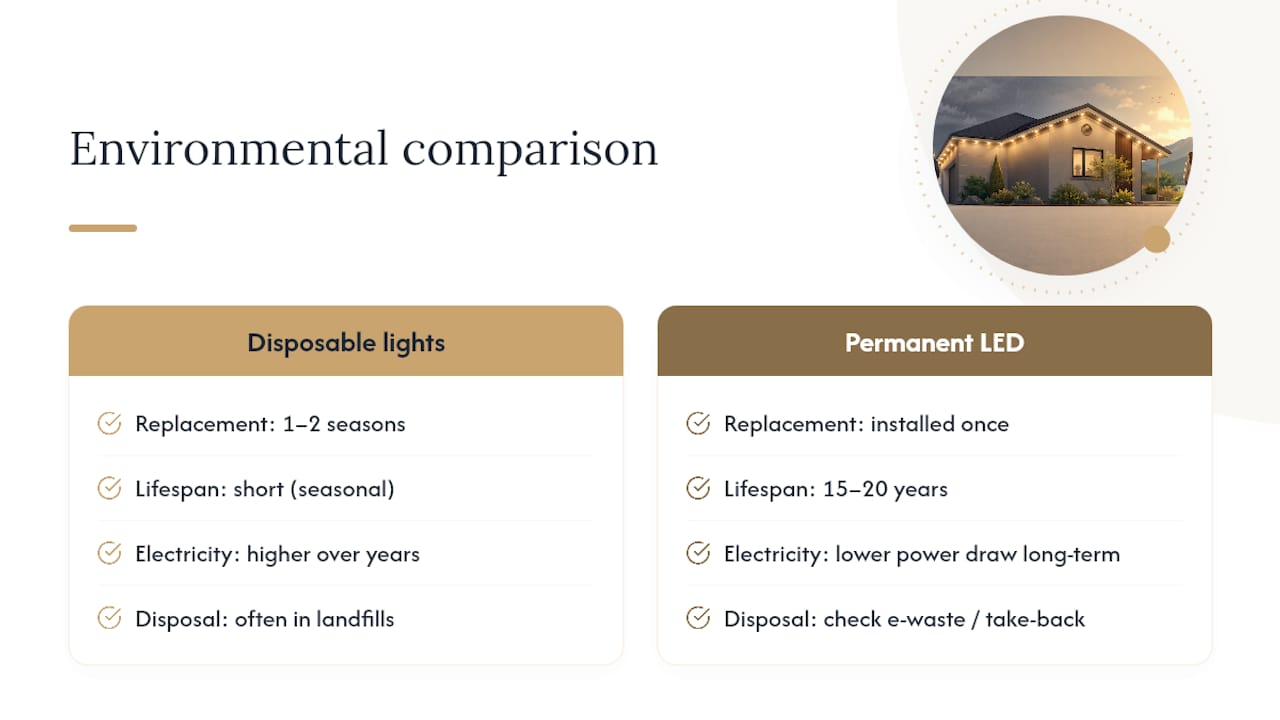
A system built to last two decades produces less waste than one replaced every year or two, simply by removing repeated manufacturing and shipping cycles from the equation. String lights that fail after a season or two typically end up in landfills, tangled with wiring that’s rarely recycled. A permanent system installed once and maintained properly sidesteps that cycle almost entirely.
LEDs themselves carry environmental tradeoffs. They contain small amounts of circuit board material and occasionally trace metals, so they shouldn’t go in a regular curbside recycling bin. Many municipal electronics recycling programs accept LED fixtures, and some manufacturers offer take-back programs for drivers and housings at end of life. Checking local e-waste guidelines when a system is finally retired is worth the ten minutes it takes.
The bigger environmental win comes from energy use while the system is running, not just at disposal. Lower power draw over 15 to 20 years of operation adds up to a meaningfully smaller footprint than replacing incandescent string lights annually, both in electricity consumed and in packaging and shipping waste avoided. Durability, in this case, doubles as an environmental strategy. A system that doesn’t need replacing is one less box shipped, one less spool of wire in a landfill, and one less trip up a ladder that ends in tangled string lights getting tossed.
Who Should Actually Invest in Permanent Roofline Lighting
If you plan to stay in your home for years, use your lighting often, or want reliable entry and security lighting, the lifespan math favors going permanent. If you’re renting, moving soon, or only decorate for a few weeks a year, a modest seasonal setup may cover your needs just fine. Match the investment to how long you’ll actually be there to enjoy it.
— Dave
Getting the Full Lifespan Out of Your Roofline System
The lifespan numbers in this article assume one thing: a correct install from the start. A professional installer is the alternative to gambling on a DIY kit or a lower-bid installer who skips sealing and surge protection to save a few hundred dollars. High-quality roofline systems are built around IP65+ hardware, quality drivers, and sealed tracks because those details separate a 5 year system from a 20 year one.
Maintenance plans handle the seasonal checks most homeowners forget to schedule themselves, so the system invested in actually hits its rated lifespan instead of quietly degrading behind the scenes. If you’re comparing quotes or just want to understand what a proper install looks like before you commit, see how our installation process works and request a free estimate for your home.
Sources
- Permanent Christmas Lights vs Traditional String Lights – Edwards Christmas Lights
- Permanent Christmas Lights Buying Guide | The Gentlemen Pros