
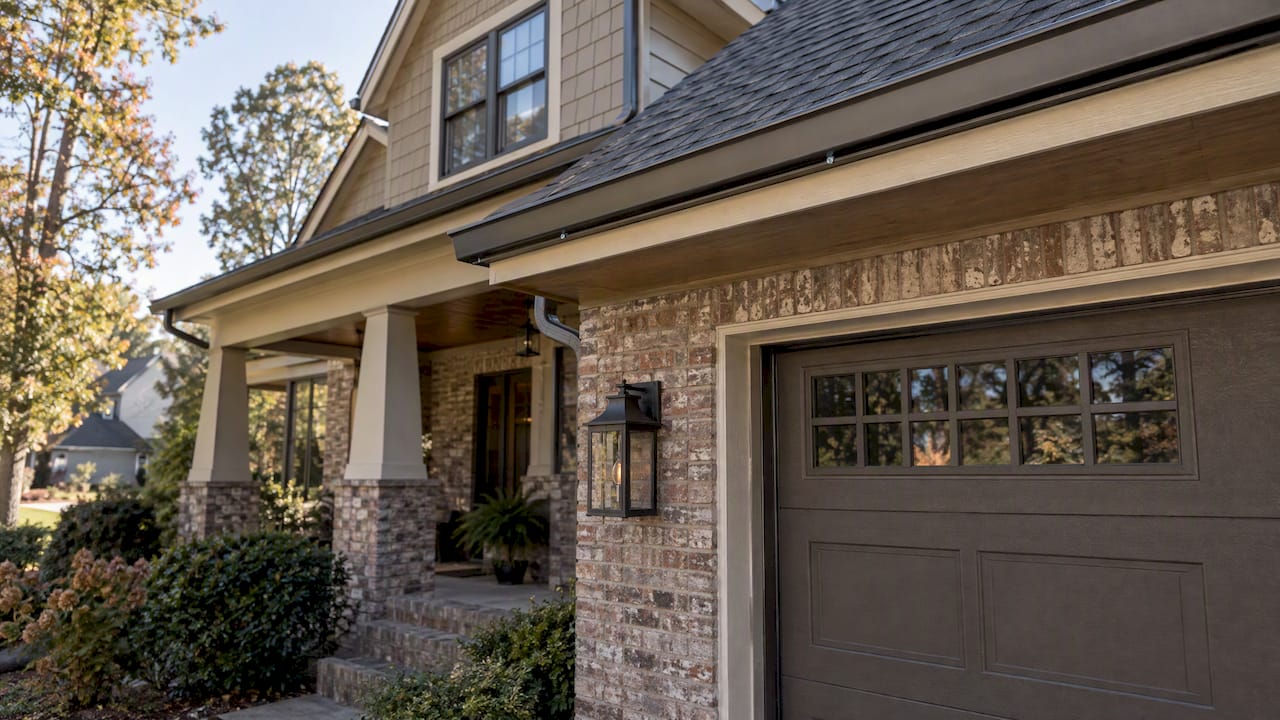
For most homes, an extruded aluminum track with a UV-stable polycarbonate lens and corrosion-resistant hardware is a common choice balancing heat management, impact resistance, and a low daytime profile. The single spec to verify first is the wet-location (IP) rating on connectors and drivers, since that number predicts failure more reliably than anything else on the spec sheet. Homeowners in coastal, hail-prone, or very high-UV regions should expect to pay more for upgraded finishes and sealing.
TL;DR:
- Extruded aluminum housings with UV-stable polycarbonate lenses and stainless steel fasteners are best for impact resistance and corrosion longevity, especially in coastal and hail-prone areas.
- An IP67 rating on drivers and connectors is necessary to ensure outdoor durability, with power supplies placed in protected locations for extended lifespan.
- Gaskets and proper sealing are critical; inexpensive gaskets can allow moisture ingress, leading to early failure of the system.
- Installation methods vary by roof type but should include non-penetrating clamps or seam clamps for metal roofs to prevent warranty voids and leaks.
- Regular maintenance, including annual inspections of seals and fasteners, helps prevent early system failure and prolongs system performance.
Table of Contents
- Materials overview: housings, lenses, seals, and fasteners
- How tracks attach to your fascia, soffit, or metal roof
- Weatherproofing and durability: IP ratings, finishes, and thermal management
- Wiring and electrical basics homeowners should expect
- Installation day: typical steps, timeline, and common complications
- HOA, permits, and daytime appearance: how material choices affect approvals
- Maintenance and cleaning: material-specific guidance
- Forever Glow Lighting: credentials, services, and when to call a pro
- Weighing cost, longevity, and environmental impact by material
- Matching track materials to roofline shapes and architectural styles
- Choosing materials for your climate and local weather
- Common problems and troubleshooting tips by material
- Sustainability and recyclability of track materials
- Balancing cost, longevity, and an invisible daytime look
- How Forever Glow Lighting helps you choose the right materials
- Datasheets worth saving for your installer or HOA
- Sources
- FAQ
Materials overview: housings, lenses, seals, and fasteners
Four materials decide how a permanent roofline system looks and how long it lasts: the housing, the lens, the gaskets, and the fasteners.
Extruded aluminum is the standard housing material because it is stiff enough to stay straight along a long fascia run and because it doubles as a heat sink. A die-cast aluminum housing datasheet from a commercial fixture maker notes that aluminum housings with a built-in heat-sink design extend LED life, and that corrosion-resistant powder coat finishes with proper pretreatment hold up better outdoors than paint alone. Anodized aluminum is a step-up for coastal homes; it resists salt pitting better than most powder coat systems.
Lens material matters just as much as housing material:
- Polycarbonate resists impact well, which is why it shows up on most commercial-grade track systems.
- Acrylic is cheaper and optically clearer but cracks more easily under hail or thermal stress.
- Unstabilized polycarbonate can yellow over years of UV exposure, so UV-stabilized polycarbonate should be specified by name, not assumed.
Gaskets, usually silicone or EPDM rubber, are what actually earn a fixture its IP rating. A perfect aluminum housing with a cheap gasket still lets moisture in. Fasteners should be stainless steel or marine-grade; standard zinc-plated screws rust within a season or two on an exposed roofline.
How tracks attach to your fascia, soffit, or metal roof
Mounting method depends on what the track is attached to, and each substrate has its own rules.
- Fascia and trim mounting is the most common approach for asphalt-shingle homes, using low-profile brackets screwed directly into solid trim boards; it gives the cleanest daytime look.
- Soffit or under-eave mounting works well when fascia is damaged or too narrow, and it tucks the track further out of sight, though it can be harder to access for future service.
- Gutter-safe clamps are non-penetrating hardware that grips the gutter lip instead of drilling into it, protecting the gutter’s warranty and preventing leaks at the attachment point.
- Standing-seam and metal roof attachments use seam clamps rather than screws, since puncturing a metal panel voids most roofing warranties and invites corrosion at the fastener site.
Whatever the substrate, the fastener should match or exceed the corrosion resistance of the track hardware itself. A stainless track bracket paired with a mismatched steel screw creates a weak point that fails long before the rest of the system does.
Weatherproofing and durability: IP ratings, finishes, and thermal management
The IP rating on drivers and connectors is the number that predicts how long a system survives outdoors. IP65 covers protection against water jets, while IP67 and IP68 cover temporary and continuous submersion, which matters for low points in a run where water can pool. The Unilume standard series datasheet specifies an IP67 rating for its outdoor strip and notes that power supplies must either be installed in a protected location or carry their own wet-location rating.
An IP67-rated connector is built to survive temporary submersion, which matters most at low points on a roofline where runoff collects after storms.
A few finish and material details separate a system that lasts from one that fails early:
- Powder coat pretreatment (iron phosphate or similar) and a proper high-temperature bake matter more for longevity than the thickness of the topcoat, according to a commercial luminaire finish datasheet.
- Aluminum housings improve LED lifespan by pulling heat away from the diodes rather than trapping it inside the track.
- Coastal homes benefit from anodized aluminum or marine-grade stainless hardware to resist salt corrosion.
- Hail-prone regions call for polycarbonate lenses over acrylic, since impact resistance matters more than optical clarity there.
Wiring and electrical basics homeowners should expect
Material choice and wiring choice are connected: a great housing paired with exposed wiring or the wrong enclosure still fails early.
- Transformers and drivers belong in wet-location-rated enclosures, mounted somewhere accessible but shielded from direct spray.
- Conduit and sealed, strain-relieved connectors keep water and movement from working a connection loose over time.
- Low-voltage systems are more common for roofline tracks and tend to be safer to service, while line-voltage runs need stricter code compliance.
- Smart app controllers need to be matched to the transformer’s voltage and load capacity before installation, not after.
Pro Tip: Ask any installer whether your local electrical code requires a licensed electrician for the transformer connection; even low-voltage systems often fall under National Electrical Code (NEC) provisions for outdoor wiring.
A system with the best aluminum track in the world still fails early if the driver sits in a location that floods every spring.
Installation day: typical steps, timeline, and common complications
Most permanent roofline installations follow a predictable sequence, and knowing it in advance helps homeowners avoid surprises.
- An evening demo and mapping session lets homeowners see the lighting pattern and approve exact placement before anything is permanently mounted.
- Mounting brackets go up first, followed by track installation, wiring runs, and connection to the transformer or driver.
- The system is commissioned and tested with the control app on site, so any dead sections or color mismatches get caught before the crew leaves.
- An average single-family home typically takes a single visit, though steep rooflines, older fascia needing repair, or metal roofing can add time.
- Handover should include a wiring diagram, finish and material specs for HOA records, and app setup instructions.
Common complications include rotted fascia that needs repair before mounting and metal roofs that require specialized clamps rather than standard brackets. Reviewing how the installation process works ahead of time helps homeowners anticipate these issues.
HOA, permits, and daytime appearance: how material choices affect approvals
Material and finish choices often determine whether an HOA approves a system on the first pass.
- HOAs commonly ask for daytime photos or mock-ups showing the track’s visibility, plus spec sheets confirming a low-profile housing.
- Finish samples, particularly color-matched powder coat swatches, help reviewers picture the final look against existing trim.
- A permit is more likely needed for line-voltage work or any electrical panel changes; low-voltage transformer installations often fall outside permit requirements, though local rules vary.
- A recessed track profile, a powder coat color matched to the fascia, and a slim polycarbonate lens address the most common objection: visibility during the day.
Homeowners submitting for approval should bring finish samples and spec sheets rather than verbal descriptions. A reviewer looking at an actual swatch approves faster than one trying to picture “a dark bronze track” from a sentence.
Maintenance and cleaning: material-specific guidance
Materials determine how a system should be cleaned, not just how long it lasts.
- Polycarbonate lenses should be cleaned with mild soap and water; solvents and abrasive pads can cloud or scratch the surface over time.
- Powder-coated housings tolerate the same mild soap approach, and a soft brush removes pollen or debris without damaging the finish.
- An annual inspection of gaskets, fasteners, and electrical enclosures catches small issues, like a loosening bracket or a cracked seal, before they become failures.
- Seasonal checks after heavy storms or extreme heat spells are worth adding to that annual routine in harsher climates.
Forever Glow Lighting: credentials, services, and when to call a pro
Specifying the right housing, lens, and hardware combination for a given roofline, climate, and HOA takes more than reading a datasheet. Some lighting companies design custom-installed, smart LED roofline systems engineered for weather resistance and HOA-compliant appearance, with color-matched tracks and commercial-grade hardware selected for regional climates. Services can include material selection guidance, HOA documentation support, and maintenance subscription programs for ongoing seal and hardware checks.
Weighing cost, longevity, and environmental impact by material
Aluminum housings cost more upfront than basic steel or plastic alternatives, but they last longer and resist the corrosion that drives early replacement. Steel housings are heavier and cheaper in some product lines, but without a quality galvanized or powder-coated finish, they rust faster in humid or coastal climates, shortening their useful life.
Polycarbonate lenses cost somewhat more than acrylic but survive hail and impact far better, which avoids the replacement cost and labor of swapping cracked lenses mid-season. Acrylic’s lower price attracts budget buyers, but its brittleness under cold or impact stress often erases that initial savings within a few years.
On the environmental side, aluminum is widely recycled and retains value as scrap, which makes aluminum-housed systems a reasonable long-term choice from a materials standpoint. Polycarbonate is less commonly recycled through standard municipal streams than aluminum, though its longer service life reduces the frequency of replacement and disposal compared to acrylic.
Stainless steel hardware costs more than zinc-plated alternatives but avoids the rust streaks and fastener failures that force early hardware replacement, a hidden cost that rarely shows up in the initial installation quote. Choosing materials with a longer service life, even at a higher purchase price, generally reduces the total material consumed and discarded over a roofline’s lifetime.
Matching track materials to roofline shapes and architectural styles
Track material and profile need to suit the roofline they sit on, not just the climate.
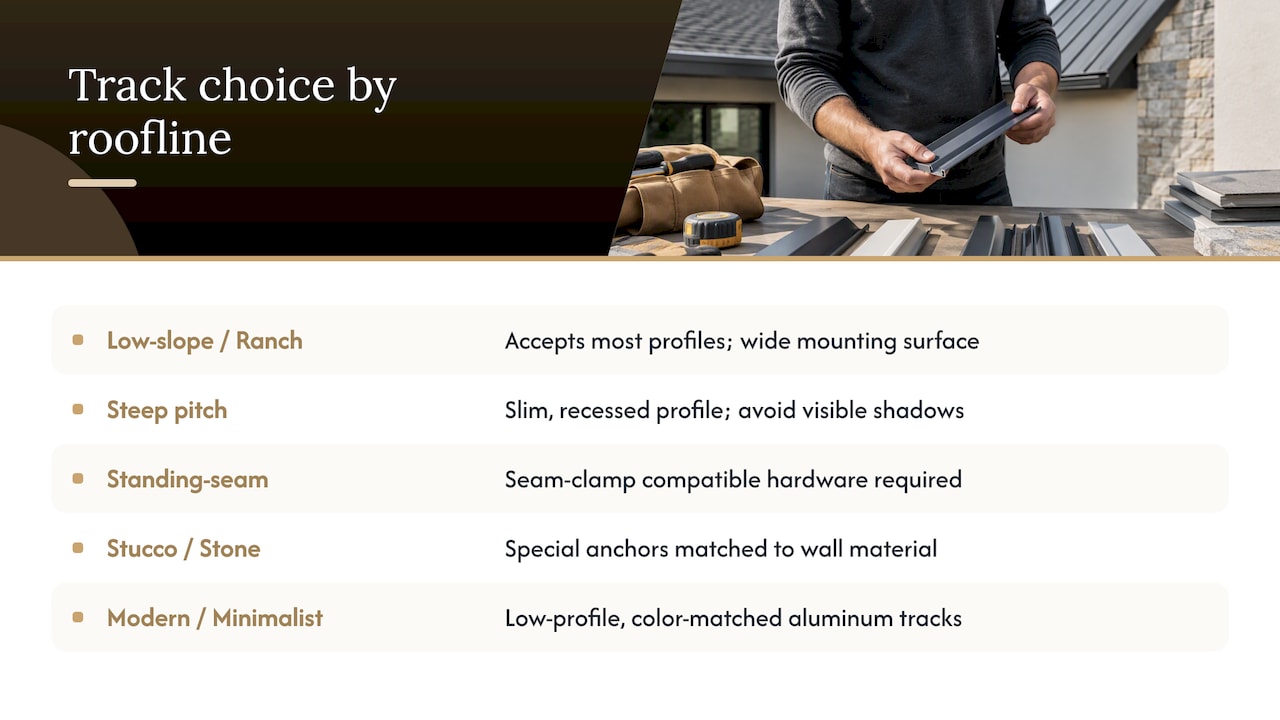
Low-slope and ranch-style rooflines with wide, flat fascia boards accept almost any track profile, since there is ample mounting surface and the track sits close to a flat plane. Steeply pitched rooflines, common on colonial and craftsman-style homes, often call for a slimmer, recessed track profile so the system does not create shadows or stand out against varied trim angles.
Homes with standing-seam metal roofs need seam-clamp compatible hardware rather than standard brackets, which narrows the track and housing choices to products designed for clamp mounting. Stucco and stone exteriors, common on Mediterranean and Spanish-style homes, often require specialized anchors rather than the wood screws used on standard fascia, so the housing’s mounting hardware needs to match the wall material as much as the roofline.
Modern and minimalist architecture tends to favor a low-profile, color-matched aluminum track that disappears against clean trim lines, while traditional and historic homes often benefit from a track finish chosen to blend with existing gutter or trim color rather than a stark black or white option. In every case, the housing’s physical width and depth matter as much as its material: a track that is technically durable but too bulky for a narrow fascia board will look wrong no matter how good the finish is.
Choosing materials for your climate and local weather
Climate should drive the housing, lens, and hardware decision more than price alone.
In coastal regions, salt air accelerates corrosion on any exposed metal, so anodized aluminum housings and marine-grade or stainless hardware are worth the added cost. Standard powder-coated steel hardware tends to show rust streaks within a season or two in these conditions.
In hail-prone regions, lens material matters more than housing material. Polycarbonate’s impact resistance protects against the cracking that acrylic lenses are prone to under hail or falling debris, as noted in guidance on UV-stabilized polycarbonate performance for exposed outdoor runs.
In high-UV regions, lens stabilization and powder coat quality both matter. Unstabilized polycarbonate yellows faster under intense sun, and a thin or poorly cured powder coat chalks and fades sooner than a properly pretreated and baked finish.
In humid, temperate climates like much of the southeastern United States, the main risks are moisture at connection points and thermal cycling, so a solid IP67 rating on drivers and connectors matters more than any single finish upgrade. Homeowners researching permanent roofline lighting types for their specific home should weigh local weather patterns before comparing price alone.
Common problems and troubleshooting tips by material
Most roofline lighting failures trace back to one of three materials: the lens, the gasket, or the fastener.
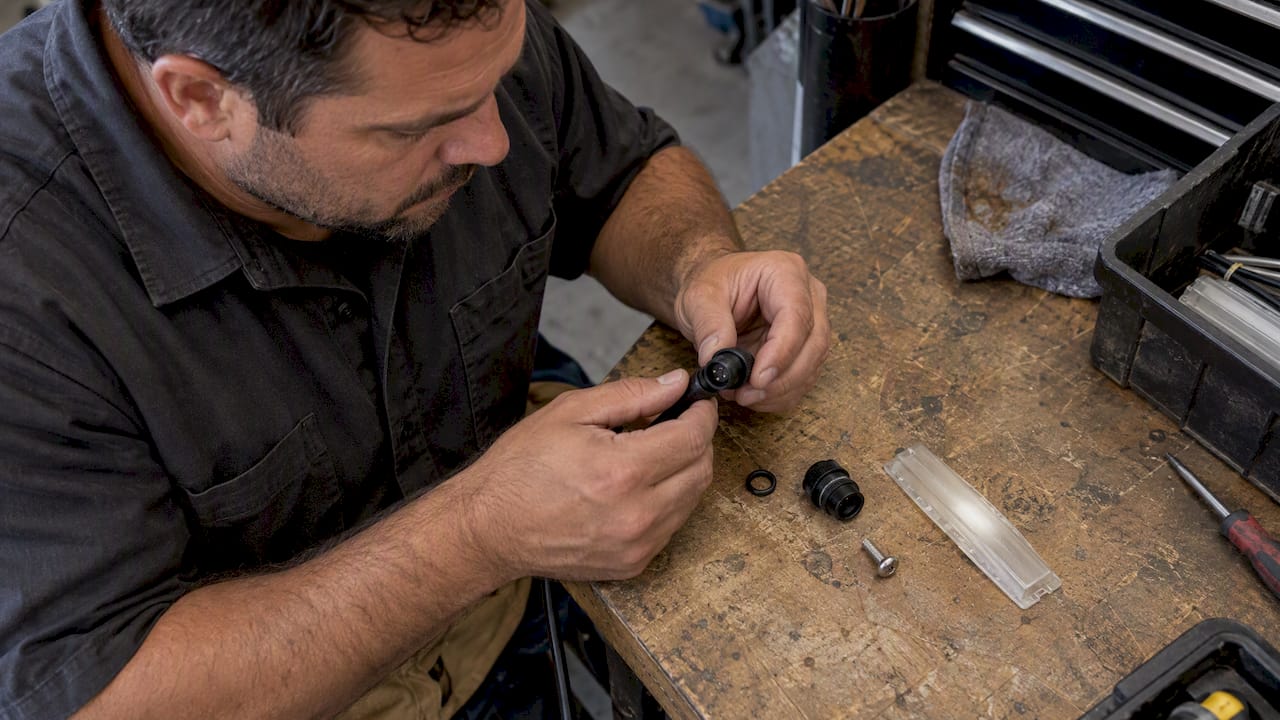
A cloudy or yellowed lens usually points to unstabilized polycarbonate or acrylic that has spent several seasons in direct sun; replacing it with a UV-stabilized polycarbonate lens solves the problem permanently rather than temporarily.
A dead section of track that otherwise tests fine at the driver often means a failed gasket let moisture into a connector. Since gaskets are relatively inexpensive compared to the housing itself, replacing the gasket and connector is usually cheaper than most homeowners expect.
Rust streaks running down from a mounting bracket indicate a fastener mismatch, typically a zinc-plated screw used with stainless or aluminum hardware. Swapping to matching stainless fasteners stops the streaking and prevents the structural weakening that follows.
A track that has warped or pulled away from fascia, often on a south-facing run, usually points to thermal expansion that was not accounted for during mounting. Expansion gaps or slotted mounting brackets, rather than fixed-point screws along the entire run, prevent this over multiple seasons.
Sustainability and recyclability of track materials
Aluminum is one of the more sustainable housing materials available for permanent roofline tracks because it is widely accepted by recycling programs and retains scrap value at the end of its service life. A track that lasts well over a decade, as aluminum-housed systems with proper finishes tend to, also reduces the material turnover that comes with replacing a cheaper system every few years.
Polycarbonate lenses are less commonly processed through standard curbside recycling than aluminum, but their impact resistance extends service life well beyond acrylic, which lowers the total volume of lens material disposed of over time. Stainless steel hardware, like aluminum, holds scrap value and is broadly recyclable, which makes it a reasonable environmental choice despite its higher upfront cost compared to zinc-plated steel.
The clearest sustainability lever available to homeowners is simply choosing materials built to last rather than materials built to be replaced. A system specified with corrosion-resistant hardware, a properly pretreated powder coat, and a UV-stable lens avoids the repeated manufacturing and disposal cycle that comes with cheaper components failing every few seasons.
Balancing cost, longevity, and an invisible daytime look
For most homes, aluminum housing, a polycarbonate lens, and stainless hardware is the right default. Coastal, hail-prone, or high-UV properties justify the upgrade cost. If budget is tight, prioritize the connector and driver’s wet-location rating first.
— Dave
How Forever Glow Lighting helps you choose the right materials
Specifying the right housing, lens, and fastener combination for your roofline and climate can require professional guidance. Some installers handle material selection, HOA documentation, and code-compliant wiring as part of installations, often offering maintenance subscriptions for ongoing seal and hardware checks.
| Service | What it covers |
|---|---|
| Permanent Christmas Lighting | Year-round roofline track installation with custom color-matched finishes |
| Landscape Lighting Design | Architectural and accent lighting design for additional outdoor areas |
| GlowCare Maintenance Subscription | Ongoing inspection and upkeep for seals, fasteners, and enclosures |
Request a free estimate through Forever Glow Lighting’s permanent lighting page to get a materials recommendation suited to your roofline and local weather.
Datasheets worth saving for your installer or HOA
Keep these on hand when comparing products or submitting for HOA approval:
- IP67-rated LED strip datasheet, for wet-location wiring standards
- Aluminum housing datasheet, for heat-sink and finish specs
- A general materials reference from Novelty Lights for comparing consumer-facing product options
Sources
- Unilume standard series LED strip (IP67) datasheet — Tech Lighting
- GE Evolve outdoor luminaire datasheet (die-cast aluminum housing) — Villa Lighting
- LUM PLED luminaire datasheet (construction and finish process) — USALTG
FAQ
What is the most durable material for roofline lighting tracks?
Extruded aluminum housings paired with UV-stable polycarbonate lenses and stainless hardware offer the strongest combination of impact resistance, heat management, and corrosion resistance for most climates. Coastal or hail-prone properties often benefit from upgraded anodized finishes or marine-grade hardware.
What IP rating do I need for outdoor roofline lighting?
An IP67 rating is standard for outdoor LED strips and connectors exposed to rain and splashing, as specified in the Unilume IP67 datasheet. Power supplies and drivers need either a wet-location rating or placement in a protected, non-exposed location.
Can roofline tracks be mounted without drilling into my roof?
Yes. Gutter-safe, non-penetrating clamps and fascia-mounted brackets attach without drilling into the roof itself, and standing-seam metal roofs use seam clamps rather than screws to avoid puncturing panels. The right method depends on your roofline substrate and roof type.
Will permanent lighting tracks be visible during the day?
A properly specified system, using a recessed track profile and a powder coat finish color-matched to your fascia or trim, is designed to stay close to invisible in daylight. This low-profile appearance is also what most HOAs look for when reviewing installation requests.
How often does permanent roofline lighting need maintenance?
An annual inspection of seals, fasteners, and electrical enclosures catches most issues before they cause failures, with additional checks recommended after severe storms. Forever Glow Lighting’s GlowCare Maintenance Subscription covers this ongoing upkeep for homeowners who prefer a scheduled service visit.