
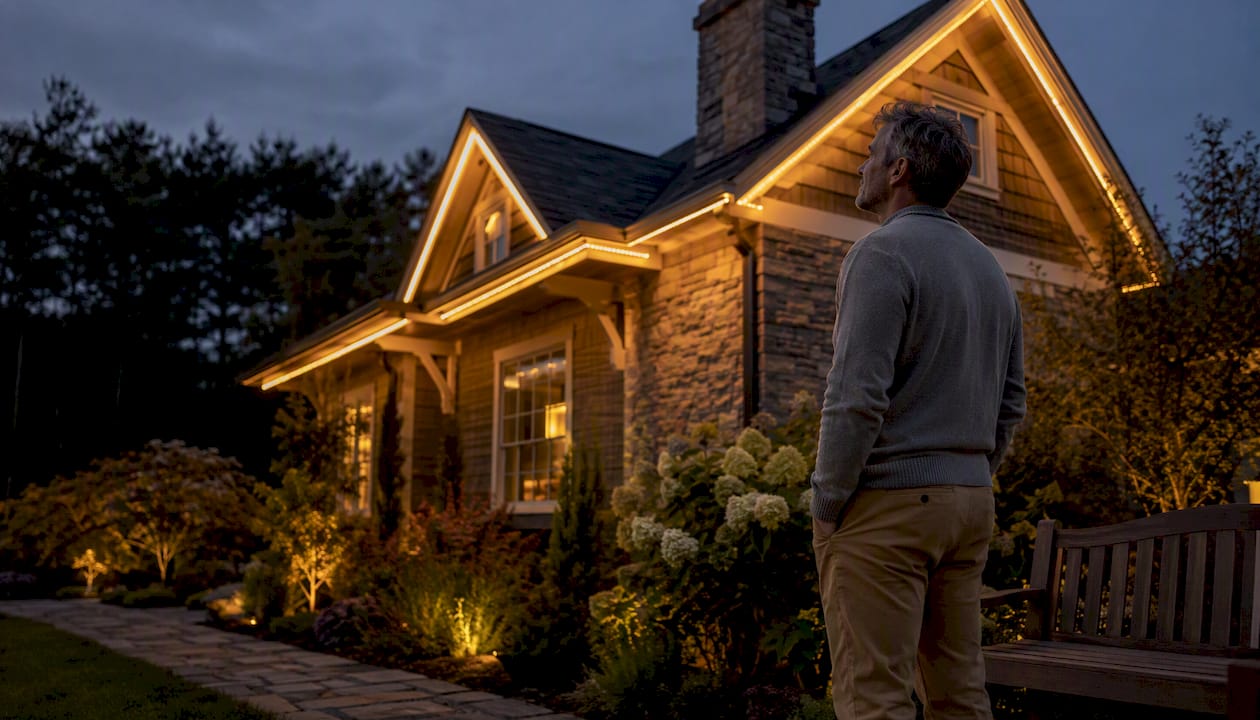
Permanent roofline lighting typically outperforms seasonal string lights on every dimension that matters to homeowners: appearance, safety, and long-term value. Three reasons stand out immediately.
- Year-round architectural look. A professionally installed LED track system mounts flush under the fascia, stays invisible during the day, and produces a clean, consistent glow at night — every night, not just in December.
- Lower lifetime energy and maintenance costs. According to the U.S. Department of Energy, residential LEDs use at least 75% less energy and last up to 25 times longer than incandescent bulbs, which is the technology still found in many seasonal string sets.
- Reduced ladder and roof risk. Foreverglowlighting installs the system once, by licensed professionals. After that, homeowners never need to climb a ladder to hang, adjust, or remove lights again.
The Illuminating Engineering Society and DarkSky International both support well-engineered, low-glare LED systems as the responsible choice for residential exterior lighting. The evidence below explains why.
Table of Contents
- How does permanent roofline lighting compare to string lights?
- What is permanent roofline lighting and how does it work?
- What types of string lights do homeowners typically use?
- What does roofline lighting actually cost over time?
- How safe is roofline lighting compared to seasonal string installation?
- How do you choose the right permanent roofline lighting system?
- Key Takeaways
- The case for permanent lighting is stronger than most homeowners realize
- Get a free estimate from Foreverglowlighting
- Useful sources
How does permanent roofline lighting compare to string lights?
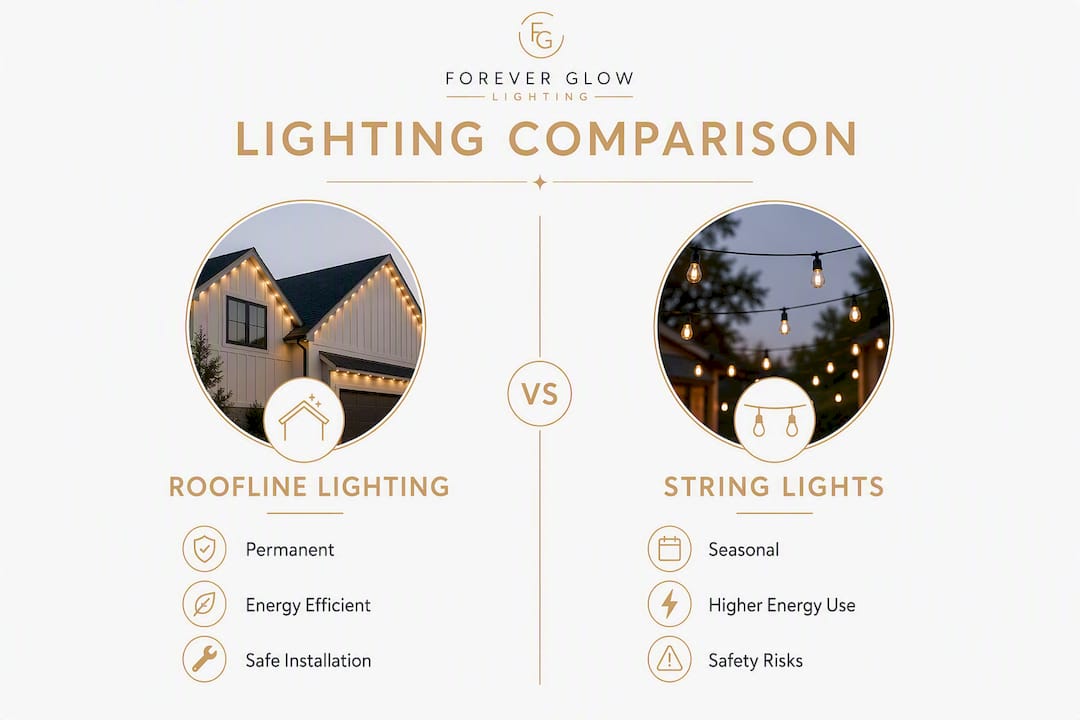
The table below covers the eight dimensions homeowners most often ask about when weighing a permanent system against seasonal strings.
| Dimension | Permanent roofline system | Seasonal string lights |
|---|---|---|
| Appearance / finished look | Flush track, hidden wiring, color-matched to trim; clean day and night | Visible clips, sagging cords, and exposed sockets during daylight |
| Installation effort & safety | One-time professional install; no repeated roof access | Requires ladder climbs every season; increases fall and roof-wear risk |
| Upfront cost | Low thousands and up, scaling with footage and complexity | Low to moderate; basic sets start under $50 |
| Maintenance & lifecycle cost | Minimal; sealed LEDs rarely need replacement | Annual bulb and cord replacement; connectors fail under weather stress |
| Energy use / efficiency | LED; uses at least 75% less energy than incandescent equivalents | Older C9 and mini-incandescent strings draw significantly more power |
| Durability / weather resistance | Aluminum track, IP-rated sealed LEDs, engineered for all seasons | Exposed cords and sockets degrade with UV, moisture, and temperature swings |
| Features & control | Smartphone app, millions of colors, scene scheduling, voice integration | Manual plug-in; no scheduling or color control on most sets |
| Seasonal flexibility / reusability | Always in place; switch scenes by app for any holiday or season | Stored and reinstalled each season; cords tangle and connectors corrode |
The single biggest trade-off is upfront cost. A permanent system costs more on day one than a box of string lights. But when you account for annual replacement costs, energy bills, and the real risk of a ladder fall, the math shifts toward the permanent option for most homeowners who plan to stay in their home more than a few years.
Pro Tip: On steep or complex rooflines, the safety calculation is especially clear. Repeated seasonal climbs on a high-pitch roof carry meaningful fall risk. A one-time professional installation eliminates that exposure entirely.
What is permanent roofline lighting and how does it work?
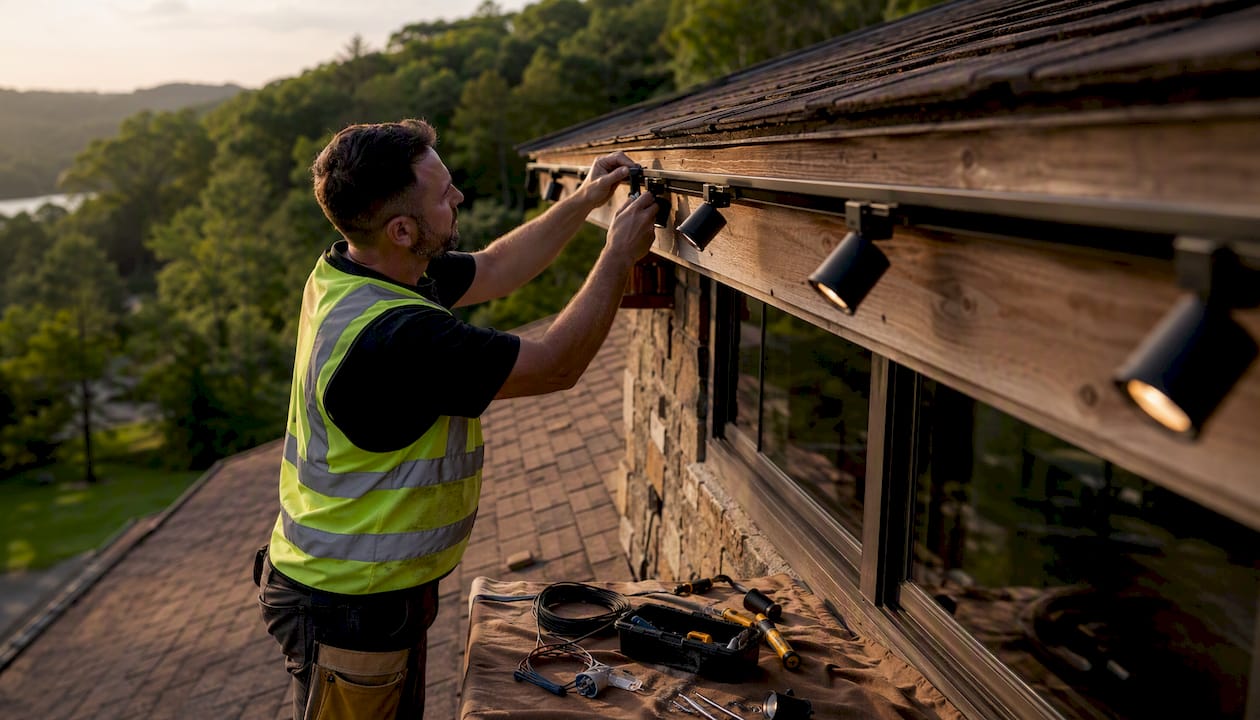
Permanent eave lighting is a year-round architectural system mounted in a track under the fascia. Unlike string lights, which hang from clips and move with the wind, a track system holds each LED module at a fixed, engineered spacing. The result is consistent brightness from one end of the roofline to the other.
The core components of a typical installation are:
- Aluminum track. Mounted directly under the fascia, color-matched to the trim. During the day, it reads as part of the architecture.
- Linear LED modules. Snap into the track at set intervals. Each module is sealed against moisture and UV exposure.
- Low-voltage wiring and transformer. Runs from the track to a transformer, which steps down line voltage to a safe, efficient level for the LEDs.
- Smart controller. Connects to the homeowner’s Wi-Fi and enables app control, scene scheduling, and color selection.
One engineering detail worth understanding: permanent systems manage voltage drop across long runs through the track architecture itself. Long string light runs often produce dim or flickering sections at the far end because voltage falls off over distance. Engineered track systems solve this by design.
A typical installation follows four steps: a site survey to measure linear footage and confirm routing; track mounting under the fascia; low-voltage wiring run to the transformer and controller; and a final app setup and scene configuration with the homeowner.
Pro Tip: Ask your installer to photograph the wiring routes and controller location before the fascia trim goes back on. Those photos are useful for warranty claims and HOA documentation.
What types of string lights do homeowners typically use?
String lights are a broad category. The most common types homeowners install seasonally are:
- C9 strings. Large, classic bulbs on a heavy cord. Traditional holiday look, but high energy draw, especially in incandescent versions.
- Mini-LED strings. Smaller bulbs, lower energy use than incandescent minis, widely available at hardware and big-box stores.
- Cafe / bistro strands. Larger globe bulbs on a heavier cord, popular for patios and pergolas. These work well as permanent patio bistro lighting when installed on a fixed structure with proper strain relief.
Seasonal string lights are installed and removed each season, attached with plastic clips or adhesive hooks along the roofline or gutters. The clips and sockets are visible during daylight, and connectors between runs are a common failure point. Moisture works into the sockets over a season, and cords that flex in wind eventually crack at stress points.
String lights still make sense in specific situations: temporary decoration for a rental property, a one-season event, or a homeowner who genuinely decorates only once every few years. For everyone else, the seasonal cycle of installation, storage, and replacement adds up faster than most people expect. Securing connectors with weatherproof tape, as home warranty guides recommend, helps extend a string set’s life, but it does not eliminate the underlying maintenance cycle.
What does roofline lighting actually cost over time?
Upfront cost is where string lights win, and it is the only category where they do. A basic seasonal string set costs a fraction of a professional permanent installation. But total cost of ownership tells a different story.
Cost breaks down into four buckets for each option:
- Professional installation — Permanent systems require a licensed electrician or certified installer. String lights are typically DIY, which shifts the labor cost to the homeowner’s time and, more importantly, their physical risk on a ladder.
The factors that most affect a permanent system’s quote are linear footage of roofline, roof pitch and access difficulty, the number of zones the controller needs to manage, and whether the homeowner wants single-color or full-color-spectrum capability. Getting a written scope with those variables itemized is the right way to compare quotes.
How safe is roofline lighting compared to seasonal string installation?
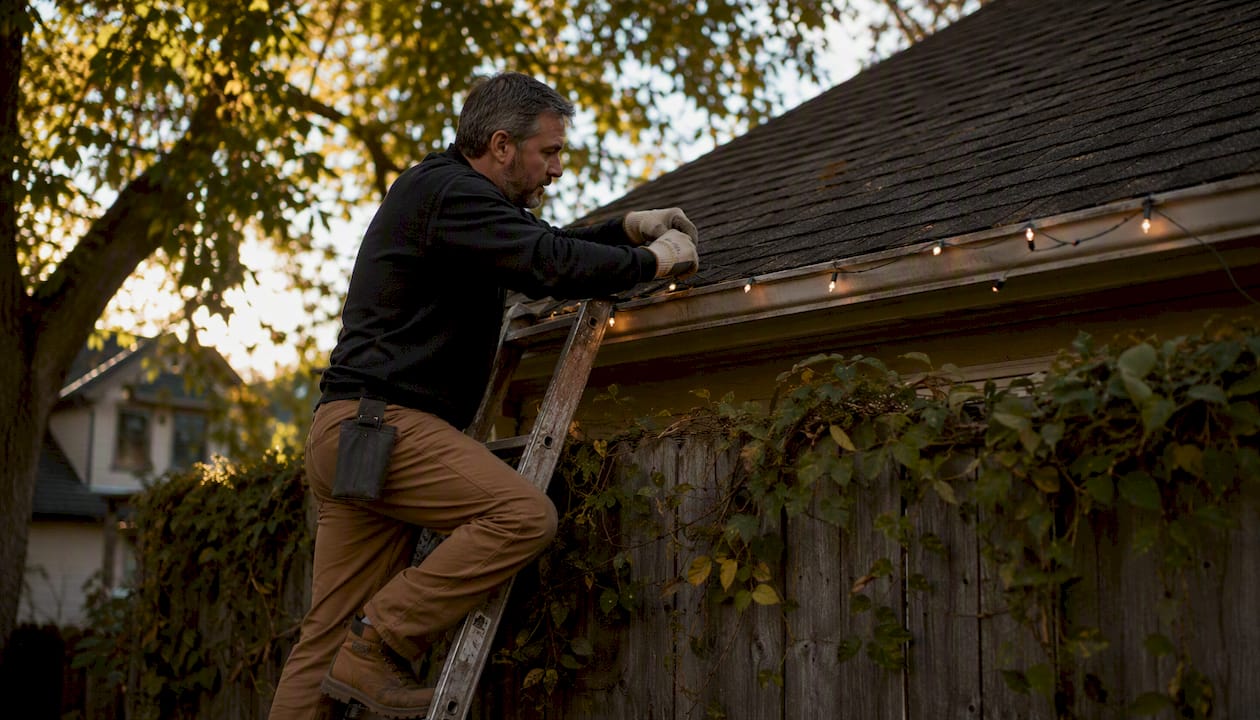
The safety difference between the two options is direct and practical. Seasonal string installation on steep roofs requires repeated ladder climbs and roof access every season. Each climb carries fall risk, and the Consumer Product Safety Commission consistently identifies ladder falls as a leading cause of home injury in the United States. A permanent system installed once by professionals removes that risk from the homeowner’s annual routine entirely.
Weather durability follows the same logic. Permanent track systems use aluminum housings and IP-rated sealed LED modules, meaning they are rated to resist dust and water intrusion. Seasonal string lights use open sockets and flexible cords that are not designed for year-round outdoor exposure. UV degradation, freeze-thaw cycles, and moisture infiltration shorten their effective life.
Warranties reflect this difference. Permanent systems from reputable installers typically carry multi-year manufacturer warranties on the LED modules and hardware. Most seasonal string light sets carry no meaningful warranty, and even those that do rarely cover weather-related failure.
Pro Tip: Photograph your installation from multiple angles on the day it goes in. If an HOA inspection or warranty claim comes up later, those photos establish the original condition and confirm professional workmanship.
For homeowners concerned about home security, a permanent roofline system also provides consistent exterior illumination year-round, not just during the holiday season, which removes the dark perimeter that seasonal lighting leaves for nine months of the year.
How do you choose the right permanent roofline lighting system?
A structured approach to the buying decision saves time and avoids the most common mistakes homeowners make when getting quotes.
Before you call an installer:
- Measure the linear footage of roofline you want to light, including any gable peaks or dormers.
- Note the roof pitch and whether a ladder or lift equipment would be needed for access.
- Identify where the transformer and controller will be located and how low-voltage wiring will route to that point.
- Confirm whether your HOA has lighting color or brightness restrictions that affect fixture selection.
Questions to ask every installer:
- Are you licensed and insured for electrical work in this state?
- What warranty do you provide on parts and labor, and is it in writing?
- Can you show installation photos from comparable homes, including steep or complex rooflines?
- How does your system address voltage drop on long runs?
- What color and scene options does the controller support, and which app does it use?
- Does the system integrate with voice assistants or home automation platforms?
Red flags to watch for:
- No written warranty or scope of work before installation begins.
- Installer cannot provide on-site photos from previous jobs.
- Proposal involves surface-mounted exposed fasteners or off-the-shelf string sets marketed as a “permanent” solution.
For a homeowner with a steep-pitch roof and HOA design guidelines, the recommended path is a professionally installed aluminum track system with color-matched trim and a controller that supports warm-white daily scenes. The system stays compliant during the day and switches to color for holidays by app. Foreverglowlighting handles both the HOA documentation and the installation in a single process.
Pro Tip: Ask for seasonal lighting automation options during your estimate call. Scheduling scenes by date means your lights switch from warm white to holiday colors automatically, with no manual input required.
Key Takeaways
Permanent roofline lighting outperforms seasonal string lights on appearance, safety, energy efficiency, and long-term cost for most homeowners who plan to stay in their home beyond a single season.
| Point | Details |
|---|---|
| LED energy advantage | LEDs use at least 75% less energy than incandescent bulbs and last up to 25 times longer. |
| Safety difference | Professional one-time installation eliminates repeated seasonal ladder climbs and fall risk. |
| Upfront vs. lifetime cost | Permanent systems cost more upfront but carry lower maintenance, energy, and replacement costs over time. |
| Smart control advantage | App-based controllers enable scene scheduling, color changes, and automation that string lights cannot match. |
| Foreverglowlighting | Provides licensed installation, written warranty, and optional GlowCare maintenance for Charlotte-area homeowners. |
The case for permanent lighting is stronger than most homeowners realize
Most homeowners frame the string lights vs. roofline lighting decision as a cost question. That framing undersells the real issue. The upfront price of a permanent system is visible and easy to compare. The costs of string lights — the hours on a ladder, the replacement bulbs, the energy bills, the connectors that fail in January — accumulate quietly and rarely get added up.
What tends to shift a homeowner’s thinking is the daytime picture. Professionally installed tracks hide wiring and fasteners completely, preserving the architectural lines of the home when the lights are off. String lights, by contrast, leave visible clips, sagging cords, and weathered sockets on the fascia year-round if left up, or a blank roofline for nine months if taken down. Neither version looks intentional.
The other underappreciated factor is what smart control actually changes. A permanent system with app integration is not just “wired lights.” It becomes a lighting layer that supports scenes, schedules, and energy management across every season. Warm white for a winter evening, red and green for December, blue and white for the Fourth of July — all from a phone, with no physical work. That capability reframes the system from holiday décor to a genuine home feature.
For homeowners on the fence, the honest advice is this: if you decorate once every few years and have a simple single-story roofline, string lights are a reasonable short-term choice. For everyone else, the permanent option pays for itself in ways that are easy to overlook until you stop climbing ladders.
Get a free estimate from Foreverglowlighting
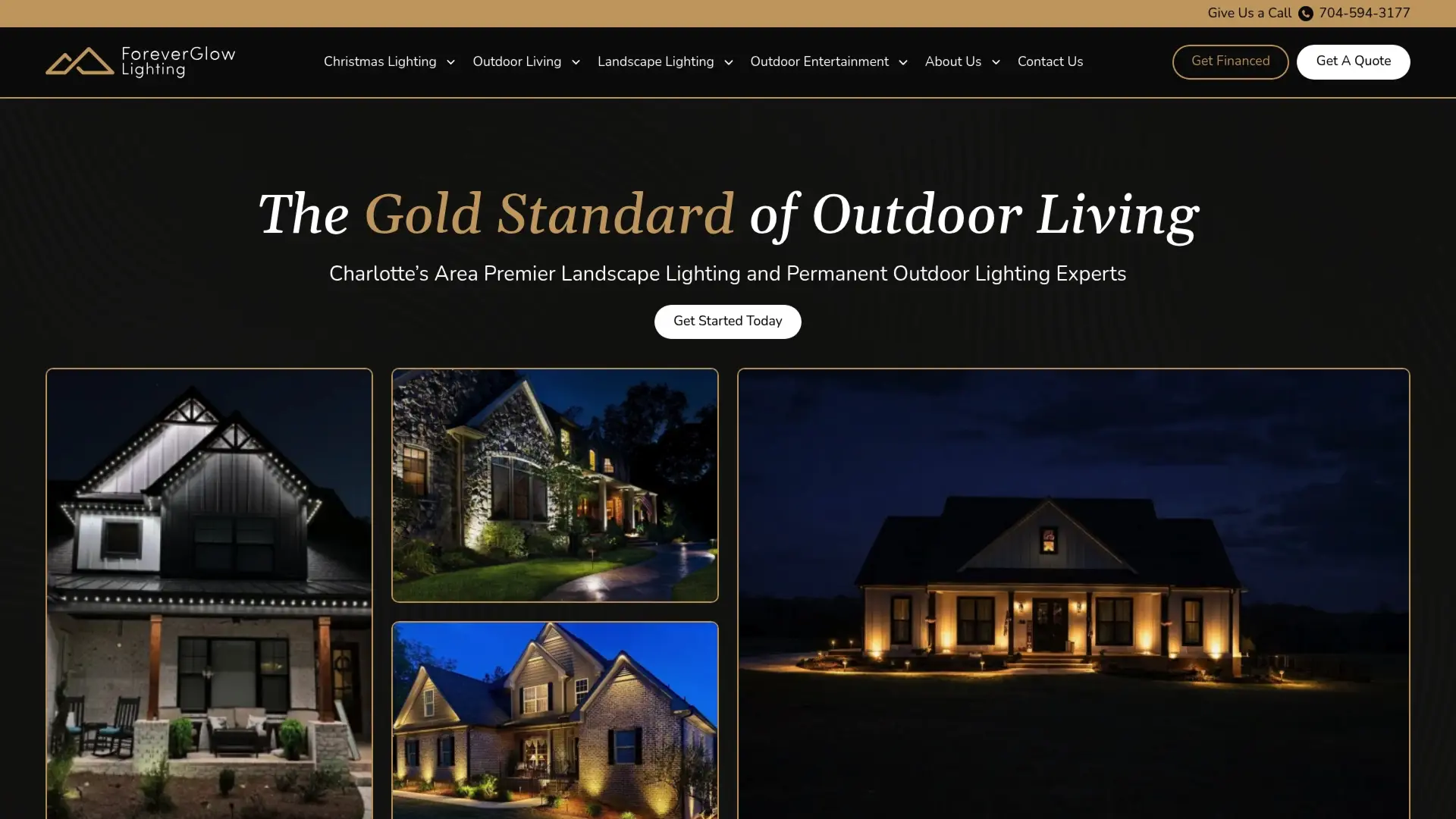
Foreverglowlighting is Charlotte’s permanent lighting specialist, and the alternative to another season of ladder climbs and tangled cords. Every installation includes a licensed electrician, a written warranty, and a full walkthrough of your app controls before the crew leaves. For homeowners who want ongoing peace of mind, the optional GlowCare maintenance plan keeps the system performing and the warranty current year after year.
The permanent lighting installation process starts with a free on-site estimate. We measure your roofline, confirm routing options, and walk you through color and control choices before any work begins. Contact Foreverglowlighting today to schedule your assessment and see what your home looks like with lighting that works every night of the year.
Useful sources
The claims in this article draw on the following sources. Each is worth reading if you want to go deeper on a specific topic.
- Celebright vs. Traditional String Lights for Steep Rooflines — Vertical Roofing Co: Safety and daytime aesthetics comparison, with specific notes on steep-pitch roofs.
- Tips for Hanging Outdoor String Lights — American Home Shield: Practical connector and securement advice for homeowners using seasonal strings.
- Roofline Lighting Installation Charlotte NC — Foreverglowlighting: Full details on the professional installation process and system options available in the Charlotte area.
- How Permanent Lighting Saves Time for Homeowners — Foreverglowlighting: Explains the time and convenience advantages of eliminating seasonal installation and storage.
- Deck Lighting — Cactus Decking: Covers deck and step lighting as part of a layered exterior lighting approach for outdoor entertaining spaces.