
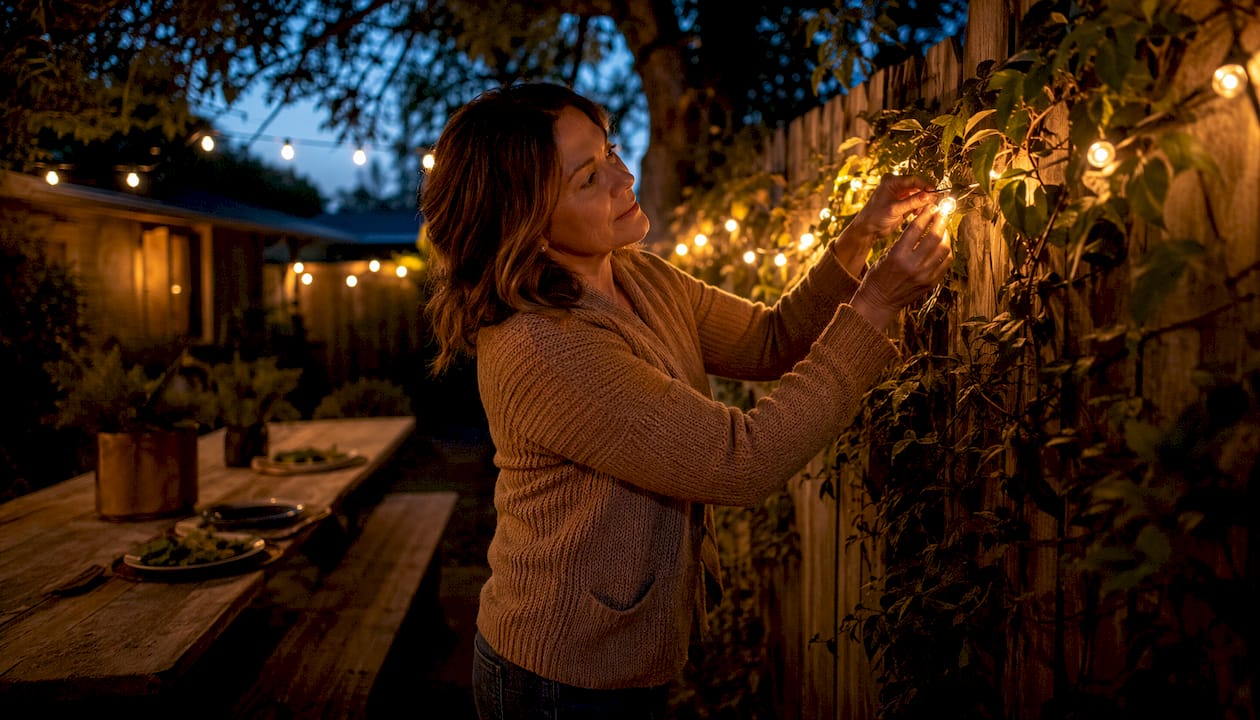
Festive lighting for homes refers to decorative light arrangements used to celebrate holidays and seasonal occasions, transforming both indoor and outdoor spaces with color, warmth, and visual interest. Most homeowners recognize the category by its most familiar forms: string lights wrapped around an indoor Christmas tree, large C9 bulbs outlining a roofline, or net lights draped over front-yard shrubs. The term covers both temporary seasonal strands you hang each November and take down in January, and permanent track systems installed once and used year-round for holidays, entertaining, and architectural accent.
Table of Contents
- How did festive lighting get its start?
- What types of festive lights do homeowners use?
- How do LED and smart controls change the way you light your home?
- Where should you place festive lights around your home?
- What safety rules should every homeowner follow?
- How long do festive lights last, and how should you store them?
- What does festive lighting cost, and how long does installation take?
- What are the biggest trends in festive home lighting right now?
- A closer look at permanent smart festive lighting
- Key Takeaways
- Why permanent lighting deserves more credit than it gets
- Foreverglowlighting: permanent festive lighting for Charlotte homeowners
How did festive lighting get its start?
The practice of decorating with lights during winter celebrations predates electricity by centuries. In early modern Germany, families placed lit candles directly on Christmas tree branches — a tradition that spread across Europe and eventually to the United States, despite the obvious fire risk. The shift to electric lights came quickly after Thomas Edison’s incandescent bulb was commercialized. By 1882, Edward Johnson, an associate of Edison’s, had hand-wired 80 red, white, and blue bulbs onto a rotating Christmas tree in New York City, creating what is widely cited as the first electrically lit Christmas tree.
“Christmas lights are lights used for decoration in celebration of Christmas, often consisting of multiple colored electric lights strung together and used to decorate a Christmas tree or the exterior of a house.”
— Christmas lights, Wikipedia
By the mid-20th century, outlining house rooflines and windows with strings of C7 and C9 bulbs had become a mainstream American tradition. The late 20th century brought miniature incandescent lights, then fiber optics, and eventually the LED revolution that now defines the category. Today, over 80 million homes in the United States decorate with holiday lights each season, and more than 150 million strings are sold annually — numbers that reflect just how deeply the tradition is embedded in American home culture.
What types of festive lights do homeowners use?
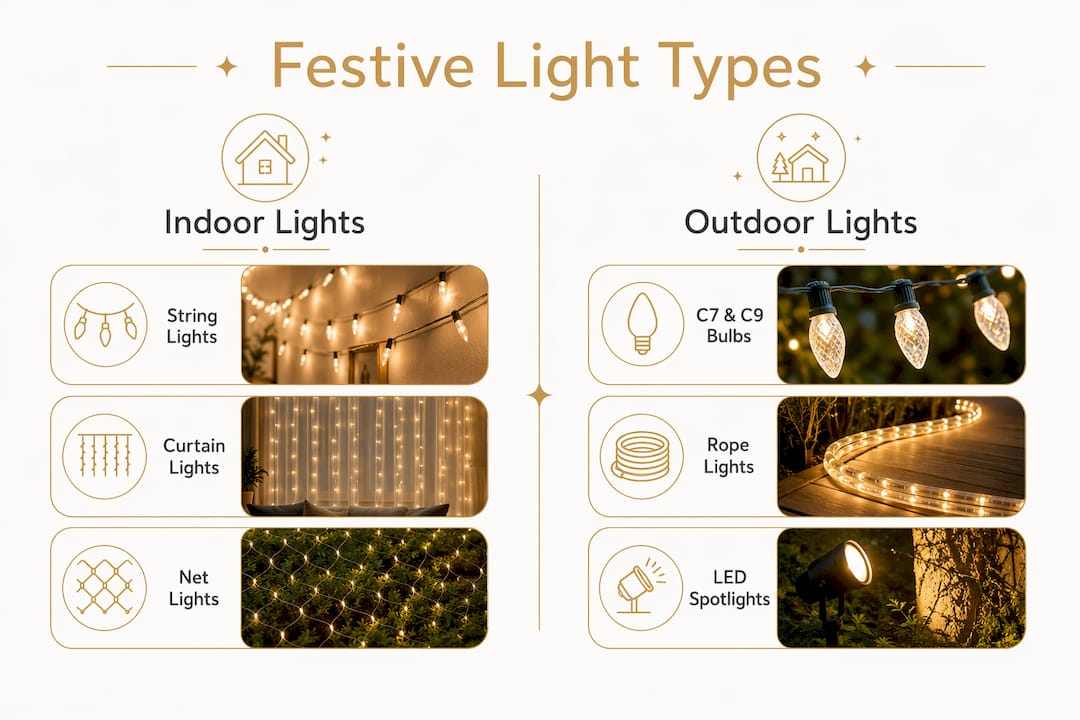
Homeowners choose light types based on scale, location, and the visual effect they want. A single strand of warm-white mini lights reads very differently from a synchronized pixel display, and the right choice depends on the architecture, the budget, and how much effort the homeowner wants to put in each season.
Common types at a glance
- String/mini lights (M5 or 5mm): The most versatile option. Wrap them around tree branches, wind them along railings, or drape them across a mantel. Available in warm white, cool white, and multicolor.
- C9 and C7 bulbs: Large, classic bulbs designed for roofline outlines, ridge lines, and gutters. C9s are the bigger of the two and visible from a distance; C7s suit smaller homes or window frames.
- Net lights: Pre-formed grids that drop over shrubs or hedges in seconds. Ideal for uniform coverage without tangling.
- Rope lights: Flexible LED tubes that follow curves, outline steps, or define pathways. Weather-resistant versions work well under eaves or along deck edges.
- Icicle lights: Hanging drop strands that mimic frozen icicles along a roofline or porch overhang.
- Curtain/festoon lights: Vertical or grid-pattern strands hung in windows or across pergolas for a layered, atmospheric effect.
- Pathway stakes: Individual lit stakes pushed into the ground along a driveway or walkway for safe, decorative guidance.
- Projectors: Laser or LED projectors that cast patterns (snowflakes, stars, color washes) across a facade with no ladder required.
- Smart pixel strings: Individually addressable LEDs that can animate, chase, or display synchronized color scenes via a smartphone app.
| Light Type | Best Use | Indoor / Outdoor | Typical Bulb Style |
|---|---|---|---|
| String / mini (M5) | Tree wrap, railings, mantels | Both | Mini LED or incandescent |
| C9 / C7 | Roofline, ridge, gutters | Outdoor | Large incandescent or LED |
| Net lights | Shrubs, hedges, ground cover | Outdoor | Mini LED |
| Rope lights | Steps, pathways, eaves | Both | LED tube |
| Icicle lights | Roofline overhang, porch | Outdoor | Mini LED or incandescent |
| Curtain / festoon | Windows, pergolas, patios | Both | Globe or mini LED |
| Pathway stakes | Driveways, walkways | Outdoor | LED |
| Projectors | Facade, lawn | Outdoor | LED / laser |
| Smart pixel strings | Roofline tracks, trees | Both | Addressable LED |
Beyond the bulbs themselves, a complete installation typically includes weather-rated extension cords, mounting clips or gutter hooks, inline fuses, and for permanent or low-voltage systems, a transformer or smart controller. Choosing components rated for outdoor use is not optional — it is the baseline for safe operation.
How do LED and smart controls change the way you light your home?
LEDs are the industry standard for outdoor festive lighting, and the gap between LED and incandescent performance has only widened as prices have dropped. That said, incandescent bulbs still have a place: their warm, slightly amber glow is difficult to replicate exactly, and some homeowners prefer it for a traditional or vintage look on indoor trees.
| Feature | LED | Incandescent |
|---|---|---|
| Energy use | ~75% less than incandescent | Baseline |
| Lifespan | 25,000–75,000 hours | 1,000–3,000 hours |
| Heat output | Very low | Noticeably warm |
| Outdoor suitability | Excellent | Moderate |
| Color options | Full spectrum, programmable | Limited (warm white / multicolor) |
| Linkable strands | More strands per circuit | Fewer strands per circuit |
| Upfront cost | Higher | Lower |
Smart controls add another layer of flexibility. Wi-Fi-enabled controllers, timers, and app-based systems let homeowners set schedules, change colors, and trigger animated scenes without touching a single bulb. Pixel-addressable strings take this further, allowing each LED to be controlled individually for chasing effects or synchronized light shows. For homeowners who want seasonal lighting automation without the annual setup hassle, smart controllers paired with permanent track systems are the most practical path.
Power options range from standard 120V plug-in strands to battery-operated strings (useful for areas without outlets), solar-charged sets for pathway stakes, and low-voltage transformer systems for landscape and permanent installations. Low-voltage systems are particularly well-suited to permanent outdoor installs because they reduce shock risk and allow longer cable runs without voltage drop.
Pro Tip: Always check the IP (Ingress Protection) rating before buying outdoor lights. IP44 is the minimum for covered outdoor use; IP65 or higher is recommended for exposed rooflines, gutters, and areas subject to direct rain or sprinkler spray. An IP rating is printed on the packaging or product label.
Where should you place festive lights around your home?
Good placement balances your home’s architectural lines, natural focal points, and practical safety. Lights that follow the structure of the house tend to look intentional; lights scattered without a plan tend to look cluttered. Pairing your lighting with other seasonal updates, like holiday interior styling, creates a more cohesive look from curb to living room.
Rooflines and soffits
The roofline is the most visible surface on a home after dark. C9 or C7 bulbs along the ridge and gutters create a classic outline; permanent LED track systems mounted in the soffit deliver the same effect without seasonal installation work.
Trees and shrubs
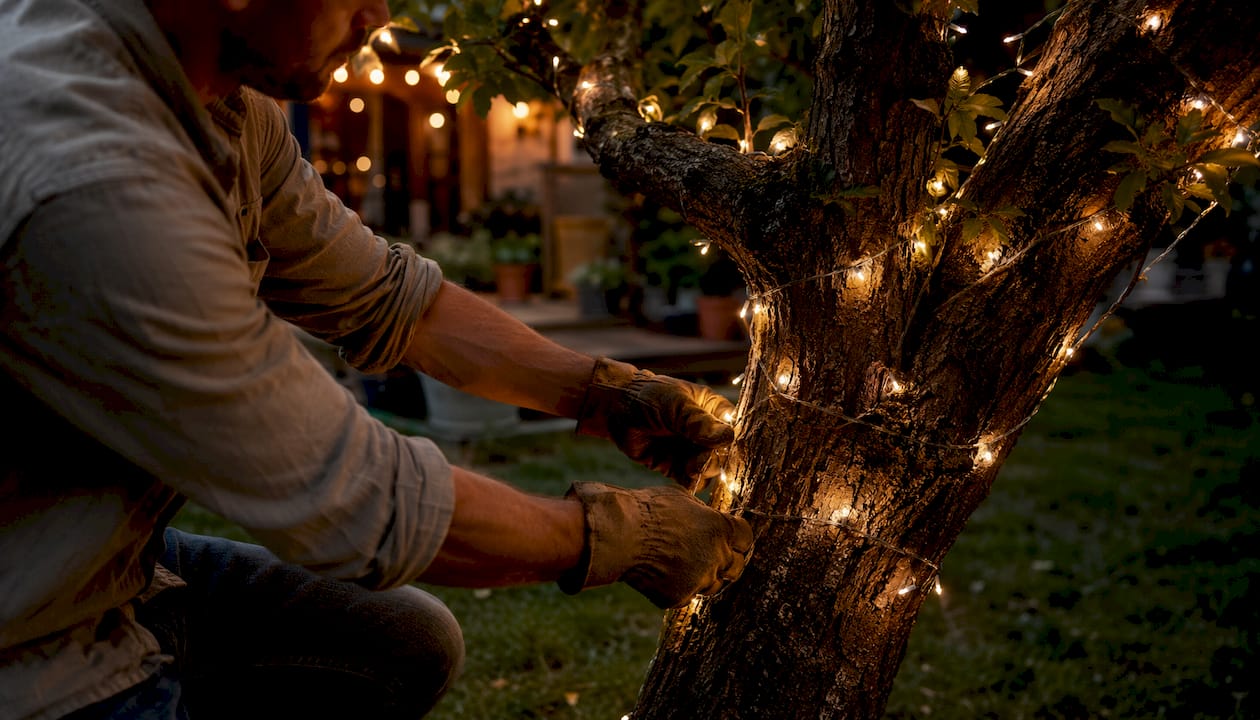
Wrap trunks and major branches first, then work outward to the tips. Net lights over round shrubs take minutes to deploy and create a uniform glow. For tall trees, a projector aimed at the canopy can add color without a ladder.
Entry, porch, and railings
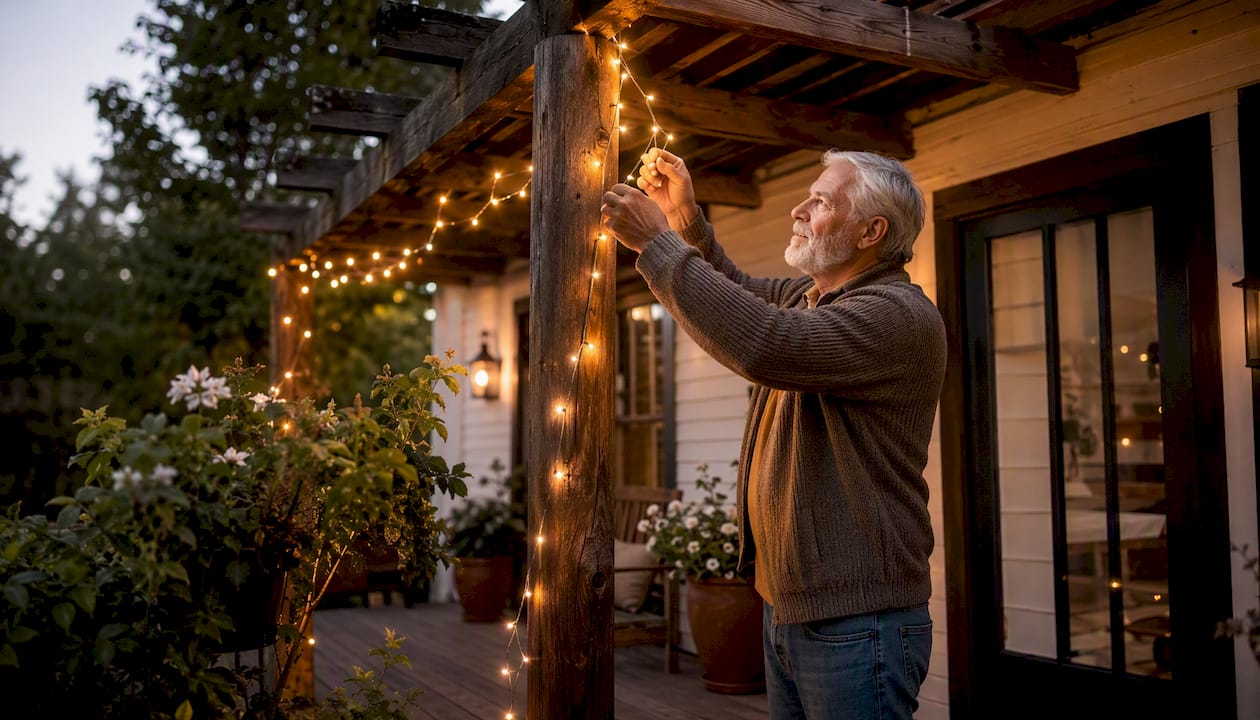
Curtain lights in a front window or string lights wound around porch columns draw the eye to the entry. Railing lights on steps improve both aesthetics and safety after dark.
Pathways and driveways
Pathway stakes spaced evenly along a walkway guide guests safely and add depth to the overall display. Rope lights along the edge of a driveway define the space without overwhelming it.
Interior focal points
Indoors, the tree is the natural anchor. Layer mini string lights from the trunk outward, then add a second strand of a different color or style for depth. A mantel with a single strand of warm-white lights and a staircase wrapped with a garland and mini lights completes the interior picture without overloading any one space.
Three practical design principles
- Scale to the architecture. A small bungalow looks best with a single, well-executed roofline outline and one lit tree. A large two-story home can carry multiple zones without looking busy.
- Repeat a motif. Using the same bulb style or color temperature in two or three locations ties the display together. Warm white on the roofline, warm white on the tree, and warm white along the pathway reads as deliberate.
- Choose a palette and commit. Warm white and gold read as classic and elegant. Cool white and blue read as modern. Multicolor works best when it is confined to one zone (the tree) rather than spread across the entire exterior.
A simple layered example: warm-white C9s along the roofline, mini LED string lights wrapped around two flanking trees, and pathway stakes along the front walk. Three elements, one color temperature, and the result looks professionally planned. For deeper guidance on layering outdoor lighting, the same principles that apply to entertaining spaces translate directly to festive displays.
What safety rules should every homeowner follow?
The foundation of safe festive lighting is straightforward: use outdoor-rated products, protect circuits with GFCI outlets, size your wiring correctly, and never pierce or pinch a cord with a staple or nail. These basics materially reduce the risk of fire and electrical shock.
The U.S. Consumer Product Safety Commission sets the standard clearly:
“Seasonal and decorative lighting products missing minimum wire size, sufficient strain relief, or overcurrent protection pose a substantial product hazard.”
— CPSC Seasonal Lighting Guidance
Safety checklist for homeowners
- Use lights labeled for outdoor use when installing anything outside — indoor-rated products are not weatherproofed.
- Check for a UL or ETL listing mark on the packaging before purchase.
- Verify the three CPSC characteristics: adequate wire gauge, strain relief at connections, and overcurrent protection (fuses or circuit breakers).
- Plug outdoor lights into GFCI-protected outlets. If your exterior outlets are not GFCI-protected, have an electrician add them before the season.
- Do not daisy-chain more strands than the manufacturer specifies — overloaded circuits are a leading cause of holiday electrical fires.
- Secure lights with plastic clips or hooks designed for the purpose. Never use staples, nails, or tacks that can pierce the insulation.
- Turn lights off or use a timer when you leave the house or go to sleep.
For landscape lighting safety on permanent systems, the same principles apply with the added benefit of engineered weatherproofing and professional-grade connectors.
When to call a professional installer
Some situations go beyond what a homeowner should handle independently:
- Multi-story rooflines where ladder work creates a fall risk
- Permanent wiring that requires a licensed electrician
- HOA rules or local permits that govern exterior lighting
- Complex synchronized or pixel systems with dedicated controllers
- Any installation where the existing outdoor circuits are already near capacity
How long do festive lights last, and how should you store them?
LED strings commonly last 25,000–75,000 hours, which translates to many seasons of use even at extended daily runtimes. Incandescent strings typically last 1,000–3,000 hours, meaning a set used 8 hours a night for a 60-day season may need replacement after just two or three years. The gap is significant for anyone thinking about total cost over time.
Common causes of premature failure
- Physical damage to the cord or bulb sockets from improper storage (tangling, compression)
- Moisture intrusion at connections that are not rated for outdoor exposure
- Overloading a strand by linking more sets than the product allows
- UV degradation on cords left outdoors year-round without UV-resistant ratings
Basic care steps
- Inspect each strand before installation. Replace any set with cracked insulation, corroded sockets, or missing bulbs.
- After the season, wipe bulbs clean with a dry cloth before storing.
- Avoid bending rope lights at sharp angles, which can crack the internal LED strip.
- For upgrading older systems, replacing a failing incandescent setup with LED is usually the most cost-effective path rather than repairing individual strands.
Pro Tip: Store string lights on cardboard reels cut from cereal boxes or on purpose-built plastic reels. Label each reel with the location it came from (e.g., “front roofline,” “tree wrap”). This prevents tangles, reduces moisture trapping, and cuts setup time next season by half.
What does festive lighting cost, and how long does installation take?
Costs vary widely depending on scale, product quality, labor, and whether the system is temporary or permanent. The ranges below are approximate and reflect typical U.S. market pricing; actual quotes will vary by region and site complexity.
Approximate cost bands
- Single-zone DIY (one tree or one window): $15–$60 in materials, a few hours of setup time.
- Whole-house DIY seasonal install: $100–$400 in materials for a mid-size home, one to two full days of work.
- Professional seasonal install (rental/service model): $300–$1,500+ depending on home size, light density, and whether take-down is included.
- Permanent roofline track system (professional install): $1,500–$5,000+ for a residential home, with minimal recurring cost after the initial install since the hardware stays in place year after year.
Typical timeline
- Planning and purchase: 1–2 weeks before the target install date.
- DIY installation: 4–16 hours depending on scope.
- Professional seasonal install: 2–8 hours on-site; take-down adds a similar block of time.
- Permanent system install: 1–2 days for the initial installation; subsequent seasons require only a smartphone app to change scenes.
Permanent systems shift the cost structure: higher upfront investment, but the recurring time and labor cost drops to near zero. For homeowners who value time savings and want to avoid the annual ladder work, the math often favors a permanent solution within two to three seasons. Always get written estimates for site-specific pricing before committing to any professional installation.
What are the biggest trends in festive home lighting right now?
Smart, energy-efficient LED systems and permanent installations are leading the current wave of festive lighting design. The shift is not just aesthetic — it reflects a practical calculation about time, safety, and year-round value.
App-controlled color-changing systems are now accessible at most price points. Homeowners can switch from warm-white holiday scenes to red-and-green Christmas palettes to patriotic red-white-and-blue for the Fourth of July, all from a phone. Pixel-addressable strings take this further, enabling animated chases, synchronized music displays, and custom color sequences that were once only possible for commercial installations.
Projector-based decorating has grown steadily as a “no-ladder” alternative. A single LED or laser projector aimed at a facade can cover a large surface with snowflakes, stars, or color washes in minutes, with no clips, no cords on the roofline, and no seasonal storage problem.
LEDs use roughly 75% less energy than equivalent incandescent decorative bulbs — a figure that adds up quickly across a whole-house display running 8 hours a night for 60 days.
Permanent roofline track systems are the fastest-growing segment among homeowners who want year-round flexibility. These systems sit flush with the soffit, invisible during daylight, and activate on demand for any occasion. Paired with timers and automation, they also address the environmental side of the equation: lights run only when needed, at LED efficiency, with no annual manufacturing waste from discarded seasonal strands. For homeowners curious about using permanent lighting beyond the holidays, the same system that handles Christmas can manage Valentine’s Day, St. Patrick’s Day, and summer entertaining with a single app change.
A closer look at permanent smart festive lighting
A permanent roofline track system works differently from seasonal strings in one fundamental way: the hardware never comes down. Small LED nodes sit inside a weather-resistant track mounted flush to the soffit or fascia. During the day, the track blends into the roofline and is effectively invisible. After dark, the system activates and delivers full-color, individually addressable light across the entire roofline, controllable from a smartphone.
A typical residential installation layers three elements: a roofline track for the primary outline, landscape accent lights for trees and architectural features, and a smart controller that manages schedules and color scenes. The homeowner sets a holiday scene in November, switches to a winter-white palette for January, and changes to spring colors in March without touching a ladder or a single bulb.
Foreverglowlighting installs permanent roofline lighting systems for residential and commercial properties in the Charlotte area, with custom design, HOA-compliant hardware, and smartphone control built into every installation. Homeowners who want to understand the full process can review the permanent installation process before requesting an estimate.
Key Takeaways
Festive lighting for homes spans temporary seasonal strings and permanent smart systems, with LED technology, proper safety practices, and thoughtful placement making the biggest difference in results.
| Point | Details |
|---|---|
| LED is the practical standard | LED strings last tens of thousands of hours and use considerably less energy than incandescent equivalents. |
| Safety starts with three basics | CPSC guidance flags wire size, strain relief, and overcurrent protection as the critical hazard factors to verify before any install. |
| Placement drives the look | Layering roofline, tree/shrub, and pathway lights in one consistent color temperature creates a cohesive, professional result. |
| Permanent systems change the math | After the initial install, permanent roofline tracks eliminate recurring ladder work and annual material costs. |
| Foreverglowlighting | Foreverglowlighting installs permanent smart LED roofline systems in Charlotte, controllable by smartphone for any season or occasion. |
Why permanent lighting deserves more credit than it gets
Most homeowners approach festive lighting as a seasonal chore: buy the lights, hang the lights, take down the lights, store the lights, repeat. The conversation almost always focuses on which strand to buy or how to keep them from tangling. What rarely gets discussed is the cumulative cost of that cycle — in time, in ladder risk, and in the environmental waste of replacing cheap strands every two or three years.
The case for permanent systems is not just about convenience, though that is real. It is about treating your home’s exterior lighting as infrastructure rather than decoration. A well-designed permanent roofline track, installed once and maintained properly, delivers consistent results for years. It handles every holiday without a new purchase, every season without a setup day, and every occasion without a safety risk on a ladder. The upfront cost is higher, but the recurring cost in time, effort, and materials drops substantially.
The homeowners who get the most value from festive lighting are the ones who stop thinking about it as something they do once a year and start thinking about it as a permanent feature of their home. That shift in perspective is what drives the move toward smart, permanent systems — and it is a shift that makes practical sense for most busy households.
Foreverglowlighting: permanent festive lighting for Charlotte homeowners
Skip the annual ladder work entirely. Foreverglowlighting designs and installs permanent smart LED roofline systems for Charlotte-area homeowners who want professional-grade festive lighting without the seasonal setup and take-down cycle. Every system is custom-fitted to your roofline, HOA-compliant, and controllable from your smartphone — switch from holiday red-and-green to warm architectural white to any color combination with a tap.
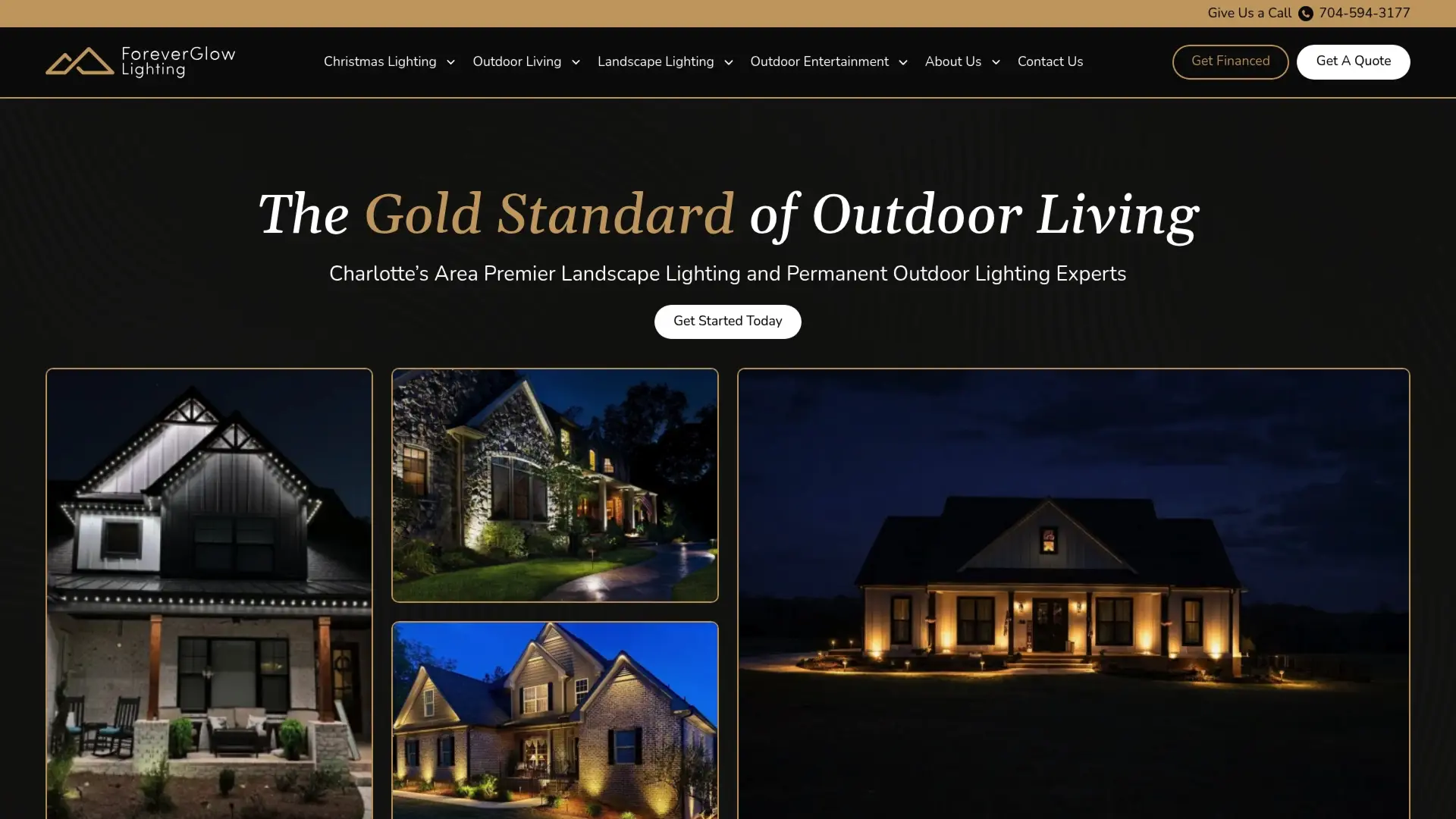
The hardware stays in place year-round, invisible during the day and brilliant after dark. Whether you want a classic warm-white roofline for the holidays, a synchronized color display for a special occasion, or subtle accent lighting that works every night of the year, Foreverglowlighting builds the system around your home and your preferences. Contact Foreverglowlighting today for a free estimate and see how a permanent lighting installation changes the way you think about your home’s exterior.