
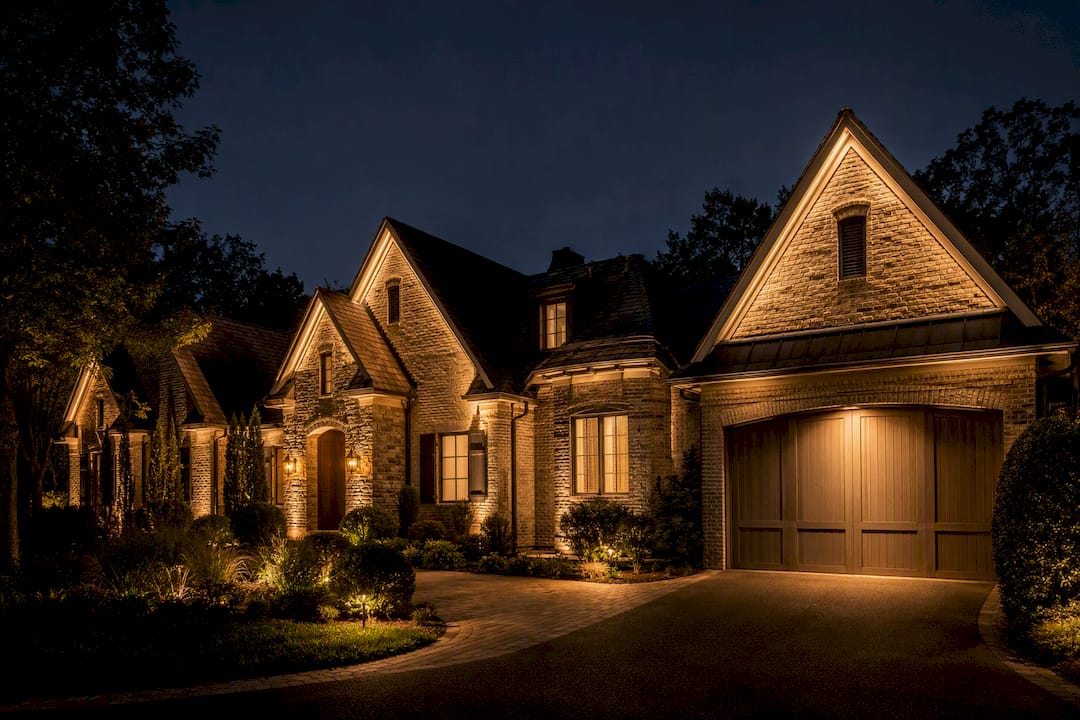
Permanent outdoor lighting typically raises curb appeal and buyer perception rather than moving the number on a formal appraisal. Appraisers rarely credit a lighting system dollar for dollar against installation cost, but the resale upside shows up elsewhere: stronger listing photos, better evening showings, and a home that reads as move-in ready. Forever Glow Lighting sees this pattern across most of the residential installs it designs and builds.
TL;DR:
- Permanent outdoor lighting enhances night-time curb appeal with layered design, highlighting features like the roofline, entry, and landscaping to attract buyers.
- Installation cost varies based on roof complexity, fixture quantity, smart controls, and site access, but LED fixtures and scheduling keep long-term energy costs low.
- Properly designed and installed systems, with weatherproof fixtures and concealed wiring, significantly boost perceived value more than brand names.
- Well-lit homes tend to sell faster and generate more buyer interest, especially in listings that showcase their outdoor features during evening showings.
- Lighting affects neighborhood appearance and safety, requiring HOA compliance and professional installation to avoid numerous aesthetic and liability pitfalls.
Table of Contents
- Permanent Lights and Home Value: The Quick Takeaways
- How Does Outdoor Lighting Change Curb Appeal After Dark?
- What Does Permanent Lighting Actually Cost, and What’s the Payback?
- Why Installation Quality Matters More Than Any Brand Name
- Will Permanent Lighting Spike Your Electric Bill?
- Can Better Lighting Make Your Home Safer, Not Just Prettier?
- Is Permanent Lighting Worth It for Your Home Specifically?
- How Forever Glow Lighting Approaches Permanent Installations
- Does an Appraiser See What a Buyer Sees?
- Does Your Lighting Choice Affect the Whole Street?
- Can Better Lighting Help Your Home Sell Faster?
- Could Exterior Lighting Affect Your Homeowners Insurance?
- Where the Conventional Wisdom on Lighting ROI Falls Short
- Ready for a Free Estimate on Permanent Lighting?
- Sources
Permanent Lights and Home Value: The Quick Takeaways
- Permanent lighting functions as a curb-appeal upgrade, not a guaranteed line item on an appraisal report.
- Return on investment varies by home, but installation quality and design almost always determine how much perceived value you get back.
- LED fixtures paired with smart controls keep energy use and running cost low, which protects your ROI over time.
- The biggest payoff goes to homeowners who plan to enjoy the lighting for a few years before selling, not those installing it the week before listing.
- A well-designed system reads as a permanent architectural feature. A poorly designed one reads as string lights that never came down.
How Does Outdoor Lighting Change Curb Appeal After Dark?
Roughly half of home showings and nearly all listing photos now happen or get viewed after sunset, which means your house has two first impressions instead of one. Daytime curb appeal depends on landscaping and paint. Nighttime curb appeal depends entirely on how light is placed, and that is where most homes fall short with a single porch fixture and a driveway floodlight.
Professionally designed systems create depth by layering light instead of blasting it. A roofline wash outlines the architecture of the house. Uplighting on mature trees adds scale. Path lights guide the eye toward the entry instead of leaving visitors to guess where the front door is.
A few placements consistently do the most work for buyer perception:
- Roofline and eave lighting that outlines the home’s silhouette against the night sky.
- Porch and entry lighting that frames the front door as the visual focal point.
- Step and path lighting that signals safety and intentional design at once.
- Facade or column accents that add dimension to flat exterior walls.
- Tree and landscape uplighting that extends the sense of scale beyond the house itself.
The mistake most DIY setups make is over-lighting. Too many fixtures at full brightness create glare, wash out architectural detail, and can make a home look like a car dealership lot instead of a place someone wants to live. Balanced lighting, with dimming built in, tends to photograph and show better than sheer brightness ever does. A landscape lighting layout built around curb appeal usually mixes warm tones with restrained placement rather than maximum output.
What Does Permanent Lighting Actually Cost, and What’s the Payback?
Installation cost depends on a handful of variables: the size and complexity of your roofline, whether you want landscape spots in addition to roofline strips, how many smart-control zones you want, and how difficult site access is for the crew running wire. A single-story ranch with a simple roofline costs far less to outfit than a two-story home with multiple gables, dormers, and mature landscaping.
Cost drivers to expect on any quote:
- Linear footage of roofline or architectural trim being lit
- Number of landscape or accent fixtures added beyond the main track
- Smart app controls, zoning, and color-changing capability
- Labor complexity from roof pitch, brick versus siding, and access for the install crew
Quick math on running cost: modern LED fixtures use a fraction of the electricity that old incandescent holiday strings did, and the Department of Energy points to LED as the clear efficiency choice for exterior lighting that runs for hours every night. Over several years, that efficiency difference adds up more than most homeowners expect when they’re only thinking about the upfront install quote.
On the resale side, don’t expect an appraiser to add a line item that matches what you paid. What actually happens is subtler: industry guidance on permanent lighting and resale consistently notes that buyer perception moves before appraised value does. Some buyers will pay a modest premium for a home that already has a professionally installed system, since it saves them the cost and hassle of doing it themselves. That premium lives in negotiation and buyer enthusiasm, not in the comps an appraiser pulls.
Why Installation Quality Matters More Than Any Brand Name
The fixture brand on the box matters far less than how the system gets designed and installed. A cheap fixture installed with care will outperform an expensive one bolted on crooked with exposed wiring, every time a buyer or appraiser walks the property.
Before signing with any installer, check for these technical and aesthetic basics:
- An IP65 or higher weatherproof rating on any fixture facing direct rain or sprinkler exposure, a standard outdoor lighting reviewers point to for multi-year durability.
- Fully concealed wiring routed behind trim, fascia, or landscaping, not zip-tied along a gutter.
- Color temperature consistency across the whole system, so the roofline doesn’t clash with the landscape lighting.
- Written confirmation the design meets your HOA’s exterior lighting rules before installation day.
The pitfalls that quietly kill perceived value are almost always the same: visible mounting clips in daylight, exposed low-voltage wire snaking across mulch beds, floodlights aimed at the wrong angle and glaring into windows, or a system that still reads as “Christmas lights” in July. None of that says permanent architectural feature. It says leftover decoration.
LED fixtures used in permanent systems generally hold up for years before needing replacement, but connectors, transformers, and mounting hardware do benefit from a periodic check. That’s the reasoning behind maintenance plans like GlowCare: catching a failing diode or a loosened clip before it becomes visible from the street, rather than after a buyer notices it during a showing.
Pro Tip: Ask any installer to show you photos of a system they installed at least two years ago, not just the week it went in. That tells you how the wiring, fixtures, and finish actually age.
Will Permanent Lighting Spike Your Electric Bill?
No, not meaningfully, if the system is built around LED fixtures and smart scheduling. Old-school incandescent holiday strings run hot and pull real electricity if left on all night; modern LED roofline and landscape systems use a small fraction of that draw, which is why the Department of Energy recommends LED for any fixture that runs for extended hours.
A few habits keep operating cost predictable:
- Set app-based schedules so lights power down automatically after your typical bedtime rather than running until sunrise.
- Use warm-white mode for everyday ambiance and save full-color displays for special occasions, since color modes and higher brightness settings draw more power.
- Dim rather than fully brighten for nightly use. Most smart outdoor systems let you drop brightness without losing the visual effect.
Solar and low-voltage options can make sense for isolated pathways where running wire is impractical, though solar fixtures trade some brightness and reliability for that convenience, so they work best as a supplement rather than the backbone of a whole-home system.
Can Better Lighting Make Your Home Safer, Not Just Prettier?
Lighting does real safety work that happens to support resale too. Well-lit steps, walkways, and entry points reduce trip hazards, which matters when you have a dozen strangers touring your property after dark during an open house. Guests move through a well-lit property with more confidence, and that comfort translates into how long they linger and how the home feels to them.
Motion-activated fixtures and camera-friendly lighting add a functional security layer as well. Illuminated entry points and side yards remove hiding spots and make security footage far more usable if anything ever happens. A few ways to use this without overclaiming in a listing:
- Mention “professionally installed exterior lighting” rather than promising a specific security outcome.
- Let listing photos of a well-lit entry and walkway speak for themselves instead of leaning on security language.
- Note motion-activated zones as a convenience and safety feature, which reads more credibly to buyers than a security pitch.
Reduced trip hazards and better visibility are practical, tangible benefits. A home security guide focused on lighting covers this ground in more depth for homeowners who want it as a primary reason to install.
Is Permanent Lighting Worth It for Your Home Specifically?
Some homes and situations get far more resale mileage from permanent lighting than others. Architecture with real texture, brick facades, gables, columns, mature trees, benefits the most because there’s more to highlight. Homes in neighborhoods where evening curb appeal is already part of the culture (holiday displays, well-lit streets, active HOA aesthetics) see buyers who notice and expect it.
It matters less when your ownership horizon is under a year or your lot sits on a low-visibility street where evening curb appeal barely registers with passing buyers. In those cases, the enjoyment you get from the lighting yourself may be the better justification than any resale math.
Run through this before deciding:
- Personal enjoyment first. Will you get years of use out of it before you sell?
- Neighborhood comparables. Do nearby homes already invest in exterior lighting, setting a buyer expectation?
- Timeline to sell. Is your horizon long enough to amortize the install cost through your own use?
- HOA rules. Confirm color, brightness, and placement restrictions before you commit to a design.
- Budget fit. Compare the quote against other visible upgrades competing for the same dollars, like exterior lighting design choices that layer with your landscaping plan.
How Forever Glow Lighting Approaches Permanent Installations
Forever Glow Lighting designs and installs smart LED track systems that stay invisible by day and controllable by smartphone at night, built around HOA-aware designs so homeowners aren’t guessing at compliance after the fact. Every estimate is free, and the GlowCare maintenance plan exists specifically to catch the small failures, a loose clip, a dimming diode, before they show up as a flaw during a showing.
Questions worth asking any installer, Forever Glow Lighting included:
- What IP rating do the fixtures carry, and does it match your home’s exposure to rain and sprinklers?
- Can they show photos of installs that are at least two years old, not just fresh ones?
- What does the maintenance plan actually cover, and what’s excluded?
- What warranty terms apply to fixtures, wiring, and labor separately?
Pro Tip: A professionally designed lighting system should come with a walkthrough where the installer explains fixture placement choices, not just a finished install with no explanation.
Does an Appraiser See What a Buyer Sees?
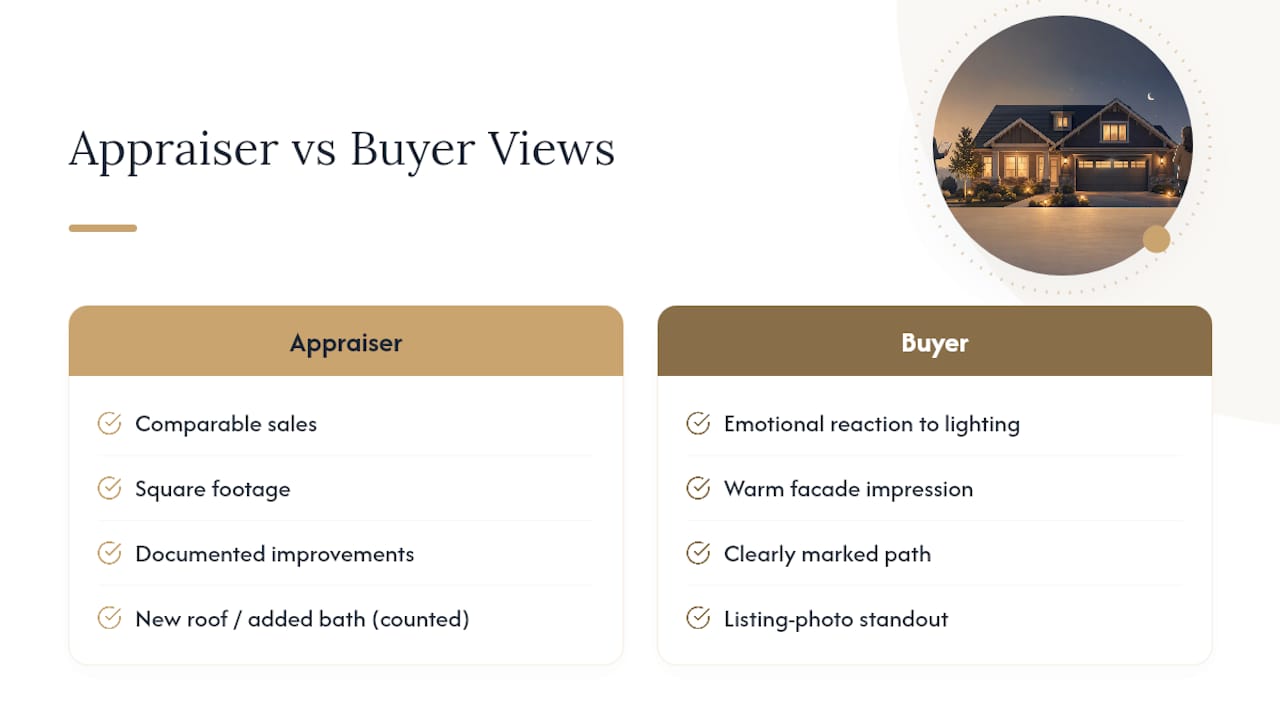
No, and that gap is the single most misunderstood part of this whole decision. Appraisers work from comparable sales, square footage, and documented improvements with clear cost data behind them, a new roof, an added bathroom, finished square footage. Lighting almost never fits that mold cleanly, so it rarely appears as its own adjustment on an appraisal report.
Buyers don’t appraise a home. They react to it. Walking up to a house with a softly lit facade and a clearly marked path feels different than approaching a dark front door with one bare bulb, even if the square footage and comps are identical. That emotional reaction shows up in offer enthusiasm, in how many people show up to an open house, and sometimes in how quickly a buyer waives contingencies to compete for a home that already feels cared for.
The realistic framing: treat permanent lighting as an investment in how your home performs during the sale process, not as an appraisal lever. It helps your listing photos stand apart in a scroll of daytime-only shots. It helps in-person showings feel warmer during evening appointments, which agents often schedule deliberately for exactly this reason. None of that guarantees a higher appraised value, but it consistently improves how buyers experience the property before an appraiser ever shows up.
Does Your Lighting Choice Affect the Whole Street?
Exterior lighting doesn’t stay contained to your property line. Neighbors see it every night, and in neighborhoods with active HOAs or informal community standards, a well-executed system can set a tone that other homeowners notice and sometimes follow.
This cuts both ways. A tastefully lit home with warm, layered lighting tends to be seen as an asset to the block, the kind of house that makes an evening walk more pleasant. A poorly executed system, mismatched color temperatures, glaring floodlights aimed into a neighbor’s window, exposed wiring visible from the sidewalk, can draw complaints or HOA violation notices instead of compliments.
Many HOAs specifically regulate brightness, color options, and permanent fixture placement, which is why confirming compliance before installation matters more than it might seem. A system installed without checking those rules risks a required teardown, an expensive and embarrassing outcome for something meant to boost your home’s appeal.
There’s a quieter benefit here too: homes contribute to a neighborhood’s overall evening character, and buyers touring a well-lit street often form a positive impression of the area before they even reach your driveway. That halo effect works in your favor if your home is one of several with thoughtful lighting, and it works against you if your fixtures are the outlier, either the darkest house on the block or the one that looks like it’s still decorated for a holiday that passed months ago.
Can Better Lighting Help Your Home Sell Faster?
Homes that show well after dark tend to spend less time sitting on the market, particularly in listings where evening or weekend showings are common. A property with confident, layered exterior lighting photographs better for online listings, and those photos are often what determines whether a buyer schedules a showing at all.
The mechanism is straightforward. Buyers scroll through dozens of listings before choosing which homes to actually visit. A home with a lit, inviting exterior in its photos stands out against a row of flat daytime shots or dark, poorly lit evening photos. More clicks and saved listings tend to translate into more scheduled showings, and more showings generally mean a shorter path to an accepted offer.
Evening showings themselves benefit too. Agents frequently schedule twilight walkthroughs specifically because a well-lit home reads as warmer and more finished at that hour than in flat daylight. A home that looks unfinished or poorly maintained after dark, patchy lighting, dark walkways, a single bare porch bulb, can create hesitation that a daytime showing wouldn’t have triggered.
None of this guarantees a faster sale on its own. Price, condition, and location still do most of the heavy lifting. But among comparable homes competing for the same buyer pool, the one that presents confidently at night has a real edge in generating the showing volume that leads to a quicker offer.
Could Exterior Lighting Affect Your Homeowners Insurance?
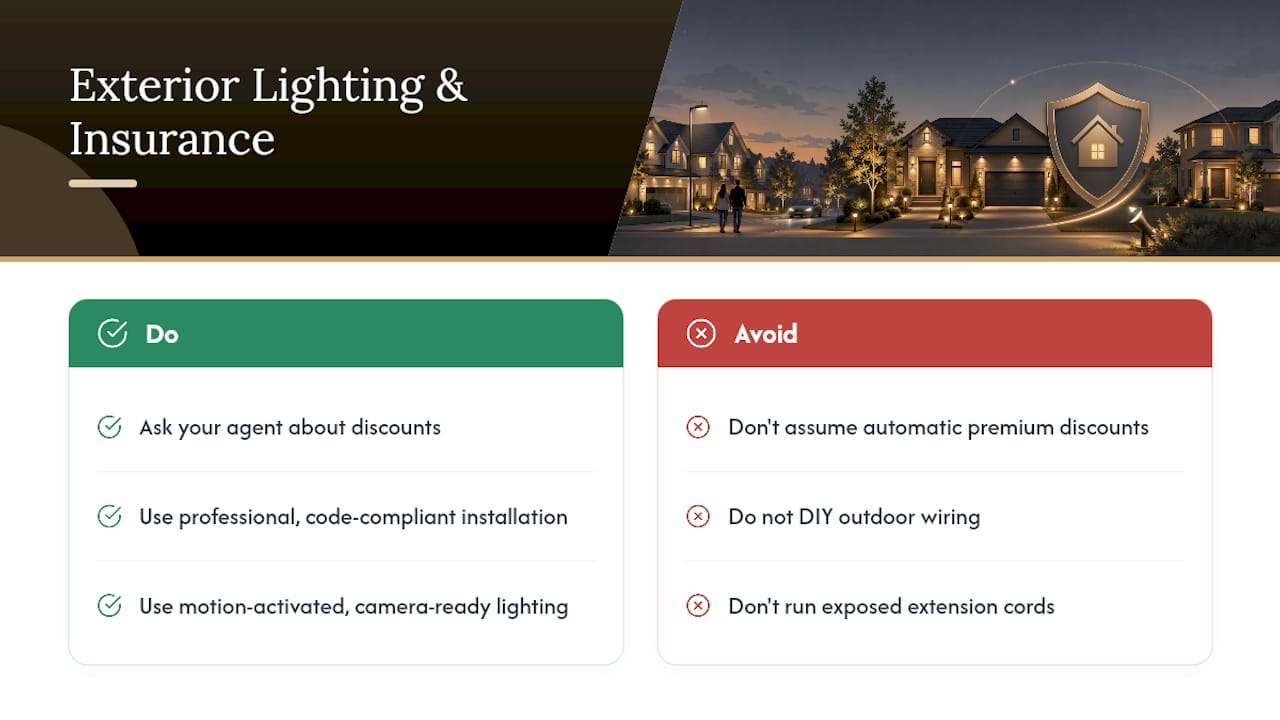
Exterior lighting itself is rarely a standalone line item on a homeowners insurance policy, but it can influence risk factors insurers do care about. Better-lit walkways and steps reduce the odds of a slip-and-fall claim from a visitor or delivery person, which is exactly the kind of liability claim insurers track closely.
Motion-activated and camera-friendly lighting can also play into discounts some insurers offer for security features, though those discounts vary significantly by carrier and are typically tied to monitored security systems rather than lighting alone. It’s worth a direct conversation with your insurance agent about whether your specific policy recognizes exterior lighting or motion sensors as a qualifying feature, since blanket claims about automatic discounts don’t hold up carrier to carrier.
There’s a flip side worth flagging too: added electrical wiring, especially DIY installations, can create liability exposure if wiring is done improperly and causes a fire or electrical hazard. This is one more argument for professional installation with proper permitting where required. A system installed to code with concealed, weather-rated wiring is far less likely to raise questions during an insurance inspection or claim than a patchwork of extension cords and staple-gunned wire running along the eaves.
The honest takeaway: don’t expect a lighting system to lower your premium in any guaranteed way, but do expect that professional, code-compliant installation protects you from the liability risk that comes with amateur electrical work outdoors.
Where the Conventional Wisdom on Lighting ROI Falls Short
Most advice on this topic treats permanent lighting like a renovation with a clean cost-to-value ratio, similar to a kitchen remodel. That framing misses what’s actually happening. Lighting doesn’t add square footage or fix a structural problem an appraiser can measure. It changes how a home performs in the moments that actually drive buyer decisions: the listing photo someone scrolls past at 11 p.m., the twilight showing an agent schedules on purpose, the split-second reaction of pulling into a driveway after dark.
The homeowners who get the most value aren’t the ones installing lighting the week before listing, hoping for a bump. They’re the ones who install a well-designed system years earlier, live with it, enjoy it, and then happen to sell into a market where that same system is doing quiet work in every online listing photo. Prioritize design quality and proper installation over any specific brand or feature list. A mediocre system installed well beats a premium one installed carelessly, every time a buyer actually walks the property.
— Dave
Ready for a Free Estimate on Permanent Lighting?
A professionally designed permanent lighting system does two jobs at once: it makes your home look its best during evening showings and listing photos, and it gives you years of low-effort enjoyment before you ever list. That combination is why Forever Glow Lighting focuses on custom design over one-size-fits-all fixture packages, especially for homeowners weighing resale value against everyday curb appeal.
A free estimate starts with a walkthrough of your home’s architecture, lighting goals, and any HOA restrictions that apply, followed by a custom design proposal rather than a generic quote. You’ll also get a clear look at how the installation process actually works from first consultation to final walkthrough, so there are no surprises on install day. The GlowCare maintenance plan and standard warranty terms get covered during that same conversation, so you know exactly what’s protected long after the crew leaves. If you’re ready to see what a custom design would look like on your own roofline, request your free estimate today.
Sources
For deeper technical background, the Department of Energy’s LED lighting guidance covers efficiency fundamentals, while Home Depot’s outdoor lighting buying guide breaks down fixture types and installation basics. For resale-adjacent home improvement value, see this partner analysis on interior doors and value.