
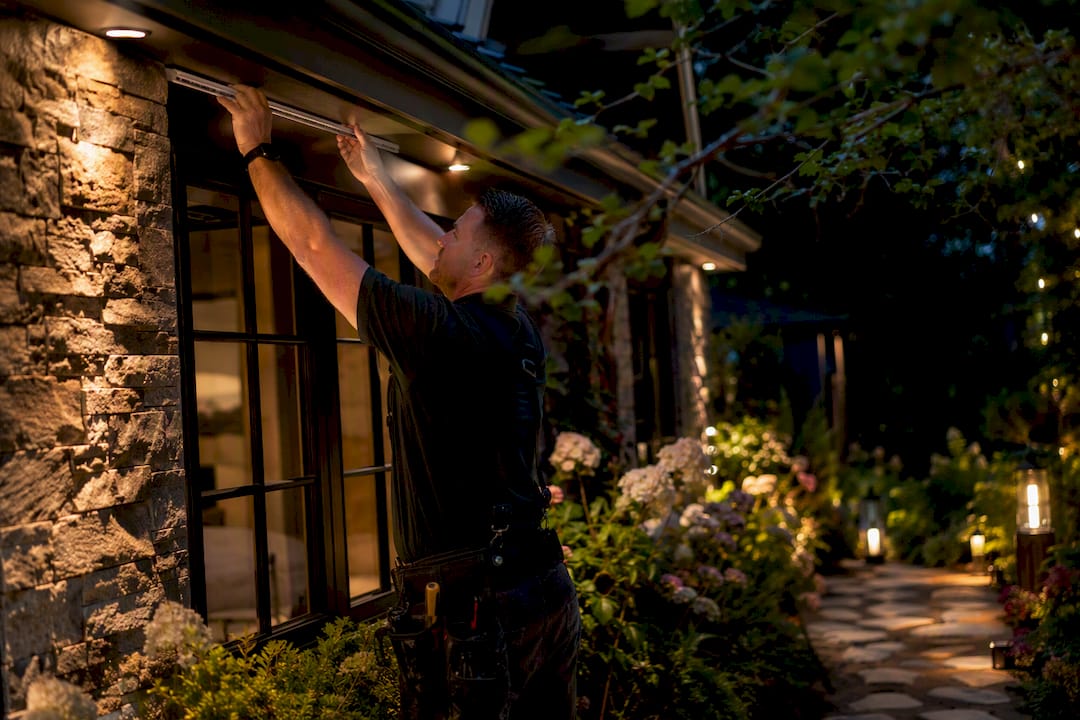
An invisible roofline track is a low-profile aluminum channel, color-matched to your fascia or trim, that holds permanent LED fixtures out of sight during the day and under smart control at night. It does three jobs at once:
- Conceals and integrates the fixtures into your roofline so nothing reads as “lighting hardware” from the street.
- Mounts hardware and routes wiring securely, protecting connections from weather and physical stress.
- Enables smart control and consistent optics, keeping every fixture aimed and powered the same way for even output.
Foreverglowlighting installs and maintains these systems across the greater Charlotte area, treating the track itself as the backbone of a permanent lighting system, not an afterthought.
Key Takeaways
An invisible roofline track works because it combines concealment, secure mechanical mounting, and protected wiring into one system that supports reliable smart lighting control.
| Point | Details |
|---|---|
| Track has three roles | Concealment, mechanical mounting, and wiring protection all happen in the same channel. |
| IP rating isn’t everything | Connector quality, splice placement, and drainage matter as much as the IP number itself. |
| Moisture causes most failures | Water pooling at ground-level junctions drives a large share of outdoor lighting failures. |
| Maintenance follows three tiers | Weekly visual, monthly hands-on, and annual electrical and photometric checks extend system life. |
| Foreverglowlighting installs and maintains | Custom design, installation, and GlowCare AMC service cover the system’s full lifecycle. |
Table of Contents
- What Role Does an Invisible Track Play in Lighting Systems?
- How Does an Invisible Track Improve Curb Appeal?
- What Technical Factors Determine a Track’s Reliability?
- What Smart Controls Come Standard With an Invisible Track?
- What Happens During Professional Installation and Commissioning?
- How Often Should Roofline Lighting Be Maintained?
- What Drives the Cost of a Permanent Track System?
- How Do You Vet a Roofline Lighting Installer?
- An Installer’s View on Why This System Earns Its Keep
- Get a Free Estimate From Foreverglowlighting
- Sources
What Role Does an Invisible Track Play in Lighting Systems?
The track is doing more work than most homeowners assume. By day, a color-matched channel disappears against gutters or fascia boards, which is what makes “invisible” more than a marketing word. By night, the same channel holds every fixture at a fixed, repeatable angle, so light output stays even across a 40-foot run instead of drifting fixture to fixture.
Mechanically, the track gives installers a straight, load-rated surface for mounting. That matters because uneven mounting is one of the fastest ways to get inconsistent illumination.
- Concealment: color-matched aluminum blends into trim, gutters, or fascia.
- Mechanical support: rigid runs keep spacing and aim consistent.
- Wiring protection: sealed channels route power without exposed splices.
Pro Tip: Ask any bidder whether their track is a true structural channel or just a mounting clip. Clips flex over time; channels don’t.
How Does an Invisible Track Improve Curb Appeal?
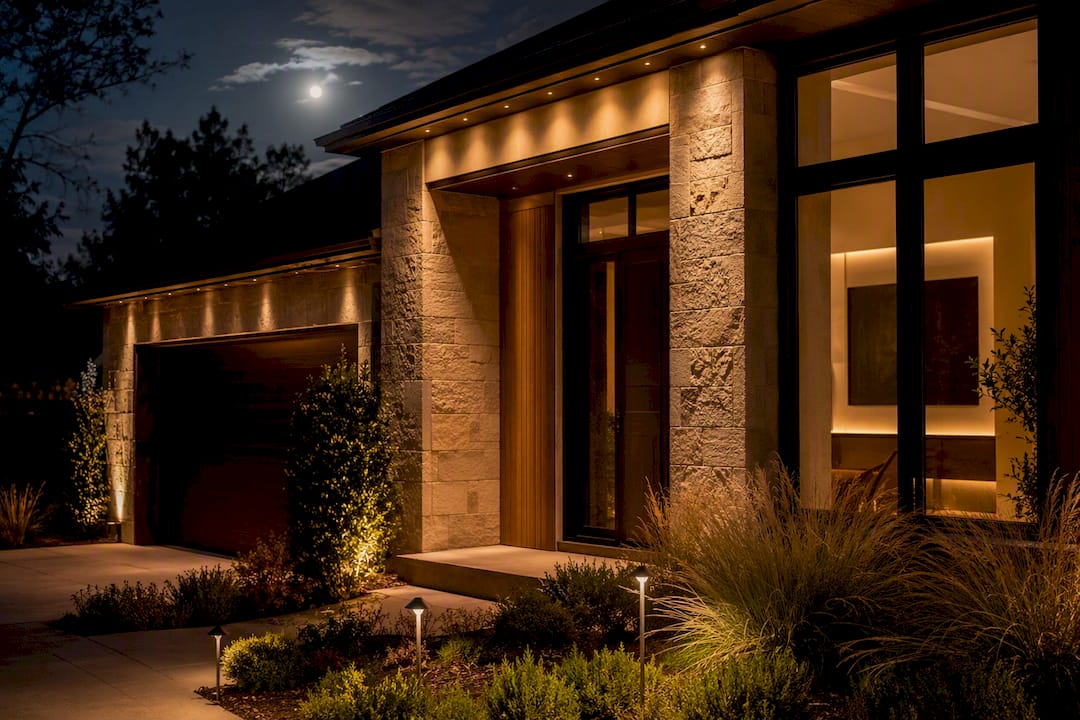
The daytime invisibility is the whole point. A properly color-matched track on white, cream, or dark trim reads as a shadow line at most, letting the architecture speak for itself until dusk. At night, the same run becomes a warm white architectural accent or shifts into full color scenes for a holiday, a graduation party, or a game-day theme.
Because tracks mount into or alongside existing trim and gutter lines rather than clipping onto shingles, they typically clear HOA design review more easily than seasonal string lights ever did.
- Year-round soft white for everyday curb appeal.
- Instant color switching for holidays and events.
- Brighter, wider security washes triggered on a schedule or by motion.
What Technical Factors Determine a Track’s Reliability?
An IP rating tells you how a fixture resists dust and water in a lab test, not how it will hold up on your actual roofline. IP65 handles direct water jets and dust; IP66 adds resistance to higher-pressure jets. Neither rating accounts for UV-worn gaskets, undersized connectors, or a splice sitting in standing water for three years.
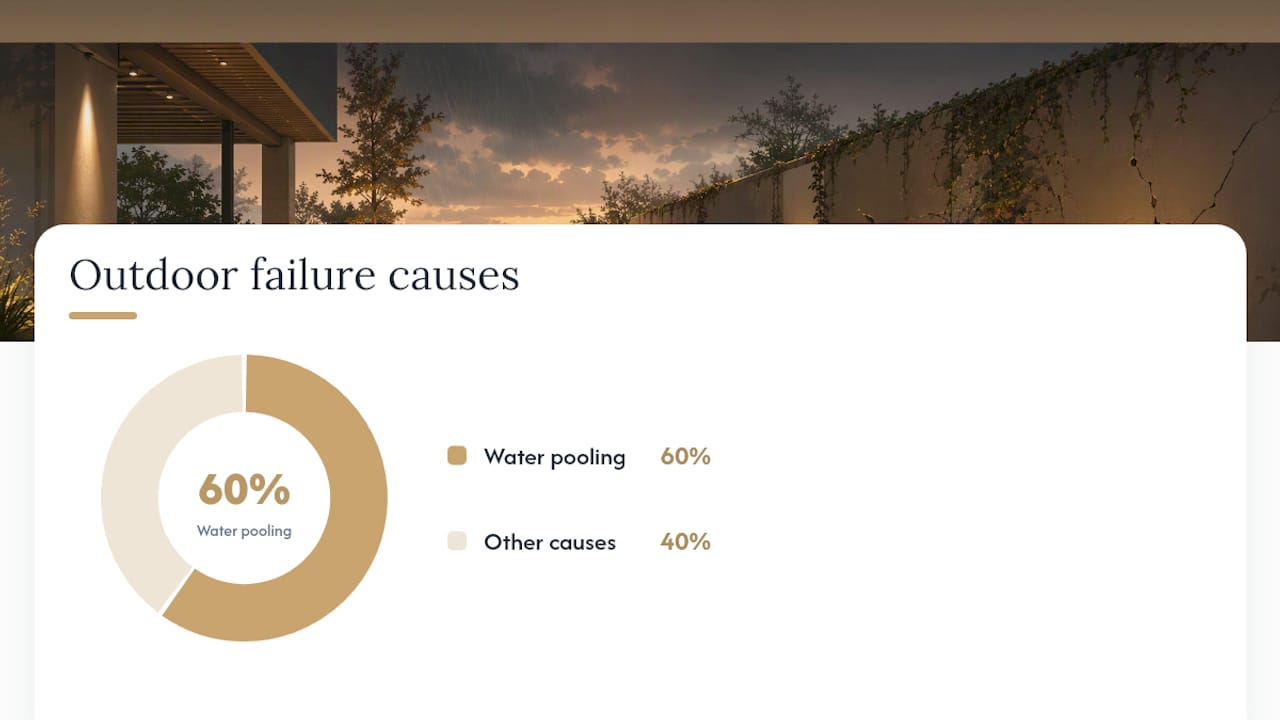
Moisture remains the leading cause of failure in permanent outdoor systems. Industry data shows 60% of outdoor lighting failures trace back to water pooling at ground-level junctions, where connectors corrode and drivers eventually give out from repeated moisture exposure.
Good installers reduce that risk with a few concrete practices:
- Elevating transformers off grade so they never sit in runoff.
- Locating splices away from gutter outlets and low points.
- Applying dielectric grease at every connector to block corrosion.
- Choosing IP-rated fixtures matched to actual roofline exposure, not just a spec sheet number.
What Smart Controls Come Standard With an Invisible Track?
Most permanent systems run on one of three control architectures: a smartphone app for individual homes, wireless controllers for mid-size commercial jobs, or DMX-over-IP for venues running synchronized shows across large facades. The track itself becomes the distribution path for those control signals, which is why upgrading from basic color-change to full DMX later usually means a controller swap, not a re-wire.
A permanent LED system replaces seasonal ladder work entirely: colors, scenes, and schedules all live in an app.
- Homeowners get saved presets for holidays, game days, and everyday accent.
- Property managers schedule dusk-to-dawn security lighting without touching a switch.
- Venue operators trigger event-specific color scenes in seconds, not hours.
What Happens During Professional Installation and Commissioning?
A competent installer follows a sequence, not a shortcut list. Skipping steps here is where most long-term problems start.
- Site survey: map the run layout, confirm roofline access, note HOA restrictions, and plan wire paths before any hardware goes up.
- Mechanical mounting: secure the track to fascia or trim at rated intervals, keeping runs straight for even spacing.
- Electrical work: place splices away from water pooling points, mount transformers off grade, and add surge protection at the panel connection.
- Labeling: tag every fixture and junction with location and install date for faster service later.
- Commissioning: aim fixtures, run sample lux checks across the facade, program initial control scenes, and document everything for handover.
Pro Tip: Request photos of the wiring before the track cover goes on. A reputable installer will hand these over as part of the installation process without being asked twice.
How Often Should Roofline Lighting Be Maintained?
A three-tier cadence keeps a permanent system performing the way it did on install day. Weekly visual checks, monthly hands-on inspections, and an annual electrical and photometric audit catch small problems before they become expensive ones.
- Weekly: glance at the run for dead fixtures, flickering, or obvious debris.
- Monthly: wipe lenses, check gaskets, and confirm mounting hardware hasn’t loosened.
- Annually: test insulation resistance, inspect drivers, and verify photometric output against baseline.
Moisture, corrosion, and thermal stress on drivers cause most failures between these checkpoints. Professional cleaning and gasket service can restore more than 30% of lost brightness on fixtures that have gone a season or two without attention, which is the core argument for an annual maintenance contract (AMC) over reactive repairs.
What Drives the Cost of a Permanent Track System?
Price scales with linear footage, but footage is only one variable. Control complexity, roofline access difficulty, and the grade of fixtures and transformers all move the number, and an AMC adds a predictable annual line item on top.
- Linear footage and roofline complexity set the base install cost.
- DMX or venue-grade control adds hardware and programming time.
- Difficult access (steep pitches, tall commercial facades) raises labor cost.
- IP-rated fixtures and marine-grade transformers cost more upfront but fail less.
Weigh that against what you’re replacing: ladder labor every season, the injury risk that comes with it, and the fact that permanent roofline lighting works for holidays, everyday accent, and security without ever coming down. Compare bids on itemized scope, warranty length, and AMC terms, not just the bottom-line number.
How Do You Vet a Roofline Lighting Installer?
A track system is only as reliable as the crew that installs it. Use this list before signing anything.
- Ask for documented examples of roofline installations, not just landscape lighting jobs.
- Confirm licensing and insurance in writing.
- Get specific IP ratings for the fixtures and transformers in your proposal, not general marketing language.
- Ask exactly where splices and transformers will sit relative to water pooling points.
- Request a live app demo before you commit.
- Ask what commissioning documentation you’ll receive at handover.
- Get AMC pricing and scope in writing, not verbally promised.
Vague answers to any of these, especially on splice placement or IP specs, are a red flag worth walking away from. For larger properties, a dedicated commercial guide covers additional bid-comparison criteria venue operators should ask about.
An Installer’s View on Why This System Earns Its Keep
Owners rarely ask about the track itself when they call, even though integrating roofline tracks with professional landscape lighting can dramatically enhance overall outdoor ambiance. They ask about color options and price. But the track is what determines whether the system still looks sharp in year five. The recurring question we field is whether IP ratings alone guarantee durability. They don’t. Placement, drainage, and connector quality matter just as much.
Note: credentials and licensing details for individual technicians are available on request from Foreverglowlighting.
Talk to a professional about a site survey before you assume your roofline is straightforward. Most aren’t.
— Dave
Get a Free Estimate From Foreverglowlighting
Foreverglowlighting handles the entire lifecycle of a permanent roofline system, not just the install day. That means custom track design and installation, smart control programming set up on your phone before we leave the property, and ongoing GlowCare maintenance so you’re never the one climbing a ladder to check a connector.

Compared to seasonal lighting crews or a DIY string-light setup, a professionally installed roofline track gives you one system that handles holidays, everyday accent lighting, and security without re-hanging anything every year. If you’re weighing a bid or just want to know what a proper site survey looks like on your property, start with our breakdown of how the installation process actually works and request a free estimate from there.
Sources
- Outdoor Lighting Maintenance: A Pro’s Guide for 2026 – Golden Lighting
- Maintenance checklist: outdoor LED wall wash lighting — BK Lite
- What is an AMC? The importance of annual maintenance contracts for architectural lighting? – Light the City.