
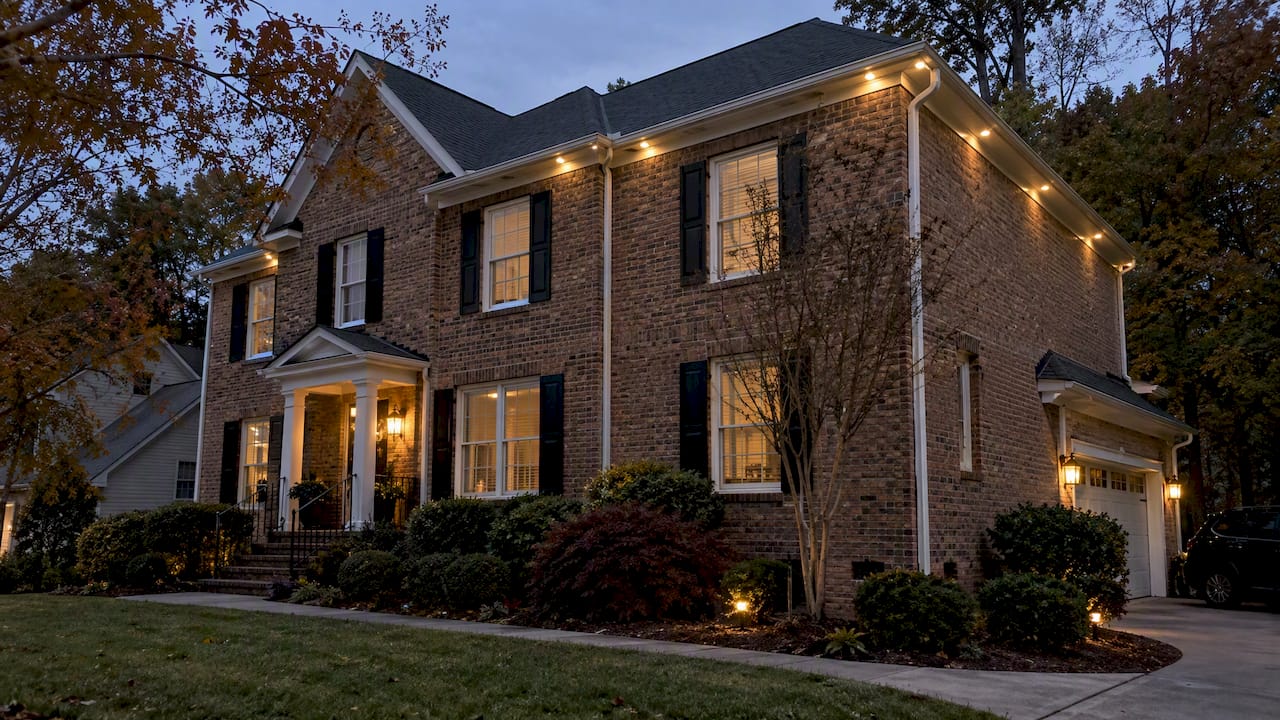
A professional permanent LED roofline track system can be installed around gutters safely, as long as the installer uses non-penetrating or fascia-mounted hardware and seals every connection point. The right starting move is a site survey with a qualified installer, who can map the roofline, check the gutter material, and recommend mounting, controls, and a maintenance plan before any hardware goes up.
TL;DR:
- Professional roofline systems use low-voltage wiring and sealing connectors to ensure safety and resistance to moisture, reducing shock risk and maintenance.
- Mounting hardware should attach to fascia or soffit, avoiding drilling into gutters, which can cause leaks, corrosion, and voided warranties.
- Multi-zone smart controls with local backup are essential for efficient operation, scheduling, and integration with existing smart home systems.
- The installation process includes a site survey, fixture placement mockup, permit clearance, wiring, sealing, and thorough testing, typically completed within several weeks.
- Maintenance routines focusing on sealing connectors, cleaning, and firmware updates significantly extend system lifespan and reliability.
Table of Contents
- What permanent roofline lighting systems actually involve
- Mounting near gutters: safe methods that avoid drilling
- Why smart controls matter more than most buyers expect
- From site survey to commissioning: what the process looks like
- What actually breaks, and how to keep a system running
- What drives the cost of a roofline lighting quote
- Professional installation and maintenance make the real difference
- If you want this handled for you, here is what Forever Glow Lighting offers
- FAQ
- Sources
What permanent roofline lighting systems actually involve
A professional roofline system is a fixed, low-profile track of LED modules that runs along the roofline and disappears into the trim by day, then lights up on command at night. This is different from seasonal string lights clipped to a gutter lip each winter and taken down in spring. Permanent systems stay in place year round, run on weatherproof wiring, and connect to a smart control module rather than a wall timer.
Most professional systems use low-voltage wiring, typically 12 or 24 volts, which routes through a transformer or driver mounted somewhere protected, like an attic or garage. Low-voltage setups reduce shock risk near metal gutters and roofing and make future repairs simpler, since no line-voltage current runs along the roof edge. Line-voltage systems exist but are less common for roofline tracks because they demand more conduit and stricter electrical code compliance.
A well-built system typically includes hardware from Noveltylights featuring aluminum or polymer tracks that hold the LED modules in a continuous channel.
- Aluminum or polymer tracks that hold the LED modules in a continuous channel.
- Individually replaceable LED modules rather than one sealed strip.
- IP-rated connectors at every joint to keep moisture out.
- A driver or transformer sized for the full run plus a safety margin.
- A control module or app gateway that manages zones, color, and scheduling.
Knowing these parts helps a homeowner read a quote with some confidence instead of taking a contractor’s word for it. For a closer look at how these setups differ by roofline shape and material, permanent roofline lighting types covers the common configurations in more detail.
Mounting near gutters: safe methods that avoid drilling
The safest professional approach mounts the track to the fascia board or soffit, not the gutter itself. Fascia-mounted brackets carry the weight of the track on solid wood or composite trim, which holds screws far better than thin aluminum or steel gutter stock. Trim-mounted clips work the same way: they grip the fascia edge above or below the gutter line, so the fixture sits close to the gutter without ever touching it.
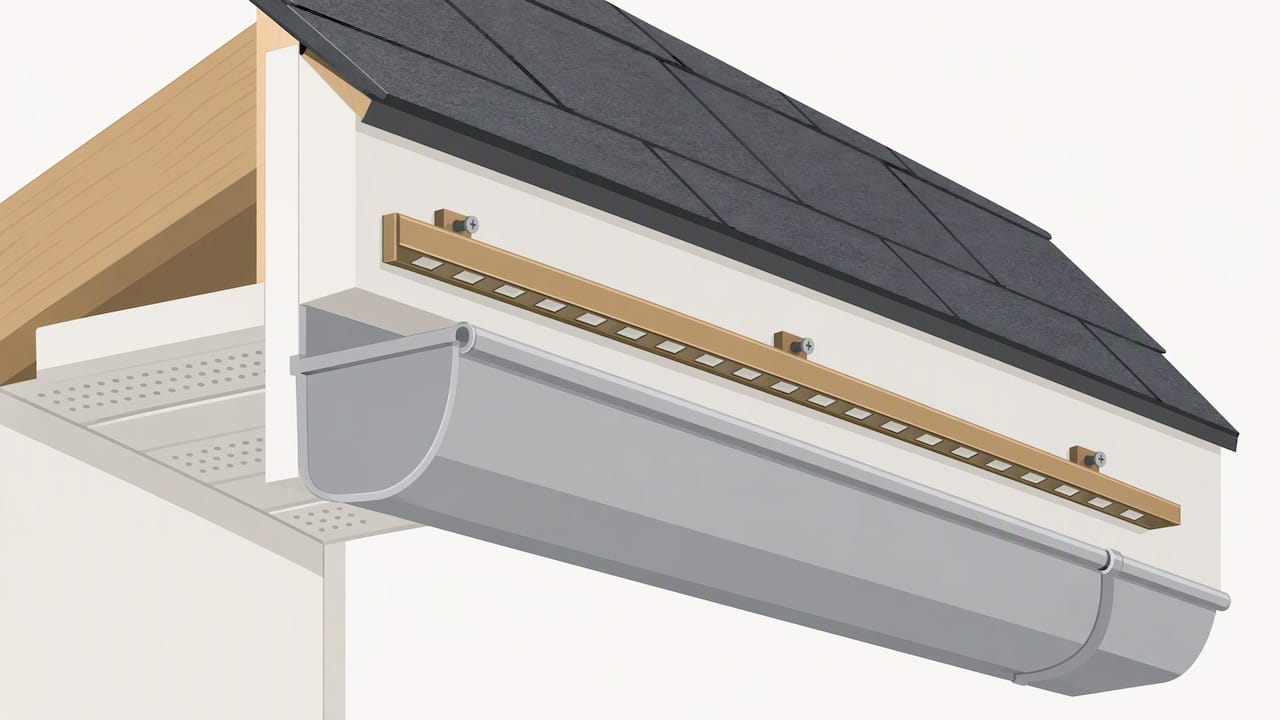
Clamp-style mounts that grip the gutter’s outer lip, rather than piercing it, are sometimes used when fascia access is limited, but only after an installer confirms the gutter gauge and condition can handle the load. Metal roofs often call for custom flashings or adapter channels that clip to the seam rather than the gutter edge, which keeps the warranty on the roofing material intact.
Drilling directly into a gutter is discouraged for good reason. Every hole is a potential leak path, exposed metal corrodes faster, and most gutter manufacturers void their warranty the moment someone punctures the trough. A professional installer only considers limited mechanical attachment to gutter trim after inspecting the material and confirming it will not compromise drainage or structural integrity.
When reviewing a proposal, watch for these warning signs:
- The plan calls for unsealed screw penetrations anywhere on the gutter itself.
- No connector carries a stated IP rating.
- The quote never mentions where the driver will live or how it will be accessed for service.
Pro Tip: Ask your installer to show you, in writing, exactly which surface the track attaches to. If the answer is “the gutter,” ask what happens if that gutter ever needs replacing.
For a deeper walkthrough of gutter-safe techniques, see how homeowners install permanent lights on gutters safely.
Why smart controls matter more than most buyers expect
A roofline system is only as good as the controller behind it. Multi-zone control lets a homeowner run the roofline separately from the eaves, the landscape beds, or the dock, so one section can shift to a security pattern while the rest stays off. Scheduling and motion-based triggers cut run hours significantly compared to systems left on a single dusk-to-dawn setting, and dimming reduces the electrical load on the driver, which tends to extend its working life.
App stability matters as much as the feature list. A system that depends entirely on a cloud connection can go dark during an internet outage, so it is worth asking whether local control survives a Wi-Fi drop. Property managers overseeing several properties should also confirm the app supports multiple user logins with separate permissions, rather than one shared login passed around a team.
Before signing, ask the installer for:
- Confirmation of independent, multi-zone control.
- A clear firmware update path, not a one-time setup with no support.
- A backup local control option if the cloud connection fails.
- Any integration options with existing smart home or security systems.
The smart landscape lighting app control guide walks through how multi-zone scheduling works in practice.
From site survey to commissioning: what the process looks like
A professional installation follows a fairly predictable sequence, and knowing the steps helps a homeowner spot a rushed or incomplete proposal.
- A site survey and photo documentation of the roofline, gutters, and roof material.
- A photometric placement mockup showing where fixtures will sit and how the light will spread.
- Design sign-off, including any HOA or municipal permit requirements.
- Mounting, wiring, and driver routing, followed by sealing every connection point.
- Commissioning, where the installer tests each zone and sets up the app.
Most residential jobs move from survey to commissioning within a few weeks, though complex rooflines, roof repairs discovered mid-project, permit delays, or long wire runs to a driver location can stretch that timeline. Commercial jobs with multiple buildings or stricter municipal approval tend to run longer.
A trustworthy quote should itemize hardware and labor hours separately, specify the driver or transformer model, state the IP and UL or ETL rating of every outdoor-rated component, and describe the warranty and any maintenance plan in plain language rather than a vague mention of “support.” The GSA federal LED and controls guidance recommends starting any system selection with code requirements and a documented photometric study, which is good practice for residential quotes too. For a full breakdown of what each visit covers, how the installation process works lays out each stage.
What actually breaks, and how to keep a system running
The LED diodes themselves are rarely the problem. Drivers, connectors, and sealants often fail before the diodes wear out, with moisture entering connector joints being a common cause of early failure. That is why UL’s landscape and outdoor lighting guidance points to specific standards, including UL 1838, UL 2108, and UL 1598, for low-voltage and line-voltage outdoor fixtures, and why ingress protection ratings matter as much as the light output.
A basic annual maintenance routine should include:
- Inspecting and resealing exposed connectors before the wet season.
- Cleaning tracks and lenses where pollen, dust, or salt air builds up.
- Verifying drainage paths near the gutter are still clear and fastenings are tight.
- Updating firmware and testing every zone for dead sections or flickering.
Pro Tip: Keep a simple log of which zones were tested and when. It makes it much easier to spot a pattern if one section of track starts failing faster than the rest.
A solid maintenance plan typically covers scheduled site visits, connector resealing, help with driver replacement, firmware updates, and a faster response window if something fails unexpectedly.
What drives the cost of a roofline lighting quote
Quotes for the same roofline can vary widely, and the gap usually comes down to a handful of factors rather than one contractor simply charging more.
- Hardware quality, including whether components carry real IP and UL or ETL listings.
- The number of zones and controllers the system needs to run independently.
- Wiring complexity and how hard the roofline is to access.
- Any electrical panel upgrades needed to support the driver load.
- Labor hours, which climb with roof pitch, height, and gutter condition.
An itemized quote with a photometric mockup and a written warranty term is worth more than a lower bid with none of that detail, since maintenance and part replacement costs add up over the system’s lifespan regardless of the upfront number. Get at least two detailed proposals, insist on seeing the IP and UL specs in writing, and compare service terms and warranty length rather than judging on price per foot alone. The permanent lighting installation cost guide breaks down these cost drivers in more detail.
Professional installation and maintenance make the real difference
The gap between a system that looks sharp for one season and one that still works flawlessly five years later almost never comes down to the LED itself. It comes down to who mounted it, how well the connectors were sealed, and whether anyone comes back to check on it. A fascia-mounted track installed by someone who understands gutter materials will outlast a bargain clip-on setup every time, and the maintenance visits matter just as much as the install day.
— Dave
If you want this handled for you, here is what Forever Glow Lighting offers
Permanent, smart LED roofline track systems can be designed and installed around gutters without drilling into them, using commercial-grade hardware matched to trim color so the track stays discreet by day. Such systems connect through a smartphone app with multi-zone and multi-color control, and installations are designed to meet HOA and municipal requirements rather than fight them.
- Permanent Christmas Lighting covers the core roofline track installation and the GlowCare maintenance subscription.
- Residential Year-Round Holiday Displays shows how the same tracks shift between everyday accent lighting and holiday colors.
- Landscape Lighting Design extends the same control system into beds, paths, and architectural features.
Contact a professional lighting installer for a free estimate and a site survey tailored to your roofline and gutter setup.
FAQ
Is it safe to attach permanent lights directly to gutters?
Direct drilling into gutters is generally discouraged because it creates leak paths and can void the gutter manufacturer’s warranty. Professional installers typically mount tracks to the fascia or soffit instead, keeping the fixture close to the gutter without touching it.
How long do permanent roofline LED systems last?
Well-designed LED outdoor luminaires often last longer than traditional HID sources and use less energy to deliver the same brightness, according to the DOE outdoor area lighting fact sheet. In practice, drivers and connectors tend to need attention well before the LED modules themselves fail.
What IP or UL rating should roofline lighting have?
Outdoor fixtures installed where rain or direct water exposure is possible should carry a wet location rating, which is part of the UL and ETL suitability system covering dry, damp, and wet locations, as explained in this UL ratings guide. Ask your installer to show the rating on the fixture’s own spec sheet, not just the marketing material.
How often does a roofline lighting system need maintenance?
An annual inspection that checks connector seals, cleans tracks, and tests every zone catches most problems before they cause a failure. Maintenance plans typically bundle these visits with driver support and firmware updates so homeowners do not have to track the schedule themselves.
Can roofline lighting be added without damaging an existing roof or gutters?
Yes, when the installer uses fascia-mounted or clamp-style hardware suited to the existing gutter material and roof edge, rather than penetrating the gutter or roofing directly. A proper site survey should identify the roof and gutter type first and recommend a mounting method that fits it.
Sources
- LED Outdoor Area Lighting Fact Sheet
- LED Lighting and Controls Guidance for Federal Buildings – September 2024
- Landscape and outdoor luminaire lighting | UL
- UL ratings guide (Lumens)