
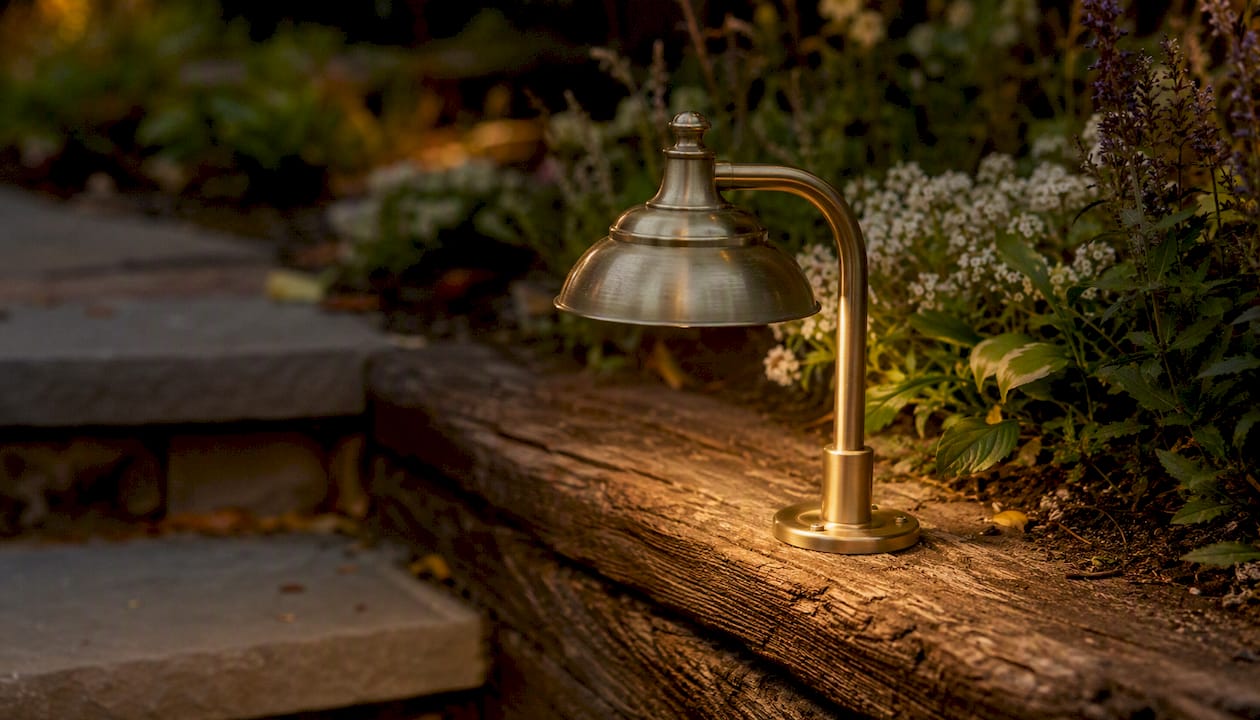
For most homeowners and professional installers, brass is the better default choice for landscape lighting fixtures. It holds up longer in humid conditions, resists denting around mechanical parts, and weathers more evenly than pure copper over a typical 20-plus year service life. That said, copper earns its place on high-end properties where the evolving patina is part of the design intent, or when a designer specifies it to complement natural stone, wood, or warm architectural finishes.
- Choose brass when durability, consistency, and low maintenance are the priority.
- Choose copper when the aesthetic trajectory (warm orange aging to rich verdigris) is a deliberate design choice, especially for focal fixtures in smaller quantities.
- Coastal or acidic-soil properties need extra scrutiny: both metals require marine-grade alloy specs or protective coatings, and dezincification risk in brass becomes a real concern in extreme salt-spray environments.
Pro Tip: Ask your installer to specify the alloy grade, not just the metal. “Brass” covers a wide range of copper-zinc ratios, and a marine-grade or high-copper-content brass performs significantly better in wet or corrosive conditions than a generic casting alloy.
Table of Contents
- What makes copper a distinctive choice for garden lighting?
- Why do installers often prefer brass for landscape fixtures?
- How do environment and corrosion affect each metal differently?
- What maintenance routine keeps copper and brass fixtures looking their best?
- What should your installer know before specifying copper or brass?
- Foreverglowlighting’s installer recommendations and best practices
- Key Takeaways
- Why we usually reach for brass first
- Foreverglowlighting can handle the material selection for you
- Sources and further reading
What makes copper a distinctive choice for garden lighting?
Copper is a pure metal, not an alloy, and that distinction shapes everything about how it performs and ages in the garden. It is softer than brass, which means it can be formed into elegant shapes and thin-walled fixtures that brass castings cannot easily replicate. That malleability is a design asset, but it also means copper bodies often rely on brass cast components for functional hardware like swivels, stakes, and threaded fittings where mechanical strength matters.
Copper’s conductivity is higher than brass, which has a modest benefit for heat dissipation around LED drivers, though modern low-voltage LED systems generate so little heat that this rarely drives the material decision on its own.
How copper patinas over time:
- Fresh copper starts as a bright, warm orange-red.
- Within months of outdoor exposure, it shifts to a darker brown as copper oxide forms.
- Over years, particularly in humid or coastal climates, it develops the blue-green verdigris most homeowners recognize.
- Humidity, rainfall, pollution, and surface finish all affect how quickly and evenly the patina develops.
Acid rain and industrial pollutants accelerate the process and can produce uneven coloration if one side of a fixture faces prevailing weather more than the other. A lacquered or waxed finish slows patina development and keeps the warm tones longer, while raw copper is specifically chosen for high-end projects where the evolving finish is the point.
Copper is also highly recyclable, which matters to homeowners with sustainability priorities. When a fixture eventually reaches end of life, the metal retains real commodity value.
Why do installers often prefer brass for landscape fixtures?
Brass is an alloy of copper and zinc, and the addition of zinc changes the metal’s behavior in ways that matter for outdoor fixtures. It is harder, more resistant to denting, and far easier to cast into complex shapes with tight tolerances. That castability is why brass is the standard choice for the mechanical components of landscape fixtures: the swivel joints that let you aim a spotlight, the threaded collars that seal a fixture to its stake, and the mounting hardware buried in the soil.
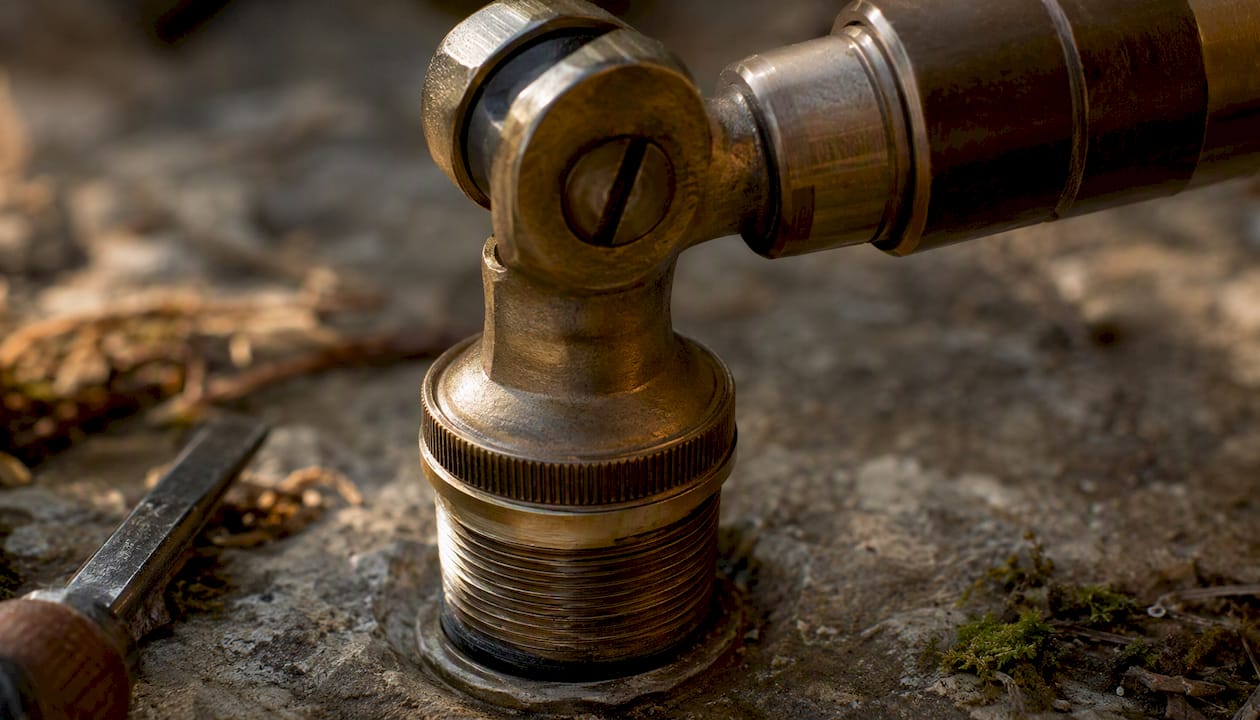
Brass also weathers more evenly than copper. Rather than developing the variable blue-green patina that copper produces, brass darkens gradually to a warm, consistent bronze tone. For homeowners who want their fixtures to look intentional and uniform years after installation, that predictability is a genuine advantage.
Where brass is the preferred specification:
- Coastal properties where salt spray is a regular factor
- High-traffic lawn areas where fixtures risk being struck by mowers or foot traffic
- Commercial installations where uniformity and low maintenance are non-negotiable
- Any install where the fixture includes moving or threaded parts
One caveat worth knowing: in extreme environments with very salty or acidic water, a process called dezincification can selectively leach zinc from the brass alloy, weakening the metal over time. Specifying a high-copper-content or marine-grade brass alloy eliminates most of this risk.
Pro Tip: For coastal installs, ask for fixtures made from C28000 Muntz metal or C46400 naval brass. Both are specifically formulated to resist dezincification and are referenced in ASTM corrosion standards for marine environments.
How do environment and corrosion affect each metal differently?
Patina on copper is not just cosmetic. The copper oxide layer that forms on the surface actually slows further corrosion by acting as a barrier. The problem is that this layer can develop unevenly, especially when one face of a fixture gets more rain, sun, or airborne pollutants than another. Fixtures near swimming pools face chlorine exposure, which accelerates surface pitting on both metals if the finish is compromised.
Key environmental stressors and their effects:
- Salt spray: Accelerates patina on copper; triggers dezincification risk in low-grade brass.
- Acid rain: Produces uneven patina on copper; can cause surface pitting on both metals over time.
- Fertilizer runoff: Nitrogen and phosphate compounds in soil can corrode fixture bases and buried stakes.
- Pool chlorine: Attacks compromised finishes on both metals; keep fixtures at least six feet from pool edges when possible.
- Industrial pollutants: Sulfur compounds in the air speed up copper’s color shift and can dull brass finishes prematurely.
Mitigation checklist for harsh environments:
- Specify marine-grade alloys (naval brass or high-copper-content brass) for coastal or pool-adjacent installs.
- Apply a UV-stable lacquer or paste wax to copper fixtures if you want to slow or freeze the patina at a particular stage.
- Choose fixture locations that minimize direct soil contact for the body; use non-metallic stakes or sleeves where soil chemistry is aggressive.
- Inspect and re-seal threaded fittings annually in high-humidity or coastal zones.
- Consult ASTM corrosion testing standards when specifying alloys for commercial or high-value residential projects.
Pro Tip: In areas with heavy clay soils or high fertilizer use, wrap buried copper or brass stakes in a protective sleeve. Direct contact with chemically active soil is one of the fastest ways to shorten fixture life regardless of metal quality.
What maintenance routine keeps copper and brass fixtures looking their best?
Both metals are low-maintenance compared to painted steel or aluminum, but “low maintenance” is not the same as “no maintenance.” A simple annual routine protects the finish, extends service life, and keeps fixtures performing safely.
Copper maintenance:
- Clean with a soft cloth and mild dish soap; rinse thoroughly and dry.
- Avoid abrasive pads or steel wool, which scratch the surface and create sites for uneven corrosion.
- Apply a paste wax or clear lacquer once a year if you want to preserve the current patina stage.
- Never use ammonia-based cleaners; they strip the protective oxide layer and can cause rapid, uneven discoloration.
Brass maintenance:
- Wipe down with a damp cloth and mild soap; rinse and dry after cleaning.
- For heavy tarnish, a diluted white vinegar solution (one part vinegar, one part water) works without damaging the alloy.
- Re-apply a protective wax or sealant every one to two years in humid climates.
- Check threaded connections and swivel joints annually; re-seal with a silicone-based thread sealant if gaps appear.
Expected service life under normal residential conditions runs 20-plus years for high-quality brass fixtures and multiple decades for copper, depending on environmental exposure and finish. Aggressive cleaning with harsh chemicals is one of the most common ways homeowners shorten that lifespan, and it can void manufacturer warranties on lacquered or coated finishes.
What should your installer know before specifying copper or brass?
The mechanical and electrical differences between copper and brass affect how a fixture is mounted, wired, and maintained. Sharing a few key details with your installer before quoting begins prevents change orders and speeds the design process.
Mounting and casting considerations:
- Brass cast parts handle threaded connections, swivel mounts, and buried stakes better than formed copper.
- Copper sheet or spun bodies are lighter and easier to aim but need brass hardware at every connection point.
- Anchor type matters: in sandy or loose soils, heavier brass fixtures may need a wider stake or a concrete collar.
Electrical compatibility checklist:
- Confirm the transformer output matches the fixture’s LED driver voltage (typically 12V AC for standard low-voltage systems).
- Verify that wire gauge is sized for the total fixture load on each run, not just individual fixtures.
- Use waterproof wire connectors rated for direct burial; both copper and brass fixtures are typically used with standard 12- or 14-gauge landscape wire.
- Check that grounding continuity is maintained across all metal fixture bodies, particularly for larger commercial installs.
- Seal all threaded fittings with a silicone-based thread sealant before burial to prevent moisture ingress.
Pro Tip: Before your installer visits for a quote, note your soil type, proximity to salt water or a pool, and whether you have a HOA finish requirement. Those three details determine alloy grade, coating spec, and finish color faster than any other information — and they prevent the most common change orders.
For more on low-voltage landscape lighting compatibility and why professional installation matters for permanent systems, Foreverglowlighting’s homeowner guides cover the technical side in plain language.
Foreverglowlighting’s installer recommendations and best practices
Foreverglowlighting approaches every landscape lighting project as a permanent installation, not a temporary fix. That philosophy shapes material selection: fixtures need to perform reliably for decades, not just look good on installation day. For most Charlotte-area residential projects, the team defaults to high-quality brass and copper fixtures because both metals align with a permanent, low-callback install philosophy in ways that aluminum and plastic simply cannot match.
Foreverglowlighting’s standard best practices for material specification:
- Brass cast hardware for all mechanical connection points, regardless of body material.
- Copper bodies specified only when the homeowner or designer has confirmed the patina trajectory is intentional.
- Marine-grade alloy specified for any fixture within reasonable distance of a pool, water feature, or coastal exposure.
- Protective wax or lacquer applied at installation on copper fixtures when the homeowner wants to preserve the initial warm tone.
- Annual GlowCare maintenance plan offered to cover cleaning, re-sealing, and fixture adjustment.
For homeowners considering a full landscape lighting installation, Foreverglowlighting offers site consultations where material selection, fixture placement, and finish matching are all addressed before a single fixture is ordered.
Key Takeaways
Brass is the more durable, lower-maintenance default for most landscape lighting installs, while copper earns its place as a premium aesthetic choice for focal fixtures and designer-specified projects.
| Point | Details |
|---|---|
| Brass for durability | Brass fixtures typically last multiple decades and resist denting and mechanical wear better than pure copper. |
| Copper for aesthetics | Copper’s evolving patina (orange to verdigris) is a deliberate design choice, not a maintenance problem. |
| Environment drives alloy spec | Coastal or acidic-soil properties require marine-grade brass alloys to prevent dezincification and accelerated corrosion. |
| Lifecycle cost favors metal | Both brass and copper outperform aluminum and plastic on total cost of ownership for permanent installs. |
| Foreverglowlighting’s approach | Foreverglowlighting defaults to brass hardware with optional copper bodies, backed by annual GlowCare maintenance plans. |
Why we usually reach for brass first
The honest reason most experienced installers default to brass has less to do with metallurgy and more to do with what happens two years after installation. Brass fixtures generate fewer callbacks. The finish is predictable, the mechanical parts hold their adjustment, and homeowners do not call wondering why their fixtures look different from each other after one wet season.
Copper is a genuinely beautiful material, and there are projects where it is clearly the right call. A front entry with four statement uplights on a stone facade, a garden focal point where the patina will be appreciated rather than questioned — those are real use cases where copper’s character adds value that brass cannot replicate. But for a 20-fixture pathway lighting plan on a property that will be maintained by a lawn crew, brass is the choice that holds up without requiring anyone to explain why the fixtures look the way they do.
The other factor that rarely gets discussed: copper’s softness means it is more vulnerable to incidental damage from lawn equipment. A brass fixture that gets clipped by a mower edge survives. A copper body in the same situation often does not.
Foreverglowlighting can handle the material selection for you
Choosing between copper and brass outdoor fixtures is one decision in a longer process that includes fixture placement, transformer sizing, wiring layout, and finish coordination with your home’s exterior. Foreverglowlighting handles all of it as part of a single, professionally managed installation.
The team at Foreverglowlighting designs permanent landscape lighting systems built to last, with material specifications matched to your property’s environment, aesthetic, and budget, and can coordinate with experts in landscape lighting for local installation and integration. Whether you need brass pathway fixtures across a large Charlotte estate or a handful of raw copper accent lights for a focal garden feature, the process starts with a site consultation where nothing is guessed.
Services relevant to this decision include:
- Custom landscape lighting design and installation
- Commercial exterior lighting for property managers and venue operators
See exactly how the installation process works and request a free estimate to get started.
Sources and further reading
Authoritative references:
- Landscape Lighting Layering Techniques For Homeowners
- Durable landscape lighting materials guide – Portfolio Lighting
- astm.org
- Brass vs Copper Landscape Lights: Which Outdoor Fixture Material Lasts – COLOER Lighting
- COPPER VS BRASS LANDSCAPING – eosoutdoorlighting.com
- Why Brass and Copper Outdoor Lighting Fixtures Are The Best – Custom Lighting Of America
- Style Feature: Raw Copper LED Landscape Lighting – C2C Lights
Foreverglowlighting homeowner guides:
- Landscape Lighting Layering Techniques for Homeowners
- Why Low Voltage Landscape Lighting Is the Smart Choice
- Landscape Lighting Explained: A Homeowner’s 2026 Guide
- Landscape Lighting Safety Benefits for Homeowners