
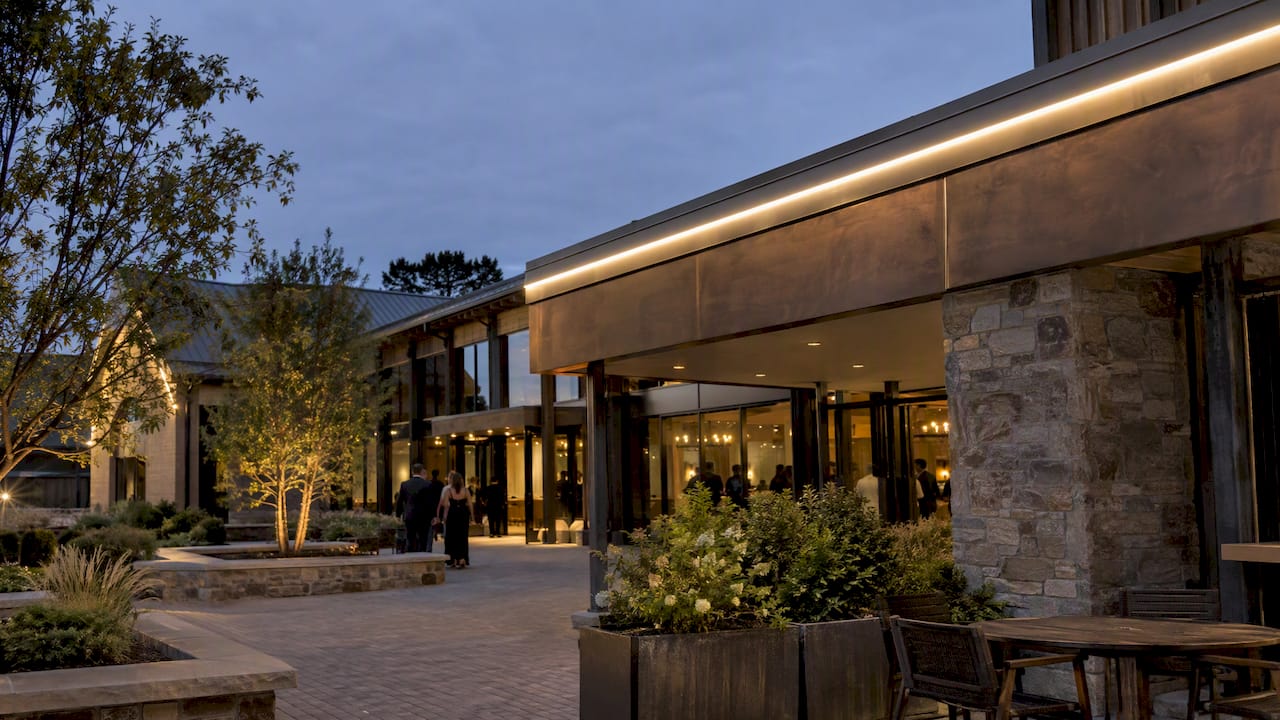
For event venues and venue-grade properties, permanent professional LED lighting with smart controls is the recommended solution. It is more reliable, more marketable, and cheaper to operate than temporary or legacy lighting. Commercial-grade fixtures, smart controls, and BUG-compliant placement form the foundation, and a qualified installer can turn that plan into a photometric design and a working system.
TL;DR:
- LED conversions typically cut exterior lighting energy use by about 50%, while fewer bulb changes reduce maintenance labor compared with legacy fixtures.
- Separate gathering spaces, pathways, architectural accents, and security areas into control zones, then use event presets and schedules tied to sunset.
- Submit a photometric plan with fixture aims, BUG worksheets, and schedules before permitting; property line readings should approach zero to limit complaints and avoid redesigns.
- Trenching and wiring usually drive the largest upfront cost variation, while commissioning verifies fixture aims, code compliance, schedules, and staff access to scenes.
Table of Contents
- Why Permanent Lighting Pays Off for Venues
- Codes and Responsible-Lighting Rules to Design Around
- Fixture Choices That Match Common Venue Goals
- Smart Controls Worth Requiring in a Venue System
- What to Expect During Installation and Ongoing Care
- How to Vet a Permanent Lighting Installer
- Staying on Good Terms With Neighbors and HOAs
- Designing Flexible Zones for Different Event Types
- How Lighting Shapes the Guest Experience
- Coordinating Lighting With Audio, Video, and Entertainment
- Matching Fixtures to Themes and Seasonal Changes
- What Successful Installations Look Like in Practice
- Why I Favor Permanent Systems Over Quick Fixes
- Forever Glow Lighting: What We Offer and How to Start
- FAQ
- Sources
Why Permanent Lighting Pays Off for Venues
A permanent, professionally designed system changes the economics of running a venue. Converting to LED exterior lighting typically cuts electricity use by about half compared to older technology, and exterior LED fixtures need far fewer replacements than legacy bulbs, which lowers labor costs over time.
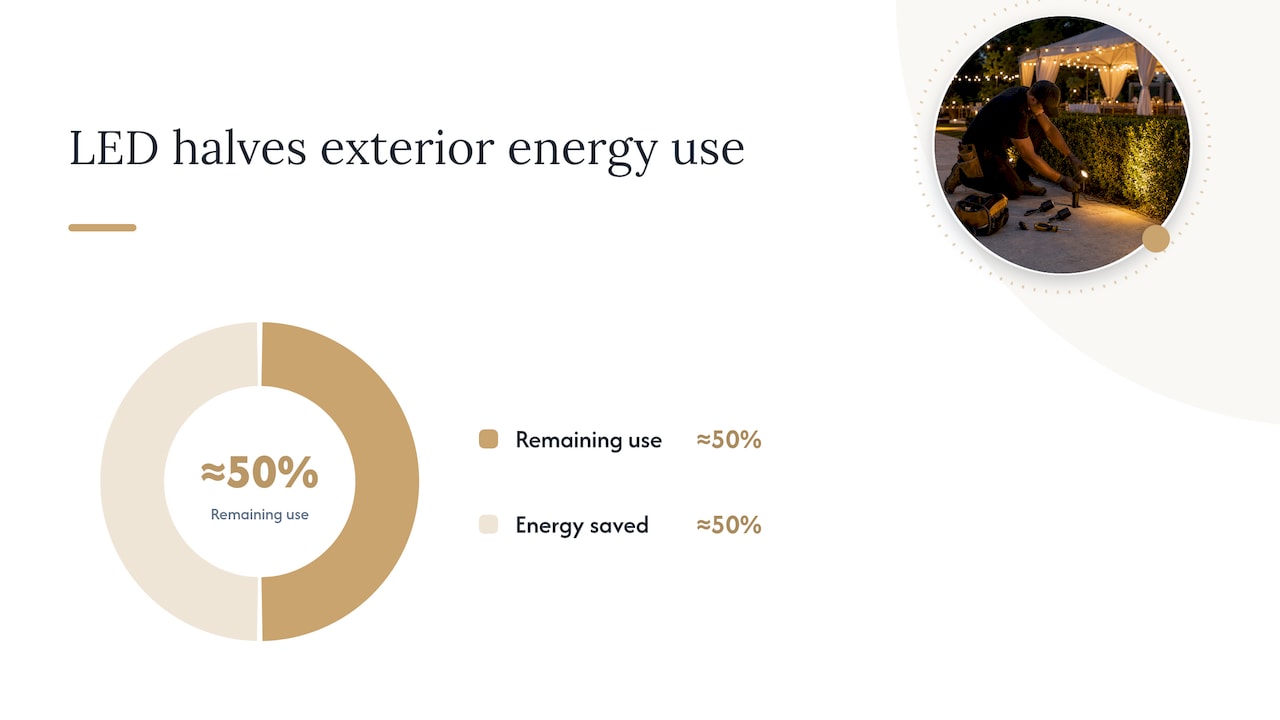
LED conversions typically cut lighting energy use by roughly 50% compared to traditional fixtures, according to IUP’s energy management guidance, with exterior applications often seeing even larger maintenance savings from reduced bulb changes.
Beyond the utility bill, permanent lighting changes how a venue operates on event day:
- Programmable scenes let staff switch from a daytime walk-through look to a full evening event in seconds, which speeds turnovers between bookings.
- Fixed, tested hardware removes the guesswork of rented or temporary rigs, cutting the odds of an event-day lighting failure.
- A well-lit property photographs better for marketing, which supports higher-value bookings.
- The same system doubles as a security asset during off-hours, covering walkways and parking areas when no event is underway.
Venues treating lighting as infrastructure rather than décor tend to book more consistently and spend less time troubleshooting on event nights, since experienced lighting partners also bring backup equipment and local code knowledge that reduce event-day technical risk.
Codes and Responsible-Lighting Rules to Design Around
Before any fixture goes in the ground, a venue needs to understand the rules that will govern placement, brightness, and timing. Skipping this step is the most common reason permits stall or neighbors complain.
The DarkSky Five Principles are the baseline most municipal codes now reference: light only where it is needed, aim it precisely, keep it no brighter than necessary, control it with schedules, and favor warmer color temperatures to cut glare and skyglow.
From there, design decisions typically follow these guidelines:
- Confirm your property’s lighting zone (LZ0 through LZ4) since it sets the baseline brightness and curfew expectations for your area.
- Select fixtures with documented BUG ratings to control backlight, uplight, and glare before submitting plans.
- Keep color temperature below 3500 Kelvin for most exterior applications to reduce harshness and glare.
- Require a CRI rating that renders landscaping and architectural materials accurately after dark.
Fixture specification matters just as much as placement. The table below lays out the technical minimums worth requiring in a contract.
| Requirement | Typical minimum for venue use |
|---|---|
| IP rating (wet locations) | IP rating suitable for outdoor use |
| IP rating (submerged/dock) | IP rating suitable for outdoor use |
| Impact resistance | IK08 or higher for public-access areas |
| Color temperature | Color temperature below 3500 Kelvin |
| BUG rating | Documented per fixture, matched to lighting zone |
A written lighting plan showing fixture aims, BUG worksheets, and schedules is a standard part of commissioning and permitting for exterior installs, and it is worth requesting from any installer before signing.
Fixture Choices That Match Common Venue Goals
Different parts of a property call for different hardware, and matching the fixture to the job keeps both the budget and the maintenance schedule under control.
Roofline lighting delivers the biggest visual payoff for venues with distinctive architecture. Integrated LED track systems sit flush against the fascia, invisible by daylight, then define the building’s silhouette at night without the glare of floodlights pointed upward.
Landscape and pathway fixtures handle a more practical job: guiding guests safely across lawns, patios, and stairs after dark. Low-profile path lights and step lights reduce trip hazards while keeping brightness within the levels a residential lighting zone expects.
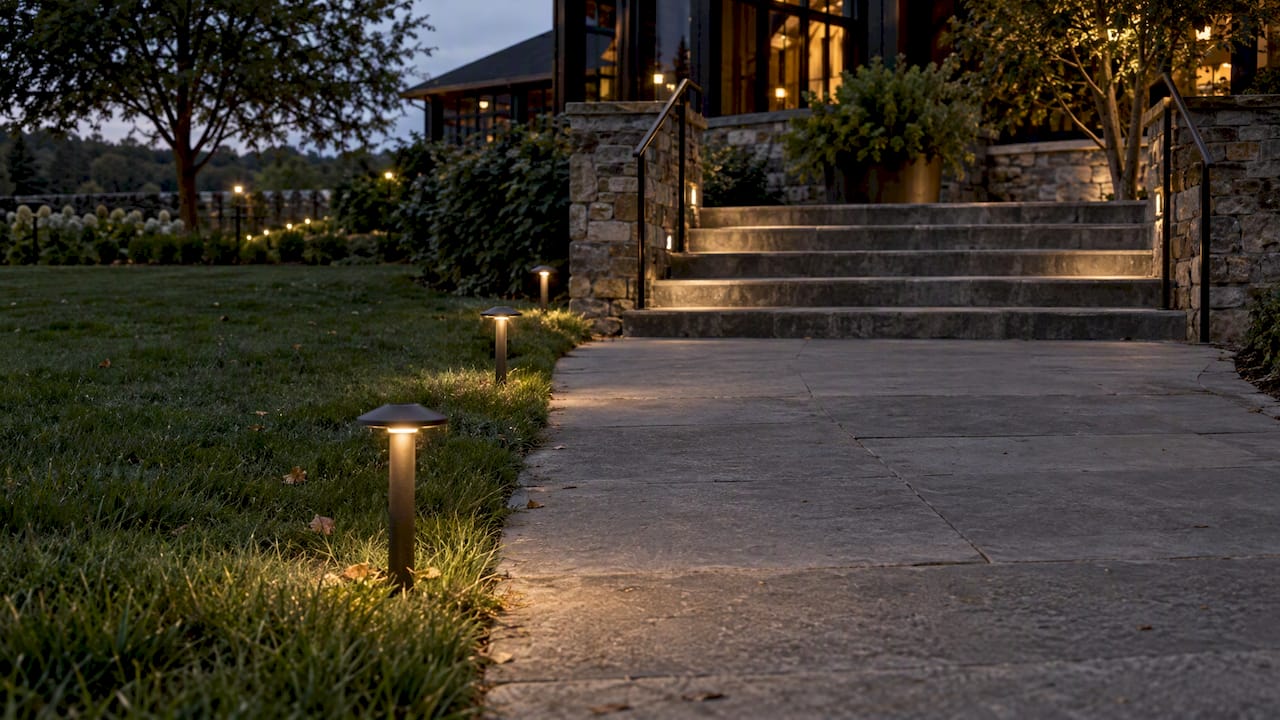
Pole and area fixtures cover parking lots and large open sites, but they come with real cost tradeoffs. Fewer, taller poles usually cost less to trench and wire than many shorter ones, so pole count and mounting height deserve as much attention in the budget conversation as the fixtures themselves.
Permanent bistro and string lighting rounds out the venue package for patios and outdoor gathering spaces. Built on weather-rated cable and fixtures designed for continuous use, these systems hold up to seasons of exposure in a way that rented or seasonal string lights cannot.
A few patterns worth matching to your site:
- Use roofline track for primary architecture that defines the venue’s nighttime brand.
- Use path and step lights anywhere guests walk after dark.
- Use pole-mounted fixtures only where wide-area coverage justifies the trenching cost.
- Use permanent bistro lighting on patios and covered outdoor spaces that host events year-round.
Smart Controls Worth Requiring in a Venue System
The control system is what turns a fixed lighting install into something a venue can actually operate day to day. A few capabilities are worth specifying up front.
- Scene presets that staff can recall instantly for different event types, from a quiet daytime setup to a full-color evening gala.
- Astronomical clock or photocell-plus-timer scheduling, so lights respond to actual sunset rather than a fixed clock time.
- Motion-sensor zones for back-of-house or security areas that do not need to stay lit all evening.
- User access levels that separate what event staff can adjust from what only the installer or property manager can change.
Network security matters too. A smartphone-controlled system should receive firmware updates and sit on a properly segmented network, the same way any connected building system would.
Pro Tip: Ask your installer whether the control platform sends service alerts when a fixture or circuit fails, since catching an outage before an event is far cheaper than discovering it during one.
Remote monitoring closes the loop: a system that flags its own problems reduces the chance that a burned-out uplight goes unnoticed until a guest points it out.
What to Expect During Installation and Ongoing Care
A professional install follows a fairly predictable sequence, and knowing the steps helps a venue owner budget time and money correctly.
- Site survey and photometric study to map existing conditions and plan fixture placement.
- Permitting, including HOA or municipal review where required.
- Trenching and wiring, which typically represents the largest line item on the invoice.
- Fixture mounting and aiming according to the photometric plan.
- Commissioning, where the installer verifies photometrics, confirms BUG compliance, and programs schedules and scenes.
Commissioning is not a formality. It confirms that the finished install matches the plan on paper, that schedules behave as expected, and that scene presets are saved and accessible to staff.
Ongoing costs are modest compared to legacy or rented lighting, but they are not zero:
- Bulb and driver replacement is rare with LED fixtures, but connectors and seals do age and need periodic inspection.
- Trenching, pole installation, and lift rentals drive most of the upfront cost variation between projects.
- A maintenance subscription, like our GlowCare plan, covers inspections and adjustments so small issues get caught before an event night.
For a closer look at how this sequence plays out from first call to final walkthrough, see how the permanent lighting installation process works.
How to Vet a Permanent Lighting Installer
Choosing the right installer determines whether the system above actually performs the way it is supposed to. A short checklist keeps the comparison honest.
- Verify licensing, insurance, and a track record of local permitting and HOA approvals in your area.
- Ask for a sample photometric plan and fixture spec sheets listing IP and BUG ratings before signing anything.
- Request a commissioning report template so you know what gets verified at handoff.
- Ask to see the control app in a live demo, not just screenshots, so you understand what staff will actually use.
- Compare warranty terms and maintenance plan pricing across quotes, and ask for references from similar venue-scale installs.
Pro Tip: Treat the absence of a photometric plan as a dealbreaker. A reputable installer should be able to show, on paper, where every fixture aims and how bright it will be before a single trench is dug.
Red flags are usually easy to spot once you know to look: vague warranty language, no willingness to show past HOA or permit documentation, or a quote that skips photometrics entirely. Any of these should send you to another estimate.
Staying on Good Terms With Neighbors and HOAs
Light trespass, light spilling onto a neighboring property, is the most common source of complaints and permit denials for venue lighting. The fix is almost always about fixture choice and aiming rather than reducing brightness overall.
Shielded, BUG-rated fixtures direct light down and across a space instead of letting it scatter sideways or upward. Municipal lighting ordinances commonly require a photometric plan that shows light levels dropping to near zero at the property line, and that documentation is often what separates an approved permit from a rejected one.
Several practical habits prevent most disputes before they start:
- Submit a photometric plan with the permit application rather than waiting for a complaint to force one.
- Use full cutoff or shielded fixtures on any light near a shared property line.
- Schedule perimeter and security lighting to dim or switch off after a reasonable curfew rather than running at full brightness all night.
- Keep uplighting aimed at architecture or trees, never at the sky or an adjacent yard.
HOAs in particular tend to focus on consistency: fixture finish, color temperature, and whether lighting matches an approved architectural style. Bringing fixture spec sheets and a photometric plan to an HOA review board is usually enough to clear approval without a redesign. Addressing trespass at the design stage also protects the venue from costly retrofits after a neighbor complaint forces a change.
Designing Flexible Zones for Different Event Types
A venue that hosts weddings one weekend and a corporate mixer the next needs lighting that can shift character without a crew re-rigging fixtures each time. That flexibility comes from zoning the property into independently controllable sections rather than wiring everything to one switch.
Typical zoning splits a venue into a handful of functional areas: the main gathering space, pathways and entries, architectural accents on the building itself, and back-of-house or parking areas. Each zone gets its own circuit and its own place in the control app, so a scene preset can dim the lawn, brighten the patio, and leave the parking lot on security mode, all with one tap.
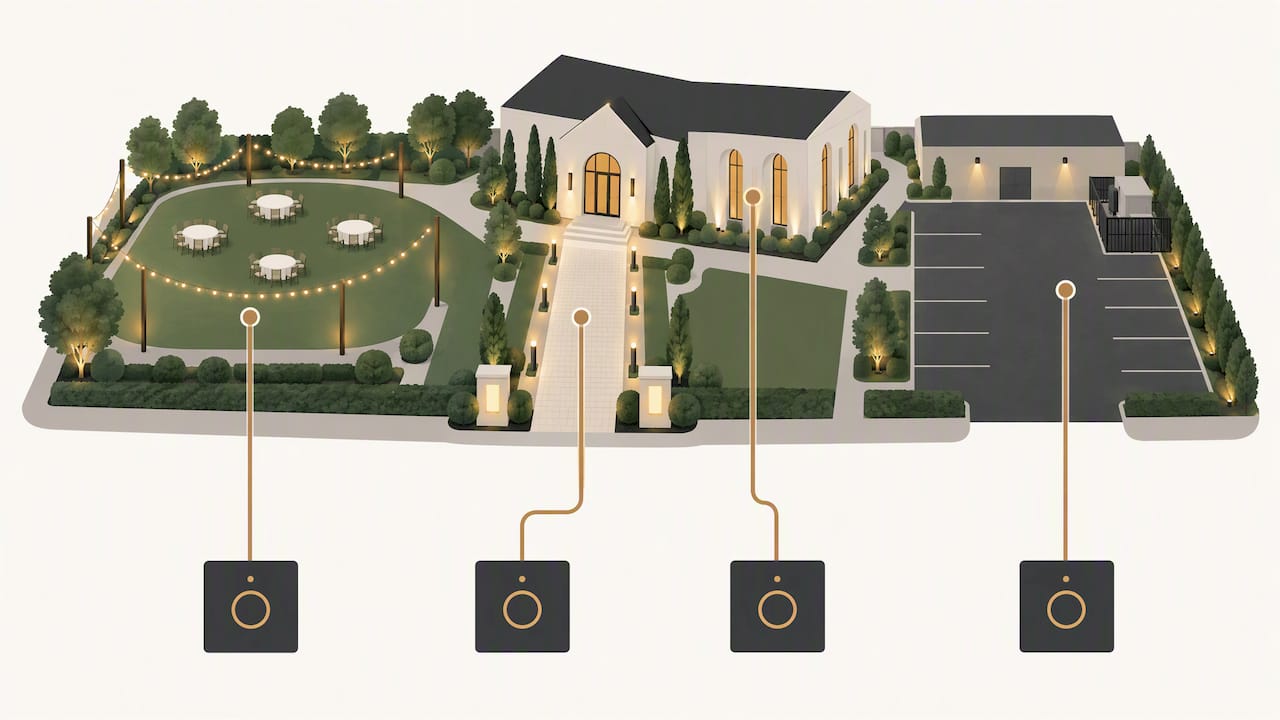
This matters most for color-capable systems. A smart roofline track can shift from warm white for a daytime wedding ceremony to a saturated color palette for an evening gala, without touching a single fixture. Planning those zones during the design phase, rather than retrofitting them later, keeps the system both code-compliant and genuinely useful across a full booking calendar. Our outdoor lighting guide for entertaining spaces walks through scene-setting ideas that translate directly to venue-scale zoning.
How Lighting Shapes the Guest Experience
Lighting does more for an event than make a property look good in photos. It shapes how safe and welcome guests feel from the moment they arrive.
Well-lit entries and pathways remove the hesitation guests feel walking across an unfamiliar property after dark, and consistent visibility along walkways and steps reduces trip hazards during the exact hours when a venue is busiest. Lighting that removes hiding spots around a property’s perimeter also increases the likelihood that anything out of place gets noticed quickly.
Beyond safety, the ambient quality of light sets the emotional register of an event. Subtle accent lighting on architecture or landscaping creates a sense of occasion before a single decoration goes up, while balanced coverage across a gathering space keeps guests from feeling like they are standing in a spotlight or a shadow. A property that transitions smoothly from daytime charm to nighttime atmosphere, without a crew swapping fixtures in between, reads as more polished to guests and more professional to anyone booking a future event there.
Coordinating Lighting With Audio, Video, and Entertainment
A permanent lighting system works best when it is planned alongside the other technology a venue runs during events, rather than treated as a separate project. Shared control platforms let staff trigger a lighting scene and an audio cue from the same interface, which cuts down on the coordination that normally falls to a hired technician.
Dock and patio installations, for example, often pair lighting with outdoor audio and all-weather televisions so a single weatherproof system handles sound, screens, and illumination together. Planning the wiring and network infrastructure for all of these systems at once, rather than retrofitting audio or video after the lighting is already installed, avoids duplicate trenching and conflicting control apps.
For venues considering networked or PoE-based lighting controls, proper cabling infrastructure matters more than it might seem. Cable run length and power loss affect how reliably a networked system performs at a venue’s edges, which is worth discussing with whoever handles your low-voltage wiring before fixtures go in the ground.
Matching Fixtures to Themes and Seasonal Changes
A venue’s lighting needs to flex with the calendar without requiring a new installation every season. Color-capable LED systems handle this by storing multiple scene presets rather than requiring fixture changes.
A single roofline track can hold a warm white preset for spring weddings, a cooler palette for a summer corporate event, and a seasonal color scheme for fall or winter bookings, all accessible from the same app. Our guide to holiday lighting color schemes built around warm white shows how a neutral base palette can still flex into something festive without clashing with a venue’s year-round architectural look.
Seasonal flexibility also applies to brightness and duration. A venue booked for late sunset ceremonies in summer needs different schedule settings than one running winter evening events that start in near-darkness, and an astronomical clock handles that shift automatically rather than requiring manual adjustment every few months.
What Successful Installations Look Like in Practice
Permanent lighting projects tend to succeed when design, fixture choice, and control programming are planned together rather than added piecemeal. A property with a custom outdoor lighting and bistro setup, like the kind documented in our Denver, NC installation, shows how permanent bistro lighting paired with landscape accents can carry a patio space through both everyday use and hosted events without looking like temporary decor strung up for the occasion.
Layering is often what separates a flat-looking install from one that reads as professional. Combining uplights on key architectural features, path lighting at ground level, and overhead bistro lighting creates depth rather than a single flat wash of brightness, a principle our landscape lighting layering guide covers in more detail. For larger commercial sites, the same layering logic scales up with pole fixtures and architectural washes, as outlined in our guide for commercial buildings.
Why I Favor Permanent Systems Over Quick Fixes
In my view, the venues that struggle most with lighting are the ones still patching together rented fixtures every season. A permanent, code-compliant system removes that annual scramble and gives staff one reliable tool instead of a pile of extension cords. One property owner I worked with described finally trusting their lighting enough to stop checking it the morning of every event. That shift, from managing lighting to simply using it, is the real payoff of going permanent.
— Dave
Forever Glow Lighting: What We Offer and How to Start
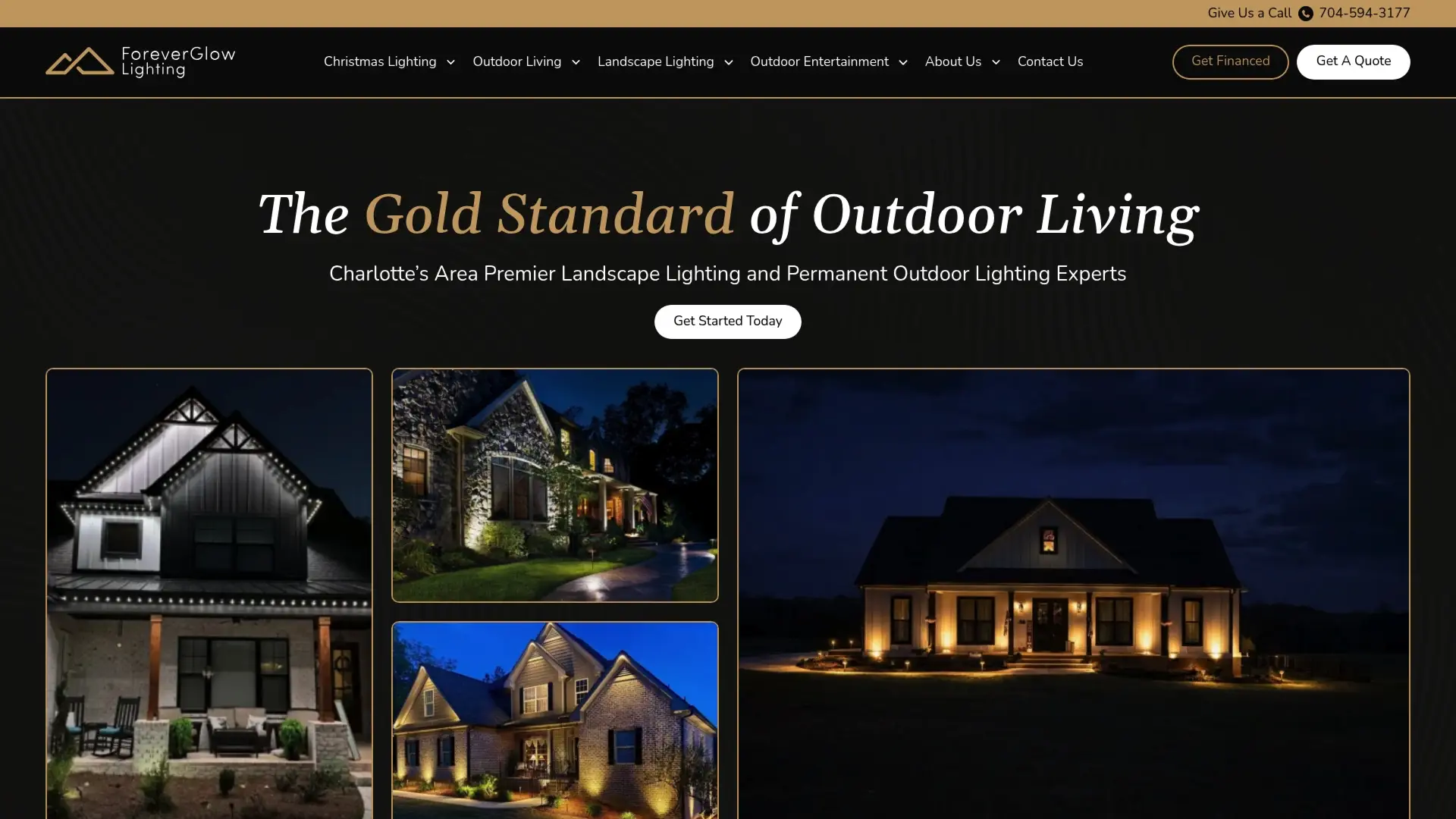
We design and install permanent outdoor lighting systems built for properties that host events year-round, including smart LED roofline tracks, landscape and architectural illumination, permanent bistro and patio lighting, and commercial exterior installations.
Every project starts with a free estimate, and we provide photometric examples and HOA-compliance documentation upfront so you know exactly what you are approving before any trenching begins. Our GlowCare maintenance subscription keeps the system running correctly long after installation day. If you want to see how a project moves from first conversation to final commissioning, our page on how the permanent lighting installation process works walks through each step, or you can start directly with a free estimate request for your property.
FAQ
What counts as event venue outdoor lighting?
Event venue outdoor lighting refers to permanent, professionally installed systems, including smart LED roofline tracks, landscape and architectural illumination, and weather-rated accent lighting, rather than temporary string lights or rental decor. These systems are designed for repeated use across many events and are controllable by smartphone.
How much energy do LED systems save compared to older lighting?
Converting to LED exterior lighting typically cuts energy use by roughly 50% compared to traditional fixtures, with retrofit kits alone capable of 40% to 60% savings before controls are added. Adding scheduling and dimming controls typically increases those savings further.
What is a BUG rating and why does it matter for venues?
A BUG rating measures a fixture’s Backlight, Uplight, and Glare output, and many municipalities use it to control light trespass in permit reviews. Choosing properly rated, shielded fixtures helps a venue avoid neighbor complaints and permit delays.
Does the company offer maintenance after installation?
Yes, a maintenance subscription covers ongoing inspection and upkeep for permanent lighting systems after installation. Pricing details are available on request through a free estimate.
How long does a permanent venue lighting installation take?
Timelines vary by site size and complexity, but the process generally includes a site survey, photometric study, permitting, trenching and wiring, fixture mounting, and a final commissioning step. Properties requiring HOA or municipal approval should expect permitting to add time before installation begins.
Sources
- LED lighting benefits and energy savings (IUP Energy Management)
- Five Principles for Responsible Outdoor Lighting (DarkSky)
- LED Lighting and Controls Guidance for Federal Buildings (Integrated Lighting Campaign / GSA)
- What is BUG rating and why does it matter? (Access Fixtures)