
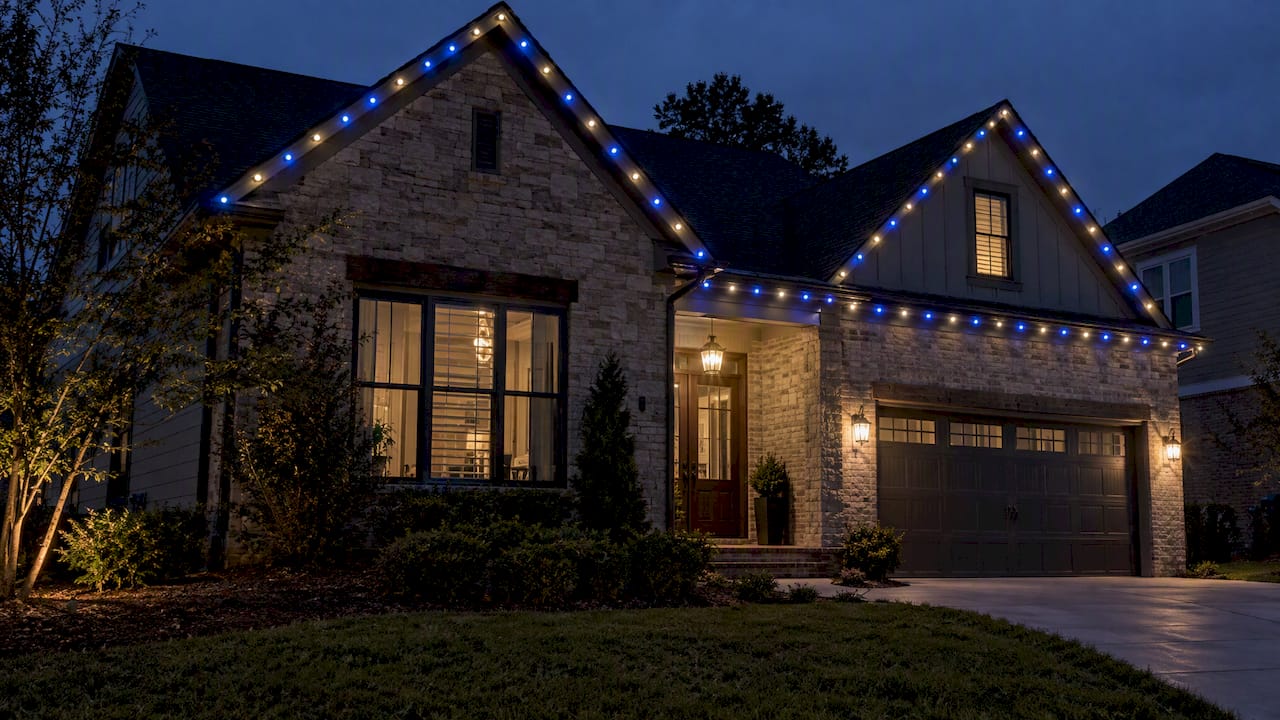
Permanent programmable exterior LED roofline lighting is one way to light your home in team colors on game day, without seasonal strings to hang and untangle. A professionally installed system gives you accurate color presets, app-based scheduling, and HOA-aware mounting that works year-round, not just on Sundays. Once it is in place, switching your house to team colors takes a few taps on your phone.
TL;DR:
- Choose RGBW or multichannel fixtures if exact maroon or forest green matters; basic RGB kits can muddy saturated team shades.
- Ask for independently dimmable zones so game day accents do not overpower porch lighting or create glare, and set a reasonable automatic shutoff.
- Use a steady color wash before kickoff, reserve brief wipes or chases for key moments, and test colors on the roofline before game day.
- Request a written quote that lists roofline footage, zones, optional features, and electrical work; confirm HOA rules and compare warranty and maintenance terms.
Table of Contents
- What a permanent programmable lighting system includes
- Game-day lighting ideas and presets worth copying
- Technical choices that affect color accuracy outdoors
- What to expect from a professional installation
- Your planning checklist for a first game-day setup
- Why we think permanent lighting beats the seasonal scramble
- Ready to light your home for game day
- FAQ
- Sources
What a permanent programmable lighting system includes
A permanent system replaces seasonal string lights with a fixed, weatherproof track mounted along your roofline or trim. Here is what typically makes up the setup:
- Weatherproof LED track or trim fixtures installed along the roofline, eaves, or architectural features.
- RGB or RGBW light modules, which determine how accurately the system reproduces team colors.
- A controller and Wi-Fi or Bluetooth bridge that connects the fixtures to your home network.
- A smartphone app for choosing colors, building schedules, and saving presets.
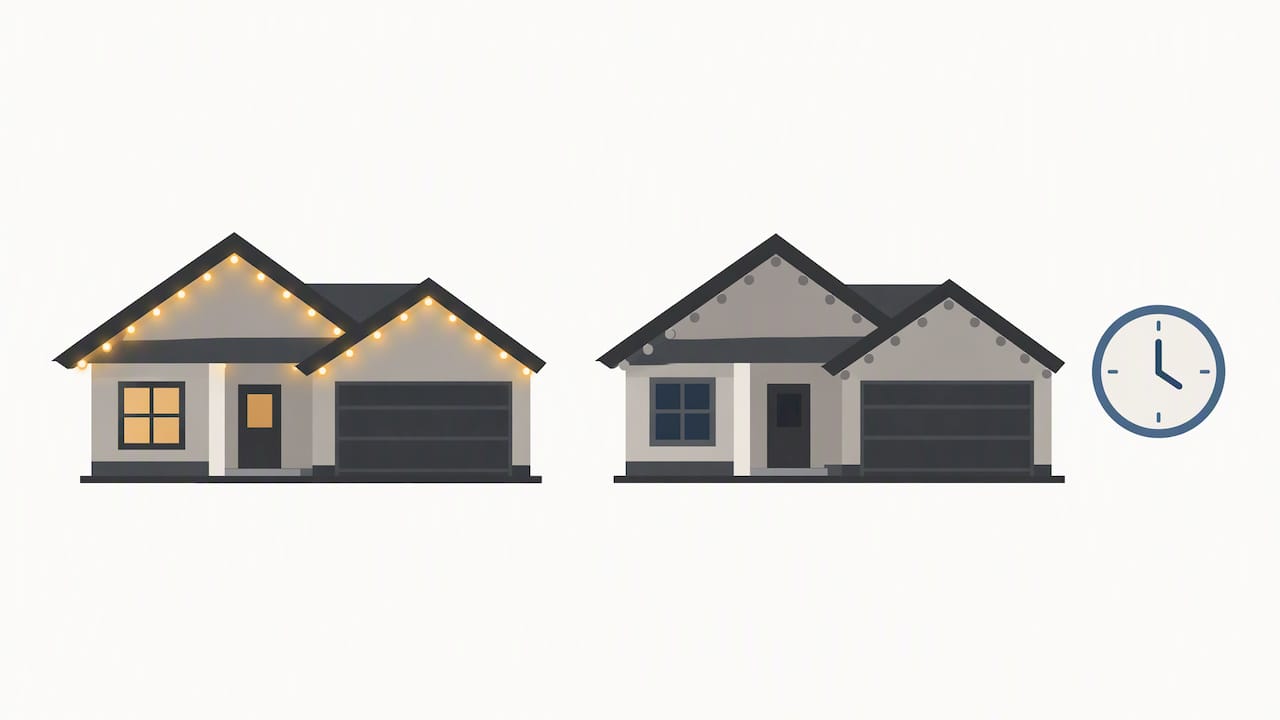
Most systems let you divide your home into zones, so the garage, porch, and main roofline can run different colors or effects at once. Many apps also support music sync, which pulses colors to a game-day playlist or stadium chants. The fixtures themselves are designed to disappear into the roofline during the day, so your home looks like any other until the lighting turns on for kickoff.
Game-day lighting ideas and presets worth copying
You do not need a complicated setup to make an impact. A single solid team-color wash across the roofline, set at full brightness, reads clearly from the street and works for most pregame builds.
- Static wash: one team color across the whole roofline, best for tailgates and pregame hours.
- Color wipe: a slow transition from one team color to the other, good for player introductions.
- Chase effect: lights move in sequence around the home, suited to big plays or touchdowns.
- Celebration strobe: a short, bright burst reserved for a win or a score, since overuse dulls the impact.
A simple schedule template works well: a steady color wash from a few hours before kickoff, a brief chase or wipe at kickoff, a calmer static color through halftime, and a strobe or wipe effect saved for scoring moments or the final outcome.
Pro Tip: Keep nighttime displays a notch dimmer than you think you need. Lights read brighter after dark than they do in daylight test runs.
Set an automatic end time so the display switches off a reasonable hour after the game, which keeps things considerate for neighbors on a weeknight matchup.
Technical choices that affect color accuracy outdoors
Not all LED systems reproduce team colors the same way. Basic RGB kits mix red, green, and blue channels, but they often struggle with precise shades like a specific maroon or forest green. Adding a dedicated white channel, known as RGBW, gives the system a cleaner base for mixing saturated, accurate colors rather than a muddy approximation. Industry guidance on residential lighting points out that low-cost generic LED kits often lack the RGBW or advanced mixing needed to reproduce brand-standard team palettes accurately, so the hardware behind your display matters as much as the app driving it.
Layering also matters. Lighting professionals recommend separating task, ambient, and accent lighting into distinct zones with independent dimming and controls so a bright game-day accent effect does not wash out a porch light or create glare for anyone trying to watch the screen. Beyond color channels, think about:
- Whether the controller connects over Wi-Fi, a cloud app, or a cellular bridge for areas with a weak signal.
- Whether the system supports voice assistant commands for quick changes.
- Whether music sync is built in or requires an add-on module.
Our RGBW guide for outdoor use breaks down these channel differences in more detail if you want to compare options before requesting quotes.
What to expect from a professional installation
A typical install starts with a site visit, where a technician measures your roofline, counts zones, and notes any obstacles like gutters or steep pitches. From there, the process generally includes:
- Design and color-matching the track to your home’s trim so it blends in during the day.
- A check for HOA or municipal rules that might affect mounting or brightness.
- Mounting and wiring the track, followed by controller setup and a walkthrough of the app.
- A final color calibration pass to confirm the presets look accurate at night.
Cost depends mainly on linear footage, the number of zones, and any add-ons like music sync or a cellular bridge for remote areas. Homes needing new electrical circuits or outlets will see that reflected in the quote as well, which is one reason it helps to have a licensed electrician involved when wiring changes are needed; Tri-County’s installation guidance is a useful reference on what that process typically involves. When comparing quotes, ask about warranty terms, maintenance plans such as a GlowCare-style subscription, and whether the installer can show examples of past work. Our own installation process walkthrough covers what a homeowner should expect step by step.
Your planning checklist for a first game-day setup
Before you call anyone, walk through these steps:
- Decide which parts of your home you want lit: full roofline, porch accents, or a single focal feature.
- Decide how exact you need your team colors to be versus a simpler, general color wash.
- Schedule a site visit and request a written quote listing zones, fixture counts, and controller features.
- Confirm HOA or municipal lighting rules and give nearby neighbors a heads-up about game nights.
- Run a low-intensity test of your presets a few days before the first game to catch any color or timing issues.
Pro Tip: Test your halftime and celebration presets in daylight first. Colors that look right on a phone screen can shift once they hit your actual roofline at night.
Our landscape lighting checklist covers additional planning steps if you are weighing lighting projects beyond game day.
Why we think permanent lighting beats the seasonal scramble
Climbing a ladder to hang temporary lights can be a chore and carries fall risk. A permanent system avoids repeated seasonal installation. We install exterior lighting hardware and offer maintenance options to help keep the system working over time. If you want to see what these setups look like in practice, our project gallery and past client references are worth a look before you commit to a design.
— Dave
Ready to light your home for game day
We design and install permanent outdoor lighting systems with smartphone control and maintenance options to help keep everything running smoothly over time.

Game day is just one use for a system that works all year, from holiday displays to everyday accent lighting, as we show in our guide to using permanent lighting beyond Christmas.
- Request a free, no-obligation estimate for your home’s roofline and zones.
- Ask to see a project gallery or past client references before choosing colors.
- Bundle game-day lighting with other upgrades like patio or landscape lighting in one visit.
Visit our permanent lighting page to request your free estimate and get a system ready before the next kickoff.
FAQ
Can LED lights accurately match my team’s exact colors?
RGBW and multi-channel LED systems can help reproduce saturated team colors, while basic RGB kits may struggle with specific shades. Ask your installer which color channels their hardware uses before committing to a design.
Is it better to install permanent lighting or use DIY string lights?
Permanent, professionally installed lighting avoids repeated seasonal installation and can offer app-based color and scheduling controls. It also stays mounted and weatherproofed year-round instead of being taken down and reinstalled each season.
How long does a permanent lighting installation take?
Installation timelines vary with home size and zone count, but the process generally includes a site visit, design, mounting, wiring, and a final calibration walkthrough. Our installation process guide outlines each step in order.
Will the lighting track be visible during the day?
Properly installed tracks are color-matched to your trim and designed to blend into the roofline in daylight. The fixtures only become noticeable once they are switched on at night.
How do I avoid annoying my neighbors with bright game-day lights?
Lighting professionals recommend layering and zone-based dimming so accent effects do not create glare or spill into neighboring yards. Setting a scheduled end time and keeping the brightest celebration effects brief are also good practices, as outlined in IES exterior lighting guidance.
Sources
- Recommended Practice: Lighting for Interior and Exterior Residential Environments
- Lighting for Exterior Environments