
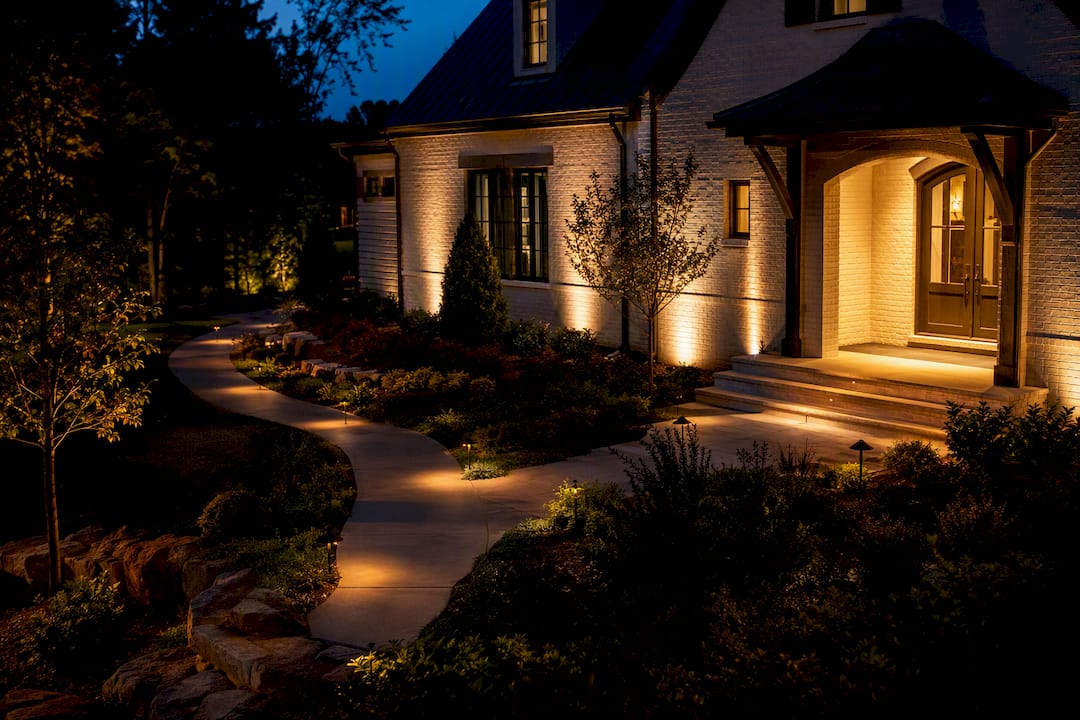
Outdoor lighting zones are separately switched or programmed areas of a permanent lighting system, such as roofline, pathway, garden, patio, and security lighting, each controlled on its own schedule and brightness. This zoning gives homeowners and property managers targeted control over energy use, safety, and mood instead of running every fixture the same way. Modern systems manage that control through a smartphone app, which is what makes multi-zone lighting practical for daily life.
TL;DR:
- Properly planned outdoor lighting zones can significantly reduce energy waste by scheduling each zone to run only during necessary hours, such as five hours for accent lighting and 12 for security.
- Separating zones for security, pathways, and architecture prevents over-lighting, which can diminish security effectiveness and create a less inviting appearance.
- Mapping out zones with clear purposes and target hours before installation saves money by avoiding costly retrofits and ensures transformer sizing is accurate from the start.
- Overlighting neighboring properties can be mitigated through correct aiming, shielding, and scheduling with zones to minimize light spill and comply with local ordinances.
- Homeowners should budget for additional costs associated with multiple zones, including drivers, cable runs, mounting surfaces, and potential phased installations, to avoid surprises.
Table of Contents
- What Are the Main Types of Outdoor Lighting Zones?
- How Much Does Zoning Actually Save on Energy and Security?
- How Do You Map Zones Before Calling an Installer?
- What Fixtures and Light Layers Belong in Each Zone?
- What Controls and Scheduling Options Actually Work?
- What Should a Professional Check Before Installation?
- What Maintenance Keeps Multi-Zone Systems Running Right?
- What Does a Simple 3-Zone Layout Look Like?
- What Safety Codes Apply to Outdoor Lighting Zones?
- How Do Lighting Zones Affect Neighbors and Light Spill?
- What Should You Budget for a Multi-Zone Lighting System?
- How Forever Glow Lighting Approaches Multi-Zone Design
- Ready to Design Your Own Multi-Zone System?
- Sources
- FAQ
What Are the Main Types of Outdoor Lighting Zones?
Most properties can be broken down into five recognizable zone types, each doing a specific job. Recognizing which zone you’re dealing with is the first step in any landscape lighting design plan.
- Security and entrance zones run brightest and longest, often with motion-triggered boosts near doors, driveways, and gates.
- Pathway and step zones use low, even light aimed at the walking surface, not the eye, to prevent trips without glare.
- Accent zones highlight trees, façade textures, or sculpture using narrow-beam uplighting.
- Roofline and contour zones trace the architecture with linear fixtures, useful for holiday color changes or year-round outline lighting.
- Patio, entertaining, and task zones need dimmable, color-capable fixtures because their job shifts from dinner ambiance to bright cleanup light in minutes.
Mixing these functions into one zone is the most common design mistake homeowners make. A porch light wired into the same circuit as garden accents means you can’t dim the mood lighting without also dimming your entryway.
How Much Does Zoning Actually Save on Energy and Security?
Zoning saves energy because each area only runs the hours it needs to. A security zone might justify dusk-to-dawn operation, but pathway and accent zones rarely need more than five or six hours before nobody’s outside to see them. Cutting runtime on the zones that don’t need to be on all night is one of the more effective and often overlooked ways to reduce wasted runtime while preserving safety lighting.
The security case is just as strong. Keeping entrance and perimeter zones on independent, always-armed circuits means a homeowner can dim or turn off patio and accent lighting for a party without ever touching the zones that protect the property. That separation also protects against the opposite failure: over-lighting. A yard with every fixture blasting at full brightness doesn’t look secure, it looks like a parking lot, and it erases the shadow and contrast that make architectural accents worth installing in the first place.
How Do You Map Zones Before Calling an Installer?
A rough site sketch, done before you ever contact a contractor, saves time and prevents costly mid-project changes. Professional outdoor lighting layout planning starts with paper, not fixtures.
- Sketch the footprint. Mark the house outline, walkways, patio, driveway, and major landscaping features.
- Identify circulation routes and focal points. Where do people walk after dark? What do you want a visitor’s eye drawn to first?
- Assign a purpose and target hours to each zone. Security might run dusk to dawn; accent lighting might run dusk to 11 p.m.
- Group fixtures by function, not location. Two trees on opposite sides of the yard can share an accent zone; a security light and a nearby accent fixture should not share a circuit just because they’re close together.
Pro Tip: Write your zone hours down before your consultation. An installer who knows you want the security zone active 12 hours a night and the patio zone active for 3 can size the transformer correctly the first time, instead of guessing.
Adding zones after the initial install almost always costs more than planning them upfront, since retrofitting zoning commonly forces installers to re-run cable or add drivers that a properly planned circuit layout would have avoided.
What Fixtures and Light Layers Belong in Each Zone?
Landscape lighting design leans on three layers working together inside each zone: ambient light for general visibility, task light for function like steps or grilling stations, and accent light for drama. The Techlumen design guide frames this as “reveal, don’t flood,” meaning the goal is to highlight form and texture, not erase every shadow.
Fixture choice follows the zone’s job:
- Uplights with narrow beams for trees and columns.
- Downlights mounted in eaves or trees for soft, moonlight-style wash over patios and paths.
- Path lights with wide, low-glare optics aimed down at the walking surface.
- Linear fixtures for roofline and contour zones.
- Spotlights for façade details or specimen plantings.
Skip the wattage debate and focus on lumen output, beam angle, and shielding instead. A warm color temperature of 3000K or below reads as natural and avoids the harsh, clinical look higher CCTs produce outdoors.
What Controls and Scheduling Options Actually Work?
Photocells handle dusk-to-dawn triggering automatically, timers handle fixed schedules, and motion sensors add targeted brightness bursts to security zones without keeping them at full output all night. Dimming late in the evening trims energy use further while keeping enough light for safety.
App-based scenes tie it together. A homeowner might run one scene for a normal weeknight, a brighter “entertaining” scene for a patio gathering, and a full-brightness “away” scene triggered by an alarm system that brings every exterior zone to full output at once, a setup security integrators generally consider a stronger deterrent than isolated motion lights.
- Photocells and timers cover routine dusk/dawn behavior.
- Motion sensors add activation only where and when it’s needed.
- App scenes handle color, brightness, and event-based overrides.
Pro Tip: The more zones you add, the more programming a system needs. A 3-zone patio setup is a weekend project for an installer; an 8-zone commercial façade with event scenes is a different scope entirely, and it should be quoted that way.
What Should a Professional Check Before Installation?
Electrical planning is where DIY ambition and permanent lighting systems part ways. A qualified installer runs a load calculation before running a single wire, because transformers and LED drivers sized without margin are the leading cause of flicker and premature fixture failure.
Before quoting a job, a professional installer typically checks:
- Circuit and load plan: how many zones, how many fixtures per zone, and total wattage per driver.
- Voltage drop on long runs: particularly relevant for roofline tracks that wrap large homes or commercial façades.
- Mounting-surface assessment: fascia, stucco, brick, and stone all require different fasteners and access methods, and commercial roofline systems are typically mounted flush to keep them invisible by day.
- IP ratings and warranty terms: fixtures near sprinklers, dock areas, or ground contact need higher ingress protection than sheltered eave-mounted units.
Skipping this survey step is how homeowners end up with underpowered transformers and zones that dim unpredictably within a year.
What Maintenance Keeps Multi-Zone Systems Running Right?
A short annual walkthrough catches most problems before they become service calls. Check firmware and app connectivity, inspect weather seals on ground fixtures, and confirm fixture aim hasn’t drifted after landscaping work or storms.
Three troubleshooting patterns cover most complaints:
- Flicker across a zone usually points to an overloaded driver or a failing transformer, not a bad bulb.
- A single zone going dark while others work fine is almost always a tripped breaker or a loose connection at that zone’s junction, not a system-wide failure.
- Color or scene mismatch between zones after an update typically means one controller needs a firmware refresh or app recalibration.
A solid maintenance contract should specify visit frequency, what’s inspected each visit, and response time for a dead zone. Programs like Forever Glow Lighting’s smart app control pair scheduled checkups with remote diagnostics, catching driver strain before it becomes a full outage.
What Does a Simple 3-Zone Layout Look Like?
A compact three-zone system covers most single-family homes: a path zone for walkways and steps, an accent or roofline zone for the façade, and a security zone for entrances. Handing a contractor this kind of brief, even roughly sketched, speeds up the quoting process considerably.
This is a starting point, not a finished design; actual lumen targets and wattage depend on fixture spacing, run length, and how far each zone sits from its power source.
What Safety Codes Apply to Outdoor Lighting Zones?
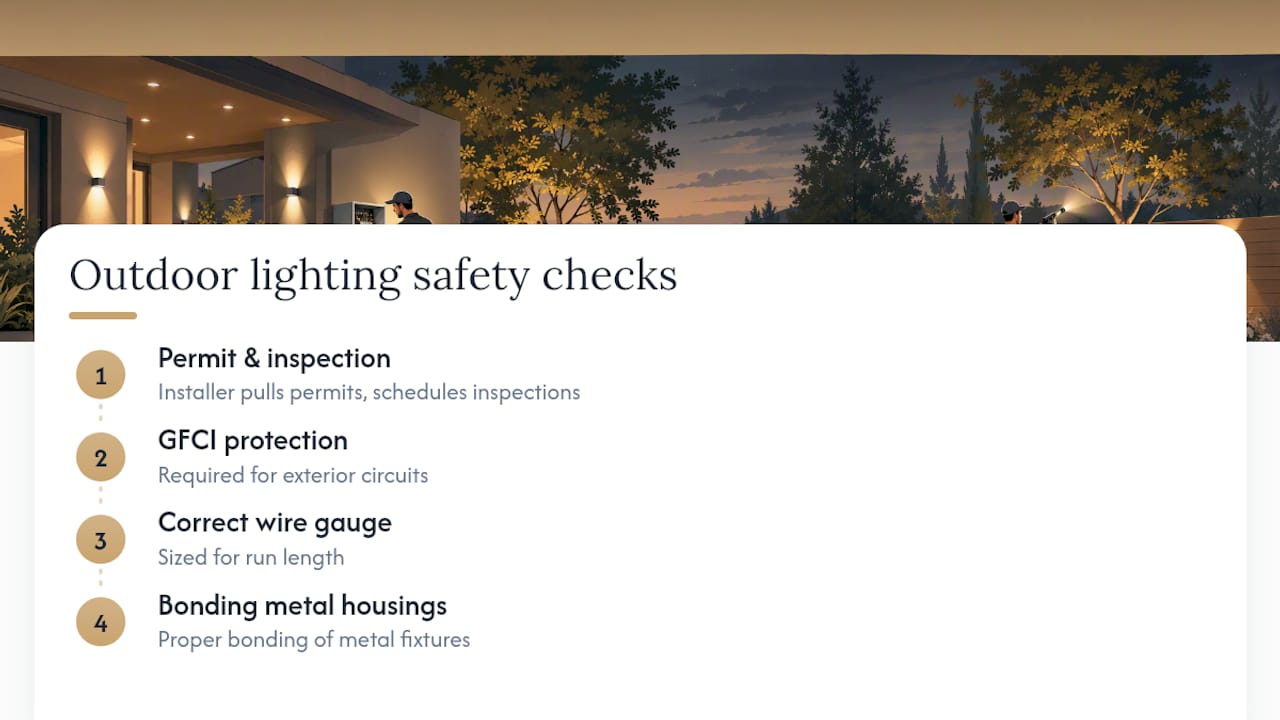
Every permanent outdoor lighting installation in the United States needs to meet the National Electrical Code requirements enforced through the local jurisdiction’s electrical permitting process, which typically covers GFCI protection for exterior circuits, correct wire gauge for the run length, and proper bonding for any metal fixture housings. Requirements vary by city and county, so a licensed installer pulls permits and schedules inspections rather than treating code compliance as optional paperwork.
Beyond wiring safety, lighting levels matter for actual security function. Pathway and step zones need enough even illumination to make footing changes visible without creating glare that blinds a visitor looking toward the fixture, which is why low-glare, downward-aimed optics matter more than raw brightness. Security and entrance zones benefit from wider coverage and higher output, but even here, more light isn’t automatically better. A blinding floodlight can create dark contrast zones just outside its beam, which actually helps someone hide rather than exposing them.
HOA communities frequently add their own rules on top of code, restricting fixture color temperature, limiting uplighting hours, or capping the number of visible fixtures on a front-facing façade. A homeowner planning zones should check HOA design guidelines alongside electrical code, since a technically compliant installation can still violate a covenant on brightness or color if nobody checked in advance. Commercial venue operators face an added layer of local signage and exterior lighting ordinances tied to zoning classifications for the property itself, which is separate from lighting design zones and worth confirming with the local building department before installation begins.
How Do Lighting Zones Affect Neighbors and Light Spill?
Well-planned zones are one of the most practical tools for controlling how much light crosses a property line. A security zone with a wide floodlight aimed at a driveway will spill onto a neighbor’s yard or bedroom window if it isn’t shielded or angled correctly, and that’s usually the single biggest source of neighbor complaints about new lighting installations.
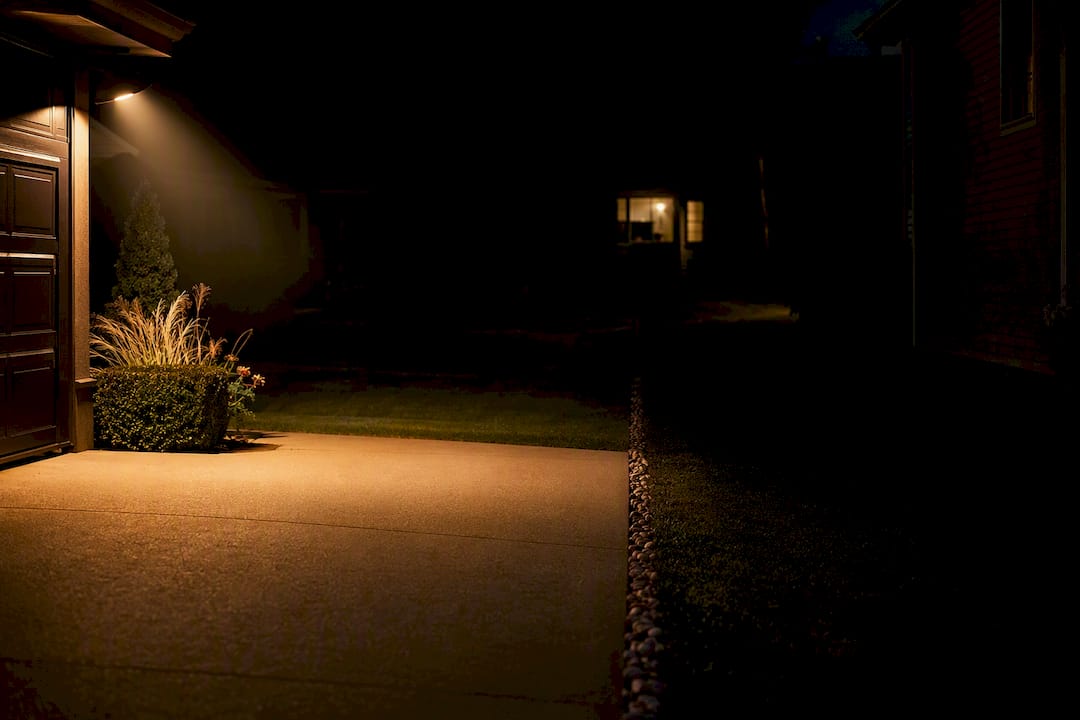
Shielded fixtures, correct aiming angles, and zone-specific scheduling all reduce that spill. A roofline or accent zone that shuts off at 11 p.m. instead of running until dawn cuts glare exposure for neighbors by more than half its potential runtime, without the homeowner losing any of the daytime curb appeal benefit. Downlighting mounted in eaves or trees also throws far less stray light sideways than ground-mounted uplights, which tend to scatter light upward and outward past the target.
Zoning also helps manage the cumulative brightness a property presents to the street. Running every zone at full output every night creates a wall of light that reads as excessive from a neighbor’s porch, even if each individual fixture is well within code. Staggering zones, so patio and accent lighting dim or shut off well before security lighting needs to stay active, keeps the overall glow proportional to what’s actually needed at that hour. For anyone renovating an older, unzoned system, this is often the most immediate improvement: the same fixtures, run on a schedule instead of a single switch, cut both the energy bill and the number of “your lights are shining in my window” conversations.
What Should You Budget for a Multi-Zone Lighting System?
Cost scales with zone count, fixture complexity, and mounting difficulty, not just total fixture count. A simple two-zone path-and-accent setup on a single-story home costs far less than a four-zone system spanning roofline, patio, garden beds, and security across a large or multi-story property, because each additional zone typically needs its own driver, its own run of low-voltage cable, and its own line in the control app’s programming.
Mounting surface changes the number meaningfully too. Fascia and soffit mounts on a standard roofline install faster than stone, stucco, or masonry façades, which need different fasteners and sometimes specialized access equipment. Commercial properties face this cost driver more often, since parking structures, tall façades, and dock areas frequently combine several mounting surfaces in one project.
Homeowners planning a budget should ask for a quote broken out by zone, not just a single lump sum. That breakdown shows exactly where the money goes: fixture cost, driver and transformer sizing, cable runs, and labor for mounting-surface prep. It also makes it easier to phase a project, installing the security and pathway zones first and adding accent or roofline zones later, though as covered earlier, that phased approach costs more in labor than wiring all zones during one initial visit. Ongoing maintenance, whether handled as occasional service calls or a standing annual contract, is a separate line item worth factoring in before signing off on a design.
How Forever Glow Lighting Approaches Multi-Zone Design
Forever Glow Lighting builds smart, energy-efficient LED track systems that stay invisible by day and switch to full color and brightness control by night. Each zone gets programmed into the companion app, so a homeowner can run security, pathway, and accent scenes independently, without another ladder trip. Maintenance plans keep drivers, seals, and firmware checked year over year.
— Dave
Ready to Design Your Own Multi-Zone System?
Forever Glow Lighting turns everything above into an actual installed system instead of a DIY wiring project. That’s the real difference: you get a site survey, a load calculation, and correctly sized drivers handled by someone who does this daily, instead of guessing at transformer margins on a ladder over a weekend.
We install permanent lighting for residential properties, luxury estates, and commercial venues, covering roofline tracks, landscape and accent illumination, bistro and patio string lighting, dock lighting, and commercial exterior systems. Our installations are designed to comply with HOA guidelines and are built for weather resistance, aiming for reliable operation through the seasons.
If you’re planning a new system or want to add zones to an existing one, start by reviewing how the permanent lighting installation process works. From there, request a free estimate and site survey, and a designer will map your property’s zones before a single fixture goes up.
Sources
For deeper technical detail beyond this guide, the Techlumen landscape lighting design guide and Lumaz outdoor lighting layout planning guide cover fixture optics and zone mapping in more depth. These are independent design references, not endorsements of any competing installer.
- Landscape & Architectural Lighting Guide — LED Design | TECHLUMEN
- How to Plan an Outdoor Lighting Layout: Zones, Layers, and Energy‑Saving
FAQ
What Are Outdoor Lighting Zones?
Outdoor lighting zones are separately controlled sections of a permanent lighting system, such as security, pathway, accent, roofline, and patio areas, each with its own schedule, brightness, and in smart systems, its own color settings.
How Many Zones Does a Typical Home Need?
Most single-family homes work well with three to four zones covering path, accent or roofline, patio, and security. Larger properties or commercial venues often need more to separate distinct façade or parking areas.
Can I Add Zones to an Existing Lighting System Later?
You can, but retrofitting zones after installation often costs more than planning them upfront, since it frequently requires re-running cable or resizing transformers and drivers to handle the added circuits.
Does Zoning Actually Reduce My Energy Bill?
Yes. Scheduling low-priority zones like accent and patio lighting to run fewer hours than security zones cuts unnecessary runtime, and dimming late at night reduces draw further while keeping safety lighting active.
Does Forever Glow Lighting Handle Both Residential and Commercial Zoning?
Yes. Forever Glow Lighting designs and installs multi-zone systems for both homes and commercial buildings, with app-based scene control for each.